GENEVA, Jan. 22, 2025 /PRNewswire/ -- ID Quantique (IDQ), a global leader in Quantum-Safe solutions and Quantum Communications, today announced that its high-performance Clavis XG series, has become the first product of its class globally to receive an official national security approval from South Korea's National Intelligence Service (NIS).
The QKD evaluation program of Clavis XG encompassed both the QKD system and the embedded Quantum Key Management platform (QKMS), Clarion KX. It was designed in collaboration with the Ministry of Science and ICT, and the evaluation testing and validation were performed in collaboration with the National Security Research Institute (NSR), the Korea Research Institute of Standards and Science (KRISS), the Korea Information and Communication Technology Association (TTA), and the IT Security Certification Center (ITSCC), a CC (Common Criteria) certification body responsible for national security evaluation and related regulations, as well as the management of Common Criteria Recognition Arrangement (CCRA).
This national accreditation acknowledges Clavis XG as the first quantum-safe cryptography system based on quantum-physics and BB84 QKD protocol to meet stringent national security standards, setting a new milestone in the global quantum cryptography market.
While most government organizations must follow the guidelines and policies of their respective national security authorities, NSR's multi-year security evaluation effort marks a significant milestone for the global QKD industry. IDQ will continue to support the undergoing international efforts for a standardized evaluation of quantum-physics based security solutions. Independent security accreditation programs that are designed and performed by experts in national security test labs enable a higher degree of confidence necessary for the migration to quantum-safe communication across enterprise and government sectors.
Grégoire Ribordy, CEO of ID Quantique, stated, "This is a massive leap forward for QKD, a physics-based quantum cryptography technology, which has successfully evolved and matured into a telecom grade security solution. We are thrilled to be able to support the cybersecurity strategy of our customers who seek to combine QKD with Post-Quantum Cryptography to mitigate the Quantum threat. The adoption of Clavis XG and Clarion KX platform will expand rapidly in the areas requiring high-level security, such as government, financial services, energy, critical infrastructure, and healthcare verticals."
The QKD approval program included rigorous and comprehensive evaluation of optical and digital subsystems of Clavis XG, as well as the software stack and protocols of the embedded Quantum Key Management System, Clarion KX.
The Clavis XG Series has already proved itself in a wide range of deployments in telecommunication network infrastructures and data centers, meeting and exceeding customers' performance requirements. With a compact 19'' rackmount 1U size, it offers the most advanced footprint in the market. Importantly, our partner interoperability program ensures our customers can immediately benefit from seamless integration with the industry leading range of network encryptors, network operation management suites, and SDNs. Together with the embedded and NIST-approved QRNG as well as the Clarion KX Quantum Key Management suite, a field proven and robust platform for complex network topologies and high SLA deployments, IDQ's partners and customers can now accelerate a cost-effective migration of network infrastructure to Quantum-Safe.
About ID Quantique
Founded in 2001, ID Quantique is the world leader in quantum-safe crypto solutions, designed to protect data for the future. The company provides quantum-safe network encryption, secure quantum key generation and Quantum Key Distribution solutions and services to the financial industry, enterprises, and government organizations globally. IDQ's quantum random number generator has been validated according to global standards and independent agencies and is the reference in highly regulated and mission-critical industries such as security, encryption, critical infrastructure and IoT – where trust is paramount.
** The press release content is from PR Newswire. Bastille Post is not involved in its creation. **

ID Quantique's Clavis XG: The World's First Quantum Key Distribution (QKD) Product to Obtain National Security Certification
|
- The achievement analysis report meeting took place on Wednesday, December 10, at 4:00 pm in the fourth-floor conference room of the Main Building, Culture Factory.
- Visitor satisfaction reached 90.3%, and the economic ripple effect increased to KRW 45 billion, indicating simultaneous growth.
- Ongoing strategies are necessary, including establishing a craft landmark, implementing branding initiatives, and connecting with UNESCO Creative Cities to support sustainable development.
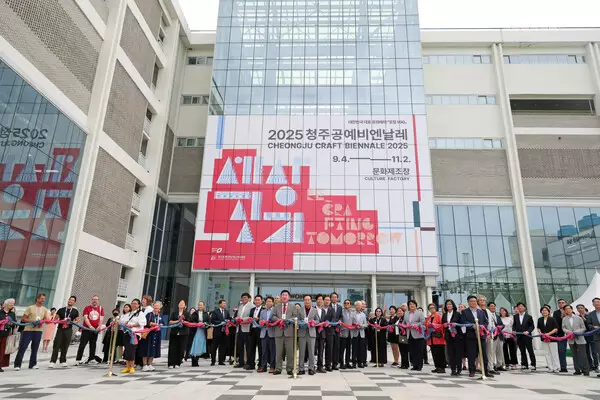
CHEONGJU, South Korea, Dec. 15, 2025 /PRNewswire/ -- The Cheongju Craft Biennale 2025 attracted 402,539 visitors and received exceptional evaluations for its exhibition scale, quality, and international networking. It also achieved record results in key indicators, including visitor satisfaction and economic impact.
The Cheongju Craft Biennale Organizing Committee (Chairman: Beom-seok Lee, Mayor of Cheongju; hereinafter, the Organizing Committee) officially announced these results at the Final Achievement Analysis Report Meeting, held on Wednesday, December 10, at 4:00 PM in the fourth-floor conference room of the Main Building, Culture Factory.
At the meeting, Executive Director Kwang-seop Byun, committee members, officials from Cheongju's Department of Culture and Arts, and research staff attended as the Cheongju University Industry-Academic Cooperation Foundation (lead researcher: Professor Sang-kyu Choi, Department of Tourism Management) presented the analysis. The study used surveys and behavioral analyses of 660 on-site visitors across three phases (early, mid, and late stages of the event), with a 95% confidence level and a ±3.8% margin of error.
According to the report, the overall satisfaction level of the Biennale was 6.02 out of 7 points, or 90.3%, representing a 1.2 percentage point increase compared to the 2023 Biennale. The research team noted that the Main Exhibition and the International Craft Competition were consistently identified as the primary reasons for satisfaction across the early, middle, and late stages, confirming the stable competitiveness of the core exhibition content.
In addition, both the intention to revisit (5.99 points) and the willingness to recommend (6.00 points), which are key satisfaction indicators, recorded high scores, indicating strong loyalty to the Biennale and a high potential for positive experiences to spread. The ratio of returning to first-time visitors was 56.6% to 43.4%, a narrower gap than at the 2023 Biennale. This result was interpreted as an encouraging sign that satisfaction and intentions to revisit have remained steady while the number of new visitors continues to increase.
The largest increase occurred in total consumer spending and economic ripple effects.
Total consumer spending at the Cheongju Craft Biennale 2025 was approximately KRW 24.9 billion, analyzed across seven categories, including ticket purchases, transportation, food and beverages, accommodation, and shopping. This amount was more than KRW 10 billion higher than the 2023 Biennale. The spending induced a production effect of KRW 45.02 billion, an increase of about KRW 6.8 billion from the KRW 38.25 billion recorded in 2023. The induced value-added effect was KRW 17.41 billion, and the employment effect resulted in 178 jobs. According to the research team, these outcomes contributed positively to the revitalization of the local economy.
Beyond quantitative achievements, the researchers evaluated the Biennale as a landmark event that "reaffirmed the intrinsic value of craft in an era of loss, introduced sustainable craft reflecting on the environment, and presented future visions of coexistence, recovery, and solidarity within the community." They also noted that, following Cheongju's designation as a UNESCO Creative City of Crafts and its Gold Award in the "Korean Wave Program" category at the Pinnacle Awards of the International Festivals & Events Association (IFEA), the Biennale, now in its 27th year, has strengthened Cheongju's international cultural competitiveness and cultural diplomacy capacity, making a significant impact both domestically and internationally.
Given the vast scale of the Culture Factory, which covers 120,000 square meters, the research team emphasized the urgent need to identify measures to reduce the complexity of visitor flow and alleviate fatigue. The team also proposed directions for further development of the Biennale.
First, they emphasized the need for sustainable strategies and practices related to the UNESCO Creative Cities Network. They recommended increasing citizens' familiarity, awareness, and participation in crafts by creating a craft landmark and providing repeated daily exposure. They also suggested expanding craft product sales platforms to create a positive marketing cycle involving appreciation, tourism, and consumption. In addition, the team highlighted the importance of building an integrated data management system to monitor visitor loyalty and revisit rates, upgrading operational systems, and developing strategies to expand international exchanges, such as institutionalizing joint residency programs.
The City of Cheongju and the Organizing Committee stated: "The Cheongju Craft Biennale 2025 was an unprecedented craft festival in every aspect, lasting a record 60 days, with participation from a record 72 countries, and presenting a record 23 exhibitions simultaneously. Thanks to this, Cheongju has transformed into the global center of crafts, beyond K-Craft." They added: "As we stand at the starting line of writing a new history of crafts as a UNESCO Creative City, Cheongju, the Organizing Committee, craft experts and artists, together with international craft networks, will join forces to ensure that the development directions presented today are fully realized."
- The achievement analysis report meeting took place on Wednesday, December 10, at 4:00 pm in the fourth-floor conference room of the Main Building, Culture Factory.
- Visitor satisfaction reached 90.3%, and the economic ripple effect increased to KRW 45 billion, indicating simultaneous growth.
- Ongoing strategies are necessary, including establishing a craft landmark, implementing branding initiatives, and connecting with UNESCO Creative Cities to support sustainable development.
CHEONGJU, South Korea, Dec. 15, 2025 /PRNewswire/ -- The Cheongju Craft Biennale 2025 attracted 402,539 visitors and received exceptional evaluations for its exhibition scale, quality, and international networking. It also achieved record results in key indicators, including visitor satisfaction and economic impact.
The Cheongju Craft Biennale Organizing Committee (Chairman: Beom-seok Lee, Mayor of Cheongju; hereinafter, the Organizing Committee) officially announced these results at the Final Achievement Analysis Report Meeting, held on Wednesday, December 10, at 4:00 PM in the fourth-floor conference room of the Main Building, Culture Factory.
At the meeting, Executive Director Kwang-seop Byun, committee members, officials from Cheongju's Department of Culture and Arts, and research staff attended as the Cheongju University Industry-Academic Cooperation Foundation (lead researcher: Professor Sang-kyu Choi, Department of Tourism Management) presented the analysis. The study used surveys and behavioral analyses of 660 on-site visitors across three phases (early, mid, and late stages of the event), with a 95% confidence level and a ±3.8% margin of error.
According to the report, the overall satisfaction level of the Biennale was 6.02 out of 7 points, or 90.3%, representing a 1.2 percentage point increase compared to the 2023 Biennale. The research team noted that the Main Exhibition and the International Craft Competition were consistently identified as the primary reasons for satisfaction across the early, middle, and late stages, confirming the stable competitiveness of the core exhibition content.
In addition, both the intention to revisit (5.99 points) and the willingness to recommend (6.00 points), which are key satisfaction indicators, recorded high scores, indicating strong loyalty to the Biennale and a high potential for positive experiences to spread. The ratio of returning to first-time visitors was 56.6% to 43.4%, a narrower gap than at the 2023 Biennale. This result was interpreted as an encouraging sign that satisfaction and intentions to revisit have remained steady while the number of new visitors continues to increase.
The largest increase occurred in total consumer spending and economic ripple effects.
Total consumer spending at the Cheongju Craft Biennale 2025 was approximately KRW 24.9 billion, analyzed across seven categories, including ticket purchases, transportation, food and beverages, accommodation, and shopping. This amount was more than KRW 10 billion higher than the 2023 Biennale. The spending induced a production effect of KRW 45.02 billion, an increase of about KRW 6.8 billion from the KRW 38.25 billion recorded in 2023. The induced value-added effect was KRW 17.41 billion, and the employment effect resulted in 178 jobs. According to the research team, these outcomes contributed positively to the revitalization of the local economy.
Beyond quantitative achievements, the researchers evaluated the Biennale as a landmark event that "reaffirmed the intrinsic value of craft in an era of loss, introduced sustainable craft reflecting on the environment, and presented future visions of coexistence, recovery, and solidarity within the community." They also noted that, following Cheongju's designation as a UNESCO Creative City of Crafts and its Gold Award in the "Korean Wave Program" category at the Pinnacle Awards of the International Festivals & Events Association (IFEA), the Biennale, now in its 27th year, has strengthened Cheongju's international cultural competitiveness and cultural diplomacy capacity, making a significant impact both domestically and internationally.
Given the vast scale of the Culture Factory, which covers 120,000 square meters, the research team emphasized the urgent need to identify measures to reduce the complexity of visitor flow and alleviate fatigue. The team also proposed directions for further development of the Biennale.
First, they emphasized the need for sustainable strategies and practices related to the UNESCO Creative Cities Network. They recommended increasing citizens' familiarity, awareness, and participation in crafts by creating a craft landmark and providing repeated daily exposure. They also suggested expanding craft product sales platforms to create a positive marketing cycle involving appreciation, tourism, and consumption. In addition, the team highlighted the importance of building an integrated data management system to monitor visitor loyalty and revisit rates, upgrading operational systems, and developing strategies to expand international exchanges, such as institutionalizing joint residency programs.
The City of Cheongju and the Organizing Committee stated: "The Cheongju Craft Biennale 2025 was an unprecedented craft festival in every aspect, lasting a record 60 days, with participation from a record 72 countries, and presenting a record 23 exhibitions simultaneously. Thanks to this, Cheongju has transformed into the global center of crafts, beyond K-Craft." They added: "As we stand at the starting line of writing a new history of crafts as a UNESCO Creative City, Cheongju, the Organizing Committee, craft experts and artists, together with international craft networks, will join forces to ensure that the development directions presented today are fully realized."
** The press release content is from PR Newswire. Bastille Post is not involved in its creation. **
Final Report Meeting on the Achievements of the Cheongju Craft Biennale 2025: Record-Breaking Economic Impact