Skip to Content Facebook Feature Image

Brief look at Liaoning Province as Xi goes on inspection tour

China

China

China

Brief look at Liaoning Province as Xi goes on inspection tour

2025-01-22 22:46 Last Updated At:01-23 02:27

Chinese President Xi Jinping on Wednesday made an inspection tour to northeast China's Liaoning Province.

Xi visited the village of Zhujiagou, under the administration of Suizhong County in Huludao City, which was badly hit by floods last August.

He inspected the progress in post-disaster restoration and reconstruction.

Visiting the villagers who had moved into their new houses just before this winter, Xi inquired about the quality of the reconstructed homes and whether their daily living conditions were adequate.

Located in the industrial heartlands of northeast China, Liaoning embodies a delicate combination of modern development and beautiful natural scenery.

The coastal province has a land area of 148,000 square kilometers and a sea area of some 150,000 square kilometers, with a resident population of over 41.8 million people.

Last year, Liaoning's GDP exceeded 3.26 trillion yuan (over 448 billion U.S. dollars), registering a year-on-year growth of 5.1 percent.

Liaoning's investment growth rate in industry hit a ten-year high in 2024, helping to stabilize its industrial market. The added value of high-tech manufacturing industries above the designated size increased by 11.3 percent from the prior year, according to data.

The provincial government has also moved to strengthen the interaction between key laboratory groups and industrial clusters, consolidating the foundation for sci-tech innovation across the province.

Progress has also been made to continually optimize the local business environment and support the growth and development of private enterprises.

With a focus on improving the wellbeing of both the young and the elderly, Liaoning authorities have worked to continuously upgrade urban and rural living environments and ensure people's livelihoods.

Last year saw Liaoning's grain output exceed 25 billion kilograms, with the stable production and supply of important agricultural products guaranteed.

The provincial government has also endeavored to create a demonstration area for the integrated development of culture, sports and tourism. Last year, the province saw a 28-percent increase in the number of tourist trips and a nearly 26-percent rise in total tourism revenue.

Liaoning has also seized the opportunity of opening up to the north and the east by actively participating in high-quality cooperation under the Belt and Road Initiative (BRI), one of China's flagship initiatives focused on developing new infrastructure and fostering greater connectivity among participating countries and regions.

In 2024, the province handled the largest number of China-Europe freight trains in northeast China, highlighting its important standing as a key logistics hub.

Brief look at Liaoning Province as Xi goes on inspection tour
Brief look at Liaoning Province as Xi goes on inspection tour
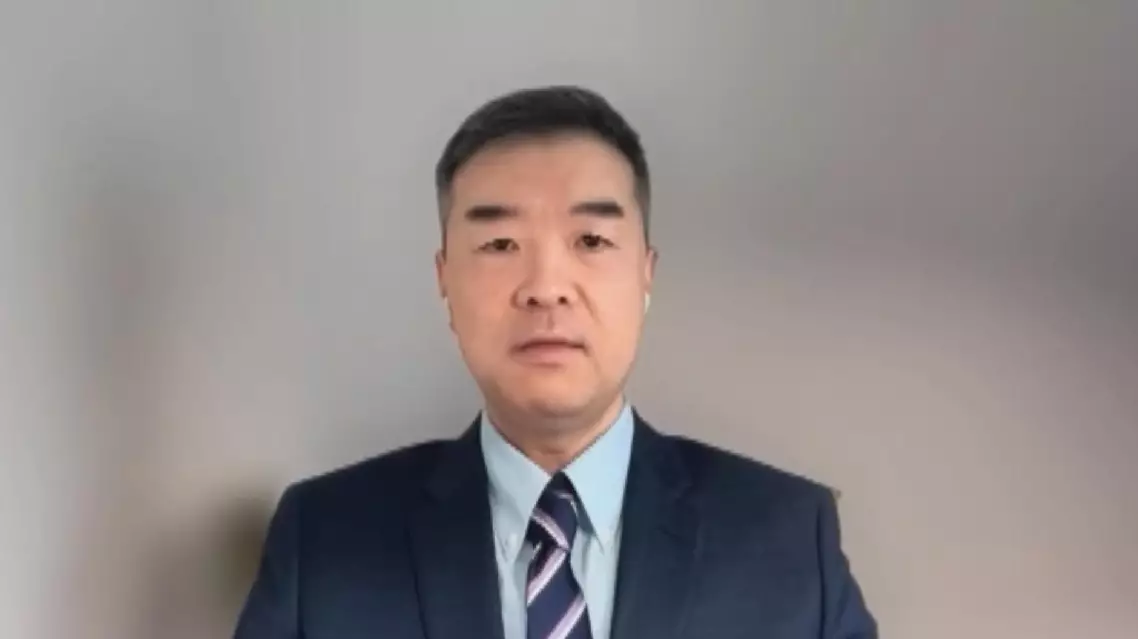
Institutional opening-up, a key topic at this year's two sessions and in the 15th Five-Year Plan, is fundamentally about establishing long-term effectiveness through systematic, nationwide efforts rather than fragmented, short-term actions, said a deputy to the 14th National People's Congress (NPC) on Friday in Beijing.

The "two sessions", a major event in China's political calendar, refer to the annual meetings of China's top legislature, the National People's Congress (NPC), and the top political advisory body, the National Committee of the Chinese People's Political Consultative Conference (CPPCC).

Peng Shou, also an academician of Chinese Academy of Engineering, explained that by developing comprehensive pilot frameworks in free trade zones like Shanghai and the Hainan Free Trade Port, China is transforming fragmented policies into cohesive systems, such as addressing processing VAT to boost high-tech industries; and exploring the expansion of models like negative lists and digital infrastructure to create a more transparent and predictable environment for global partners.

"I believe that a system is about long-term effectiveness, it's not a short-term move, and not fragmented. It's not about handling isolated cases, but about involving everyone, the whole society," said Peng.

China has built a series of comprehensive testing grounds for institutional openness.

With 22 free trade zones covering the entire country, a full-scale pilot framework has been established. Especially in free trade zones like Shanghai and the Hainan Free Trade Port, China has launched over 110 innovative, integrated pilot measures.

"Turning previous fragmented small policies into a systematic framework is key. For example, the issue of processing and value-added tax is well addressed. By incorporating processing technologies and adding value, it drives the development of high-tech industries," said Peng.

Such models could also be promoted in other regions.

Peng also said that the Hainan Free Trade Port's special customs operations can be used as a great example.

"We may apply this negative list model to some cities or development zones. Additionally, we can focus on digital infrastructure, using AI and digital technology as a foundation in cities like Beijing and Shanghai," he said.

At its core, institutional opening-up is not just about aligning with global standards; it's about creating a more open, transparent, and predictable environment that attracts global partners, according to Peng.

By embracing this new model, China is not only enhancing its position in the global market but also reshaping its own economic future, he added.

NPC deputy emphasizes long-term, systematic impact of institutional opening-up strategies

NPC deputy emphasizes long-term, systematic impact of institutional opening-up strategies

Recommended Articles