Skip to Content Facebook Feature Image

Filipino "comfort women" activist expresses opposition to Japan's participation in "Balikatan"

HotTV

HotTV

HotTV

Filipino "comfort women" activist expresses opposition to Japan's participation in "Balikatan"

2026-04-21 16:00 Last Updated At:04-22 13:34

A Filipino "comfort women" activist has expressed strong opposition to Japan's participation in the 2026 "Balikatan" exercises, which began Monday in Manila.

The drills, bringing together forces from the Philippines, the United States, Japan, Australia, Canada, France and New Zealand, sparking opposition from Filipino comfort women advocates and reviving debate over foreign troops in the country.

According to Kyodo News, Japan is sending 1,400 personnel, its largest contingent ever, to the exercises, along with three ships and two aircraft. This marks the first full participation of Japan's Self-Defense Forces (SDF) in the drills since World War II. The SDF plans to testfire a Type-88 guided missile during the exercises.

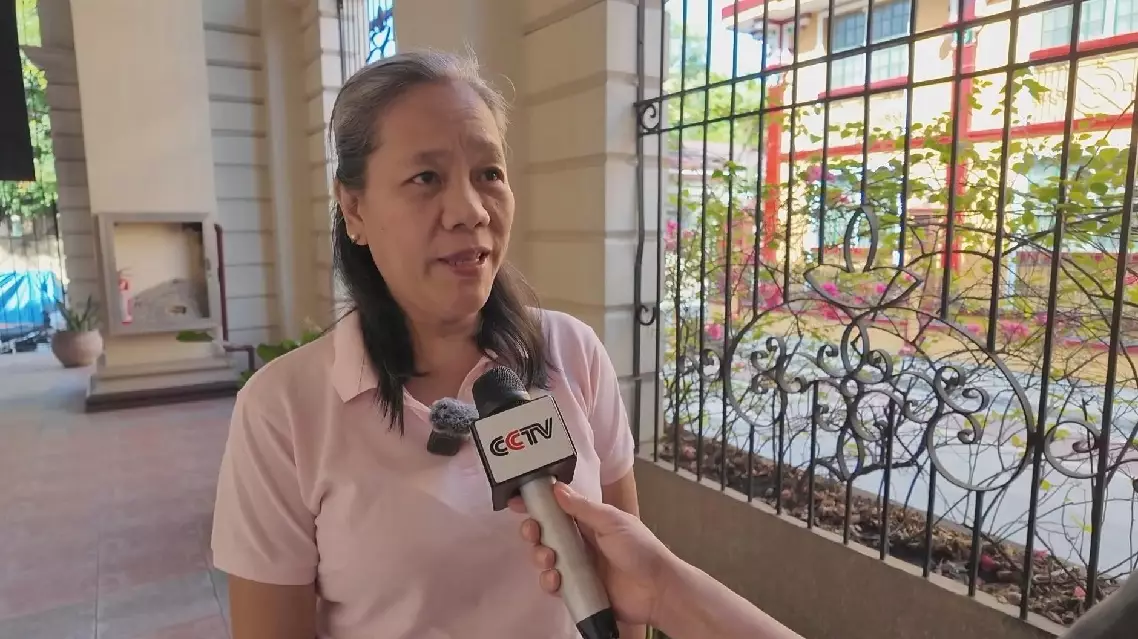
Sharon Silva, coordinator for the "Lila Pilipina" comfort women's rights organization, urged a halt to "Balikatan" exercises.

"Japan has not even atoned for the atrocities that it committed in World War II. So, now it is entering the country again for purposes of war. We do not want this. The 'Balikatan' exercises should be stopped. It should not be held in this country. We should not allow ourselves again to be used by the U.S.-led alliance and Japan to use our country as a staging ground for its war agenda anywhere in the world," said Silva.

Data shows that more than 1,000 Filipino women, dubbed "comfort women" during Japan's wartime occupation, were forced to serve as sex slaves in World War II. Only a few of the victims survive today, most of them frail and poor in their 90s. Their plight has kept alive demands for justice and apology, and groups such as Lila Pilipina say Japan's military participation in the Philippines is unacceptable until those wartime abuses are fully addressed.

The "Balikatan" drills, involving more than 17,000 troops, will run through May 8. The exercises come as the Philippines declared a national energy emergency in late March amid the Middle East conflict. At home, critics have slammed the government for permitting U.S. military presence while urging greater focus on economic recovery and improving livelihoods.
Filipino "comfort women" activist expresses opposition to Japan's participation in "Balikatan"
Filipino "comfort women" activist expresses opposition to Japan's participation in "Balikatan"
A shoe factory in Wenzhou City, east China's Zhejiang Province, has been working closely with its American partners to weather the sharp ups and downs in US tariff policies over the past year.

The city of Wenzhou is home to thousands of shoe factories, many of which focus on exports. About 1 in 12 pairs of shoes worldwide are made in the city.

Xuda Footwear in Wenzhou City, which manufactures for several major U.S. brands, saw its US orders drop about 40 percent year on year after tariff hikes began last year, according to vice general manager Lin Zhihua.

Then, despite widespread criticism and high volatility in U.S. stock markets after tariff hikes, last April, the White House clarified that the total effective tariff rate on Chinese imports had climbed to 145 percent.

The uncertainty prompted American clients to make practical adjustments. Yuan Weimin, head of Xuda Footwear's foreign trade department, said that clients asked the factory to leave retail prices blank on shoe tags, as final shelf prices in the U.S. remained unpredictable.

"The client felt the tariffs were going up and down, and were very unstable. So they started making some adjustments. For example, on the shoe price tags, we used to print the retail price. But they asked us to remove the price and just leave it blank," said Yuan Weimin, head of the foreign trade department of Xuda Footwear, as the sale price would probably be different when the shoes appeared on the U.S. shelves for customers.

Yuan said the uncertainty was also hitting the factory hard. While fearing last-minute order cancellations, Xuda continued production at the urging of its U.S. partners, who worried that halting orders would quickly empty American store shelves.

Some Americans showed solidarity with Chinese partners and chose to shoulder the risk of keeping things running. In one case, an American client paid for a large order but requested that the shoes not be shipped amid the high tariffs.

The moment of relief came in May, 2025. China and the United States reached a temporary agreement in Geneva, with U.S. tariffs on Chinese goods dropped from 145 percent to around 30 percent.

"By the end of June, production was back at scale. Because a 145 percent tariff isn't really workable for anyone," said Yuan.

Looking back on last year's turbulence, Lin said both he and his U.S. clients and partners were feeling stressed.

"It was a stressful time. Things were very unpredictable. Not just for us, but for the trading companies and the US clients too. Everyone was anxious," Lin said.

At the invitation of Chinese President Xi Jinping, U.S. President Donald Trump will pay a state visit to China from May 13 to 15.

Lin said he is looking forward to the U.S. president's visit.

"I'm actually looking forward to it. Him coming to China is in itself a sign that things might look up," said Lin.

Chinese shoe factory navigates US tariff turbulence through close partnership

Chinese shoe factory navigates US tariff turbulence through close partnership

Recommended Articles