Guests attending the World Economic Forum (WEF) Annual Meeting 2025 have praised China's role in promoting international trade and investment cooperation and its achievements in technological innovation, and green development, expressing their hopes to deepen friendly cooperation with China in these areas and many more.
In an interview with China Central Television (CCTV) in Davos, Switzerland, Said bin Mohammed bin Ahmed al-Saqri, the Omani Minister of Economy, commended China's ongoing contributions to global economic and trade cooperation, including through the Belt and Road Initiative (BRI), of which Oman was an early signatory.
"We hope Oman and China will push for global cooperation when it comes to trade and investment and bilateral trade. Oman was one of the very first countries that signed the [Belt and Road Initiative], between Oman and China. And we think this is a great initiative. It will bring about prosperity, not only to China and Oman, of course, but to the world. So, we stand behind this initiative. We think it is very important and it is very positive and useful for the rest of the world," he said.
Chakri Gottemukkala, co-founder and CEO of o9 Solutions, a leading enterprise AI software platform provider, also told CCTV that China has been a champion in innovation.
"We are already working with Chinese companies and we have global companies that have big manufacturing operations and markets in China, so we can hope to continue that partnership. I think there are a lot of innovation going on, of course, in China. And I think they recognized us as a partner who can not only bring our best practices to the equation, but also co-innovate in some areas, and that partnership is really, really fruitful for both sides," he said.
Marco Lambertini, special envoy of World Wildlife Fund International, said that China, as a leader in green tech, is poised to play a pivotal role in the global efforts to respond to climate change.
"In climate terms, it's an incredible result. Without mentioning that you have been in the early 2000s [when] the country that crashed the price of solar energy thanks to the investment that you made domestically and the export of technology abroad. China continues to steam ahead, and I think you have the chance, the opportunity, but also the responsibility, to continue to be a leader," said Lambertini, who sits on the China Council for International Cooperation on Environment and Development.
Taking place from Monday to Friday in the Swiss Alpine town of Davos, the WEF Annual Meeting 2025 gathered 3,000 attendees from over 130 countries to address key global and regional challenges, such as responding to geopolitical shocks, stimulating growth to improve living standards, and stewarding a just and inclusive energy transition.
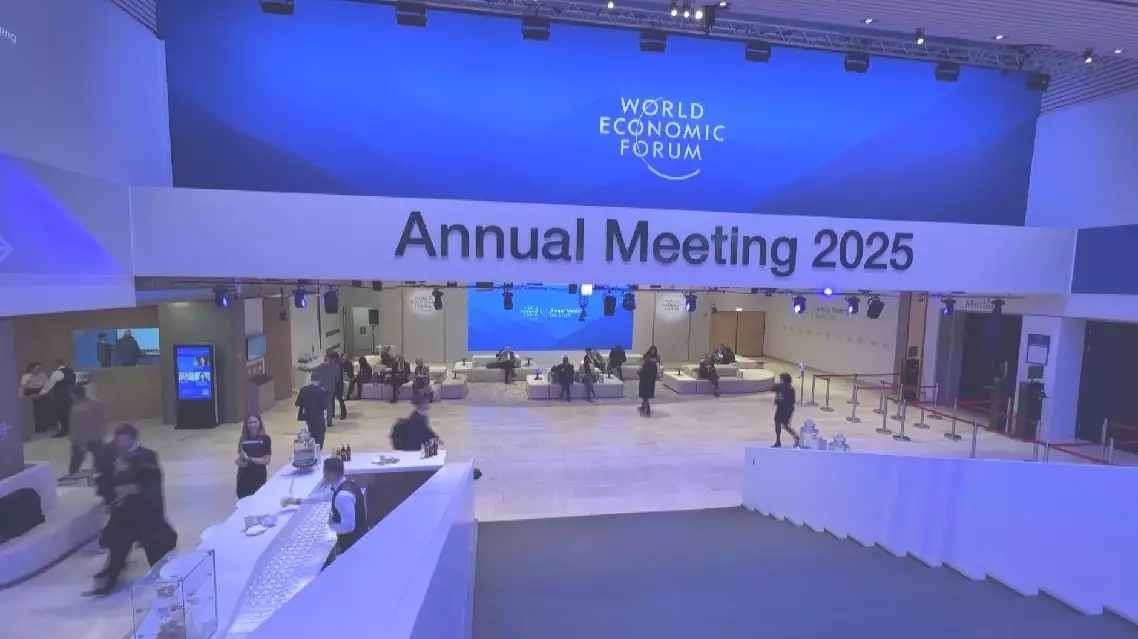
Davos 2025 attendees hope for deeper cooperation with China on trade, innovation, green tech