Paper-cuts, one of China’s oldest folk arts, carry the Chinese people’s best wishes for the upcoming Year of the Snake as they adorn homes and enhance the festive atmosphere.
This traditional craft, known as 'jianzhi,' has a long and rich history and is often used in rituals and home decoration.
As a hallmark of paper-cutting art in northern Shaanxi Province, Ansai paper-cutting is known for its simple style and diverse themes. Rich in regional character, these artworks often depict legends and scenes from daily life.
A variant of paper-cutting that originated in Yangzhou City, Jiangsu Province, is known for its refined style, featuring delicate structures and intricate shapes.
"Paper-cutting, as an art that requires sophisticated hollowing skills, is capable of telling stories about anything through a tiny piece of paper. The auspicious paper snake I made today represents longevity, abundance, good health, and good morals. I wish prosperity for our motherland and happiness and good health for our people," said Pang Jiandong, a bearer of the intangible cultural heritage of Yangzhou paper-cutting.
Yuxian paper-cutting has been passed down from generation to generation since the Ming Dynasty (1368-1644).
The representative handicraft of north China's Hebei Province is cut from Xuan paper using tiny hobby knives and then dyed in bright colors.
"We made breakthroughs in dyeing. We dye the paper-cuts by hands, combining the skills of pointillism and painting to create them," said Gao Dianliang, a bearer of the intangible cultural heritage of Yuxian paper-cutting.
Yuxian paper-cutting was listed as a UNESCO Intangible Cultural Heritage of Humanity in 2009, and works of the handicraft are sold in over 100 countries and regions worldwide.
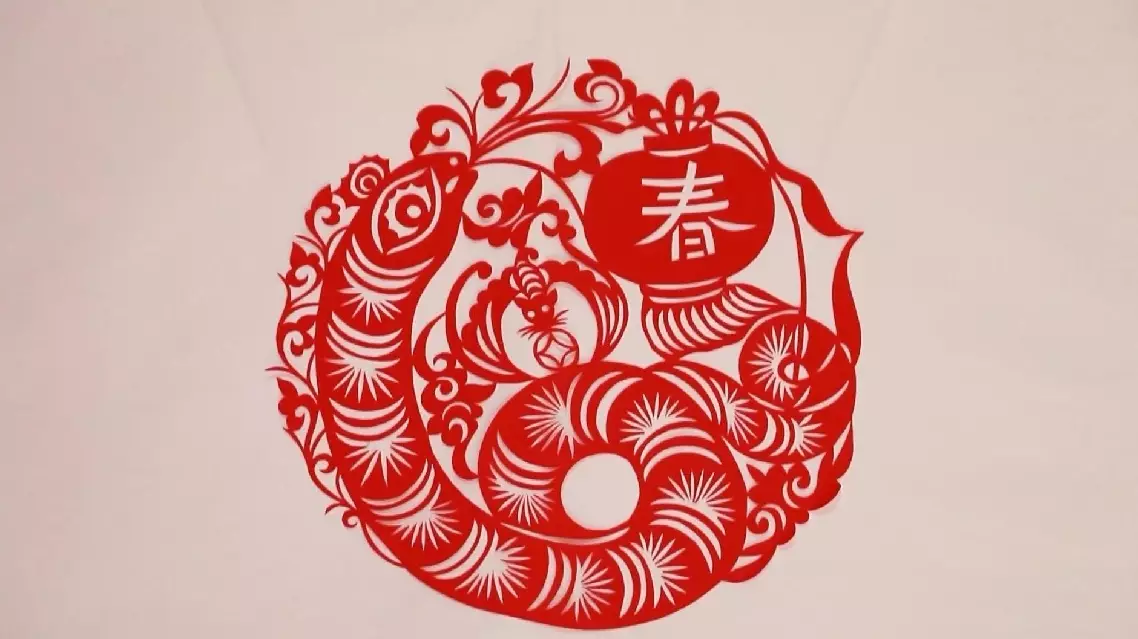
Paper-cuts convey Chinese New Year wishes, festive cheer