The upcoming 9th Asian Winter Games have boosted public enthusiasm for winter sports and tourism, contributing to the growth of China's winter economy.
Scheduled to take place from February 7 to 14, the Games will be held in Harbin, the 'Ice City' of northeast China's Heilongjiang Province.
The entire city has been decorated with themed elements, and licensed product stores are filled with tourists eager to buy souvenirs and cultural products.
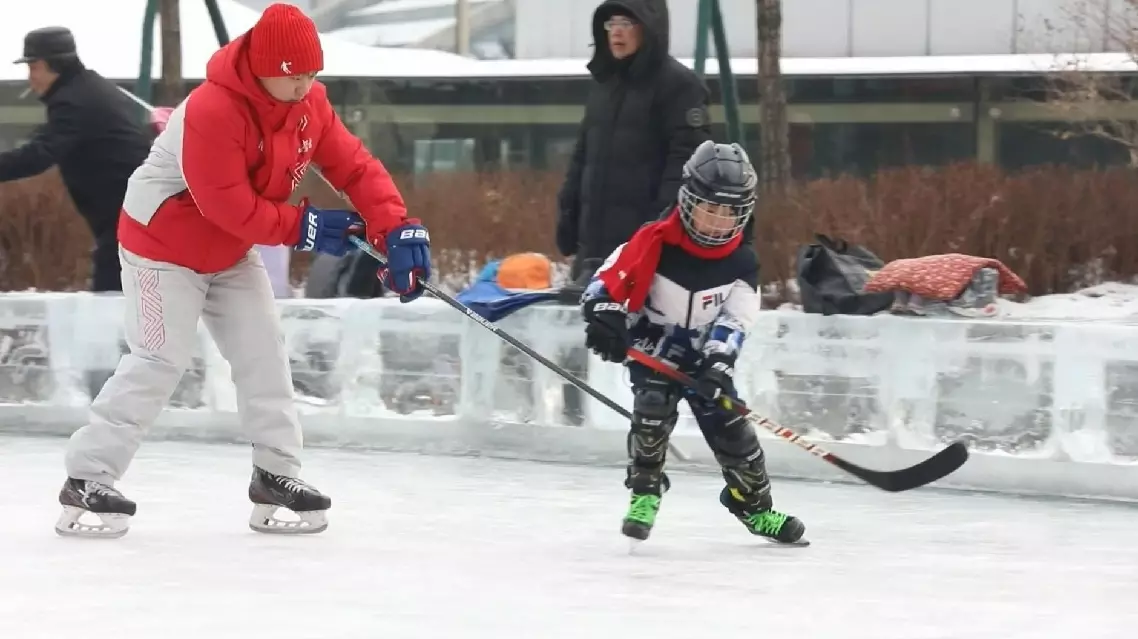
Local authorities have also opened several ice rinks to the public for free, allowing residents and tourists to enjoy the fun of ice and snow activities.
"The atmosphere of the Asian Winter Games is everywhere in the city, and there are many small ice rinks and small ski fields for citizens. Thanks to the driving effect of the Asian Winter Games, we can experience such a great atmosphere of ice and snow sports in Harbin," said resident Song Qinghua.
The impact of the grand winter sports event has extended beyond the host city.
Enshi City in central China's Hubei Province hosted a public skiing invitational featuring athletes from six provinces. Residents and tourists were given free tickets to watch and enjoy the competition.
Southwest China's Guizhou Province has launched a series of ice and snow sports activities and competitions to encourage public participation. The province has built nine ice and snow sports venues, accommodating nearly 10,000 sports enthusiasts.
Meanwhile, the ice and snow public season is in full swing in Karamay City, located in northwest China's Xinjiang Uyghur Autonomous Region, with featured events such as ice biking and ice tug-of-war gaining surging popularity.
This winter, the city attracted more than 3.6 million domestic and international visitors, marking a year-on-year increase of 17 percent. At the same time, more than 220 ice and snow tourism and event activities were held across various parts of Xinjiang.
"We have leveraged our own ice and snow advantages and coordinated the diversified development of ice and snow-related culture, sports, and tourism projects, including ice and snow culture, cuisine, scenic attractions, events, and campus ice and snow programs," said Wang Xiaojia, director of the Culture, Sports, Radio, Television, and Tourism Bureau of Karamay City.
The ice and snow craze has also driven the growth of gear manufacturers.
In Yingkou City, located in northeast China's Liaoning Province, an ice and snow sports equipment company is busy handling orders for a dozen self-developed competitive gloves. Currently, Yingkou is home to more than a dozen ice and snow equipment companies.
Meanwhile, in Ninghai County, east China's Zhejiang Province, more than 30 sports pole companies are operating at full capacity to ramp up production and meet peak shipment demands.
"Our factory used to have a low production volume during this period, so we were relatively idle. Now, the ice and snow season compensates for this low-production period, making our production more balanced throughout the year," said Lin Yueyun, sales manager at Ninghai Xingda Leisure Products Co., Ltd.
Asian Winter Games boost growth of China's winter economy