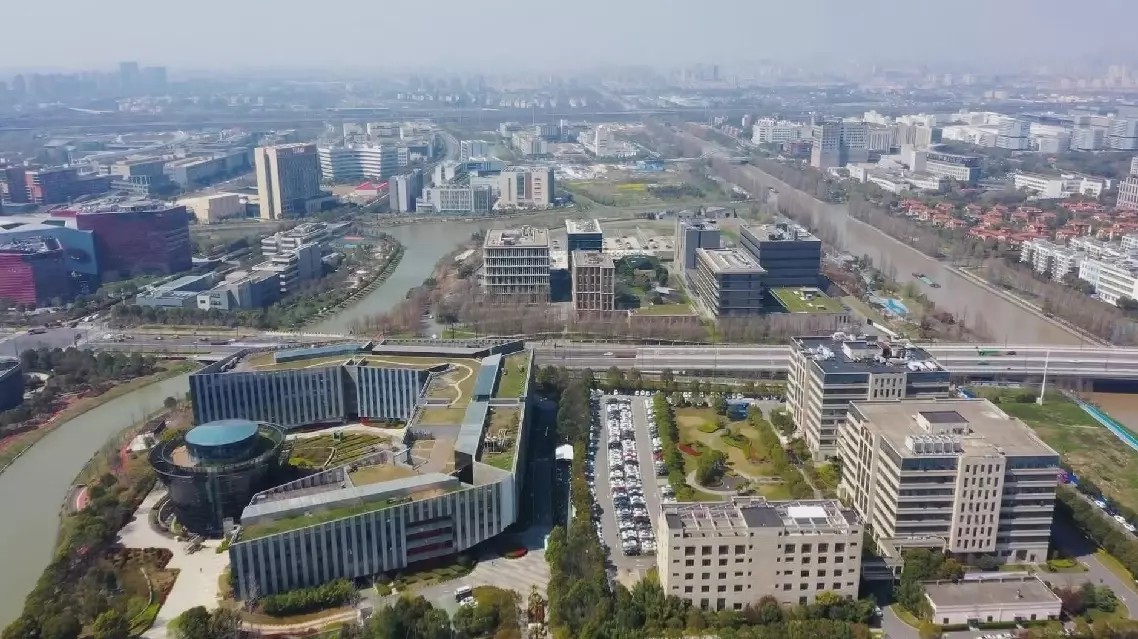
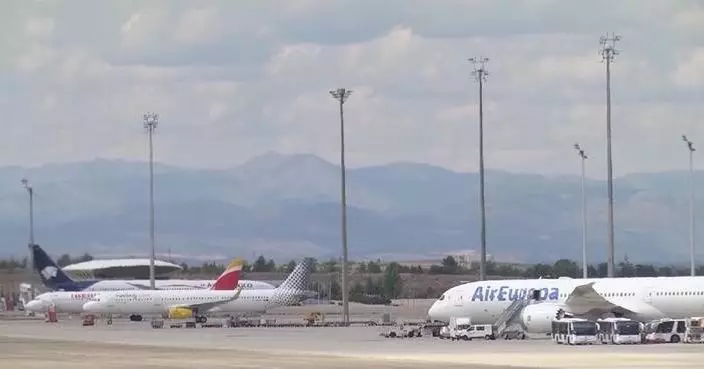
As the Chinese New Year draws near, train stations, ferry terminals and airports across the country are all packed with travelers heading home for family reunions, kicking the annual Spring Festival travel rush into high gear.
Known as Chunyun in Chinese, this travel rush is dubbed the world's largest human migration. During this 40-day period surrounding the Chinese New Year, or the Spring Festival, hundreds of millions of people crisscross the country to spend the most important holiday in China.
In Shanghai, railway stations experienced a spike in passenger flow on Saturday. The Hongqiao Station -- one of the four major railway stations in Shanghai -- alone recorded 424,200 passenger departures, a historic high. The busiest period of the day occurred between 14:00 and 15:00, when the station handled 40,000 passenger departures and arrivals within a single hour.
To accommodate the heavy flow of passengers, all the four major railway stations in Shanghai are operating their waiting rooms around the clock and have launched 199 additional train trips to meet the growing demand.
The Guangzhou-Shenzhen-Hong Kong Express Rail Link has witnessed a sharp increase in the number of cross-border travelers through Hon Kong’s West Kowloon Station, a frontier inspection station jointly administered by Hong Kong and Shenzhen.
On Friday, as early as 6:30 in the morning, the checkpoint already saw long lines of travelers eager to process their entry inspection procedures and board trains.
"I'm heading for Guangzhou South [Railway Station] on my way home for a family reunion. The subway-bullet train transfer is very convenient here [at West Kowloon Station]. Once I leave the station, it only takes about 10 minutes to clear customs and board the train," said inbound traveler Mr. Xu.
The Shenzhen General Station of Exit-Entry Frontier Inspection predicts that the total passenger flow through West Kowloon during the Spring Festival travel rush will exceed one million, with a daily average of 120,000, which is expected to hit a record high.
Cross-Strait ferry trips are also soaring. During the first 11 days of the travel rush, which kicked off on Jan 14, four ferry routes shuttling between the mainland coastal province Fujian and the Taiwan region had handled a total of 63,344 passenger trips, a surge of over 51 percent year on year.
Authorities have stepped up services, enlarging the ferry capacity and simplifying customs procedures to reduce wait times.
The tropical island province of Hainan in south China is also riding the wave of travel boom, fueled by the country’s expanded visa-free policy. The province expects 62,000 inbound passenger trips during the holiday season, a 50 percent increase compared to the same period of last year. Peak travels are anticipated on January 27, 30, 31, and February 2.
According to China Railway, the nationwide rail network handled 15.2 million passenger trips on Saturday and is expected to handle 14.55 million more on Sunday. To meet the surging demand, 2,091 additional trains are being dispatched across the country.
In addition, the Civil Aviation Administration of China announced that a total of 18,922 flights are scheduled nationwide on Sunday.
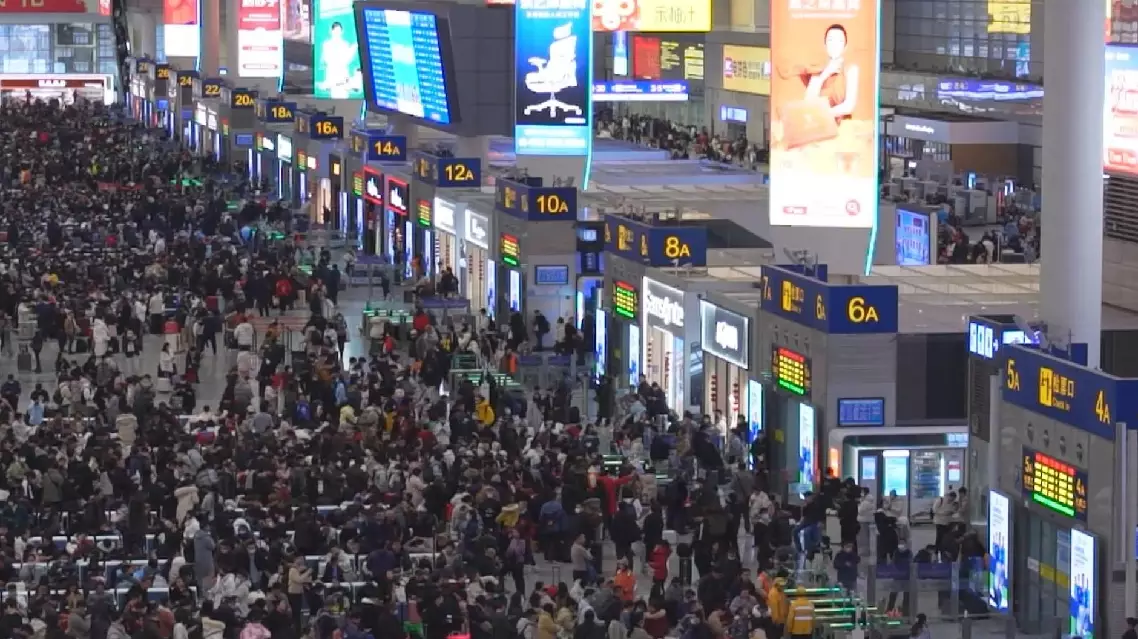
Spring Festival travel rush hits full throttle across China