NEW YORK--(BUSINESS WIRE)--Jan 27, 2025--
Algebrik AI Inc., a Delaware-incorporated company headquartered in New York City, pioneering the world's first cloud-native, AI-powered, digital-era Loan Origination Platform (LOS), today announced a strategic partnership with Auto Exam, a leading provider of vehicle service contracts, GAP insurance, and collateral protection products. This collaboration aims to revolutionize auto lending by integrating comprehensive protection solutions directly into the loan origination process, enhancing value for both lenders and borrowers.
This press release features multimedia. View the full release here: https://www.businesswire.com/news/home/20250127285961/en/
Through this partnership, financial institutions can:
Executive Perspectives
“Integrating Auto Exam’s robust protection solutions into our cloud-native, AI-powered, digital-era LOS enables auto lenders to offer unparalleled value to their borrowers,” said Pankaj Jain, Founder and CEO of Algebrik AI. “This partnership reflects our commitment to innovation and excellence in auto lending, ensuring borrowers receive comprehensive protection alongside efficient loan processing.”
“At Auto Exam, we are dedicated to providing top-tier vehicle protection products that safeguard consumers’ investments,” said Shane Vaughn, CEO of Auto Exam. “Partnering with Algebrik AI allows us to extend our reach and seamlessly integrate our solutions into the lending process, enhancing the overall borrower experience.”
Impact on Auto Lending
This collaboration underscores a shared vision to elevate the auto lending landscape by:
Algebrik AI’s Vision: Redefining Lending for a New Era
Algebrik AI was founded with a vision to transform the lending experience by addressing the challenges faced by community financial institutions. Recognizing the stagnation in lending technology over the past two decades, Algebrik set out to build a platform that bridges the gap between legacy systems and modern borrower expectations. With a foundation in cutting-edge AI and cloud-native technologies, Algebrik’s mission is to enable credit unions, auto lenders and financial institutions to reclaim their competitive edge while delivering personalized, seamless lending experiences that resonate with next-generation members.
For more information about Algebrik AI and this partnership, please visit https://www.algebrik.ai
For latest on tech & AI, follow Algebrik on Linkedin at: https://www.linkedin.com/company/algebrik-ai
Or chat with the Algebrik team at: letschat@algebrik.com
About Auto Exam:
Auto Exam is a trusted leader in vehicle service contracts and auto loan protection, committed to safeguarding financial institutions and their borrowers. With over two decades of expertise, Auto Exam provides innovative solutions designed to reduce risk, enhance loan portfolios, and deliver peace of mind to both lenders and borrowers. Their suite of products includes extended warranties, GAP insurance, and comprehensive vehicle inspection services, all tailored to meet the evolving needs of the auto lending industry. For more information, visit www.autoexam.com
About Algebrik AI
Algebrik, headquartered in New York City is the world's first cloud-native, AI-powered, digital-era Loan Origination Platform (LOS), designed for the next generation of borrowers / members. In an industry that hasn’t seen significant innovation in lending technology in over 25 years, it was high time that someone stepped in to help community financial institutions, auto lenders and financial institutions of all sizes regain their former glory. Algebrik AI’s mission is to empower lenders to attract, engage, grow, and retain next-gen members while staying competitive in today’s digital era. By transforming loan originations end-to-end, Algebrik AI takes on the heavy lifting, allowing lenders to focus on helping the borrowers / members & communities they serve. For more information, visit www.algebrik.ai

Algebrik and Auto Exam Announce Partnership to Transform Auto Lending (Graphic: Business Wire)
ST. PETERSBURG, Fla. (AP) — Taylor Walls stabbed at Brice Turang's sharp grounder and felt it glance off his glove.
“Knife in the chest,” the Tampa Bay Rays shortstop said.
Tampa Bay's first World Series game at Tropicana Field in 18 years turned into a record-setter for Brewers batters.
Milwaukee became the first team to score eight runs with two outs in a World Series inning, routing the Rays 10-1 on Monday night to take a 3-0 lead in the best-of-seven series.
Turang's two-run single was the second of a postseason-record seven straight two-out hits against starter Freddy Peralta and relievers Cam Booser and Cole Sulser.
Milwaukee turned a 2-0 lead into a 7-0 advantage with hits on three straight pitches by Turang, Garrett Mitchell and Cooper Pratt. The Brewers went on to score eight runs in a 17-pitch span to open a 10-run advantage. Jackson Chourio had a single and a double in the inning, part of his four-hit night.
"Worst feeling in the world, feeling like you let your team down,” a downcast Booser said in the quiet Tampa Bay clubhouse.
Among 25 previous teams that fell behind 3-0 in a World Series, 21 were swept and four lost in five games. Of 43 teams to trail 3-0 in any best-of-seven postseason matchup, only the Boston Red Sox against the New York Yankees in the 2004 American League Championship Series rebounded to win.
“It’s kind of that chip and a chair mentality," Rays manager Kevin Cash said. “We’ve got a seat at the table. We’ve got to do something with the chip. Obviously the only thing we can do is win tomorrow.”
Coming off a pair of one-run wins at American Family Field, the Brewers took a 2-0 lead in the third when Christian Yelich and William Contreras hit opposite-field, one-out RBI singles on consecutive pitches.
“They were very disciplined at the plate,” Peralta said. “Just tried to hit the ball the other way.”
Chourio singled with one out in the fifth and Christian Yelich walked with two outs. Contreras grounded to third and Junior Caminero threw to second as umpire Dan Bellino signaled a forceout. But the call was reversed in the New York replay operations center by umpire Alfonso Márquez, giving Contreras an infield single that loaded the bases.
Caminero may have had a better chance of throwing out Contreras at first base.
“I knew the speed at first base wasn’t necessarily the best in that situation,” Caminero said through a translator. “So going into the moment, once I got the groundball I was going to second base all the way.”
Booser relieved and Turang’s 106 mph one-hopper hit the dirt just past the infield grass, bounced off Walls' glove and into short center field.
“I’d like to have that one back. Those are plays that you’d like to make, that you expect to make even though they may be on the tougher end,” Walls said. “That was pretty much the turning point in the game there.”
Walls dropped to a knee and held out his glove at shoulder level trying to make what would have been an excellent stop, then tumbled as the ball bounced past him.
“You just try to get your eyes as close to where the ball is going to be, the height of the hop,” he said. “Ideally, I guess if you want to talk about fractions, if you can get your glove behind the ball and work more backwards you have a better chance to make the play than if you’re slightly above it having to kind of work down a little bit, which is where I kind of felt I was.”
Mitchell grounded an opposite-field RBI single through the shortstop hole vacated with Walls shifted toward second for the left-handed batter. Pratt followed with a smash off the glove of a diving Caminero that rolled into the left-field corner for a two-run double.
Sal Frelick sliced an opposite-field double that hit the wall on a hop in the left-field corner, scoring Pratt and chasing Booser.
David Hamilton greeted Sulser by lining a shoulder-high fastball into center for a run-scoring single and a 9-0 lead. Chourio then lofted an opposite-field RBI double that hit just in front of the warning track.
Boston set the previous Series high of seven runs with two outs in the fifth inning of the 2007 opener against Colorado, a feat matched three years later by San Francisco in the eighth inning of Game 2 against Texas, according to the Elias Sports Bureau. The Los Angeles Dodgers were the only prior team with eight two-out runs in any postseason inning, scoring 10 with two outs in the first inning of Game 3 against Atlanta in the 2020 NL Championship Series.
Griffin Jax said he'll put the Series deficit out of his mind when he starts Game 4 on Tuesday.
“We just got our butts kicked tonight. I don’t think there’s really much else to say,” Jax explained. “We’ll just kind of forget it and try to sleep it off and come back tomorrow ready to fight.”
See AP’s full MLB coverage here
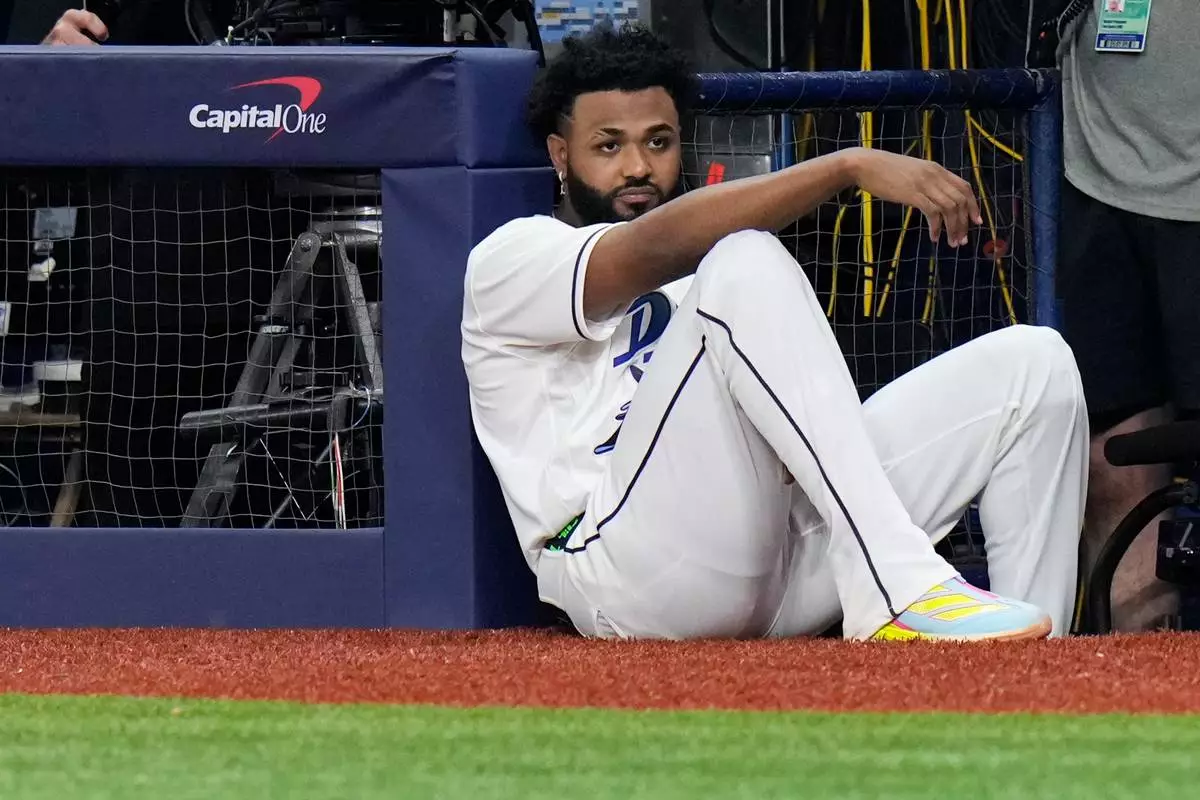
Tampa Bay Rays third baseman Junior Caminero watches from the dugout during the eighth inning of Game 3 of baseball's World Series, Monday, Oct. 26, 2026, in St. Petersburg, Fla., between the Milwaukee Brewers and the Tampa Bay Rays. (AP Photo/Chris O'Meara)
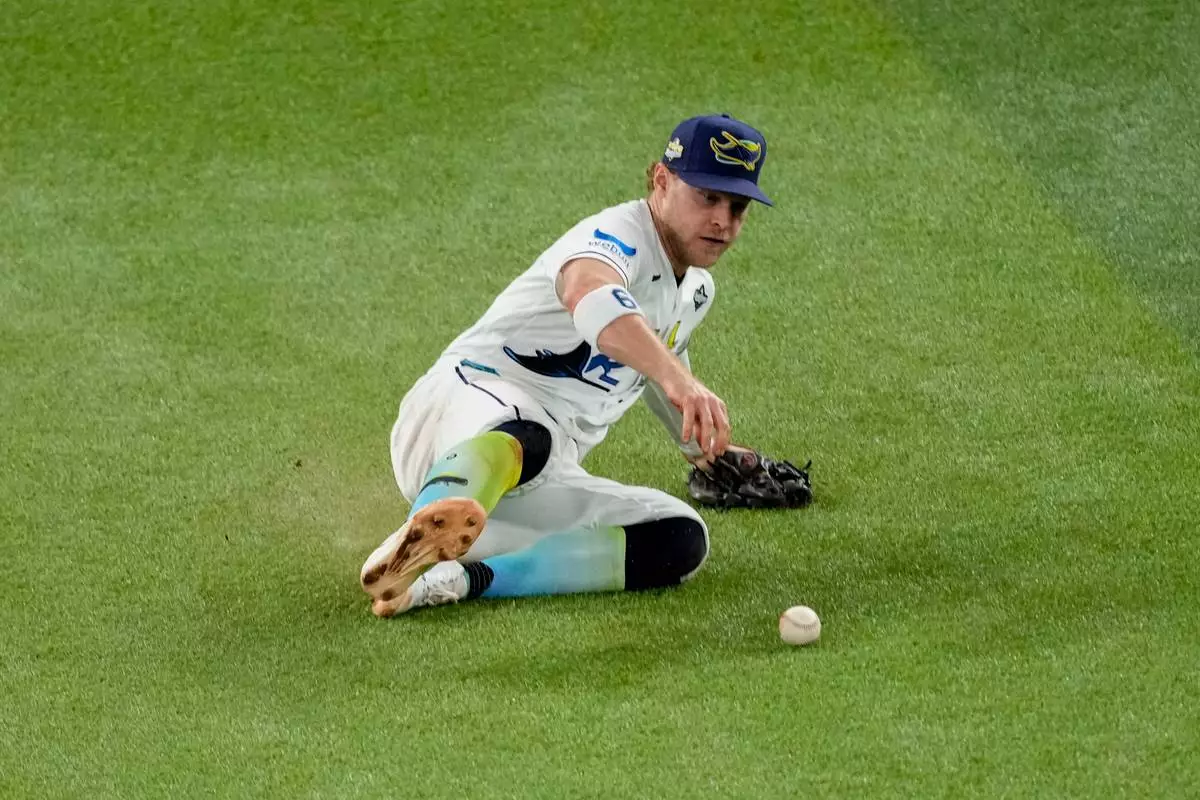
Tampa Bay Rays shortstop Taylor Walls fields a two-RBI base hit by Milwaukee Brewers second baseman Brice Turang during the fifth inning of Game 3 of baseball's World Series, Monday, Oct. 26, 2026, in St. Petersburg, Fla., between the Milwaukee Brewers and the Tampa Bay Rays. (AP Photo/Morry Gash)
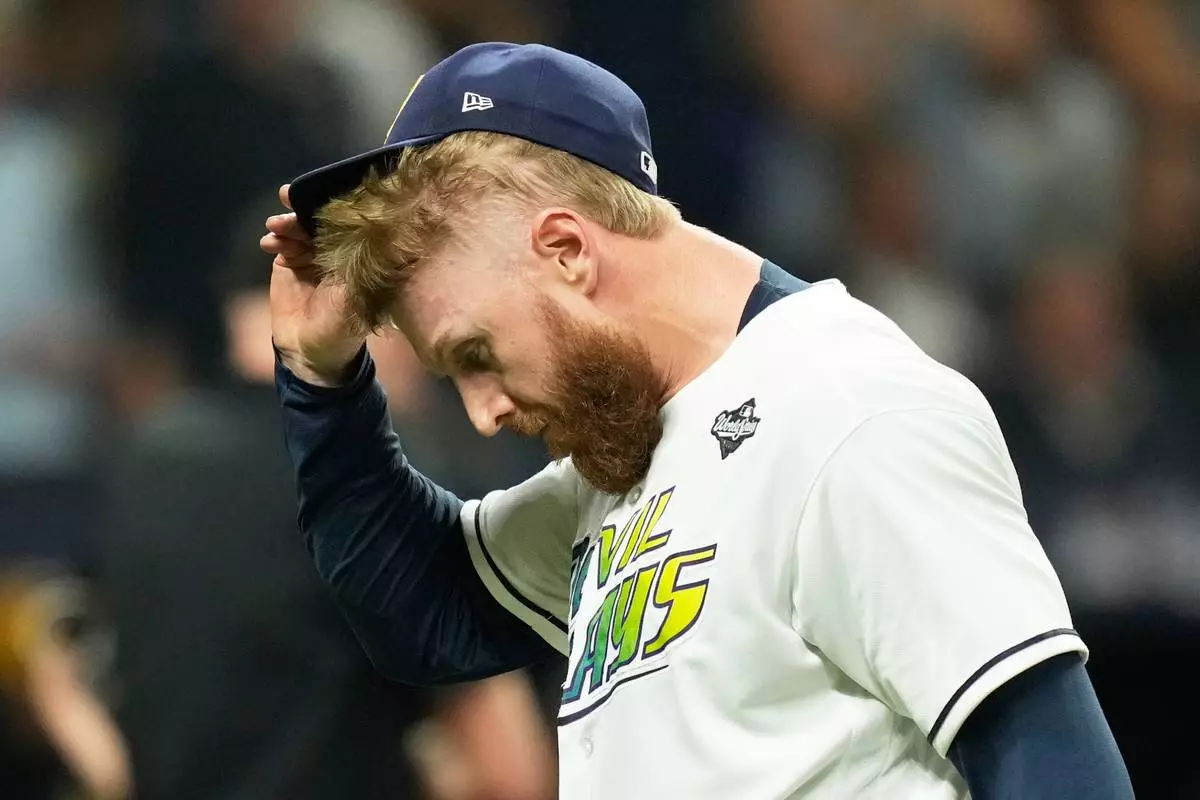
Tampa Bay Rays pitcher Cam Booser leaves the game during the fifth inning of Game 3 of baseball's World Series, Monday, Oct. 26, 2026, in St. Petersburg, Fla., between the Milwaukee Brewers and the Tampa Bay Rays. (AP Photo/Ashley Landis)
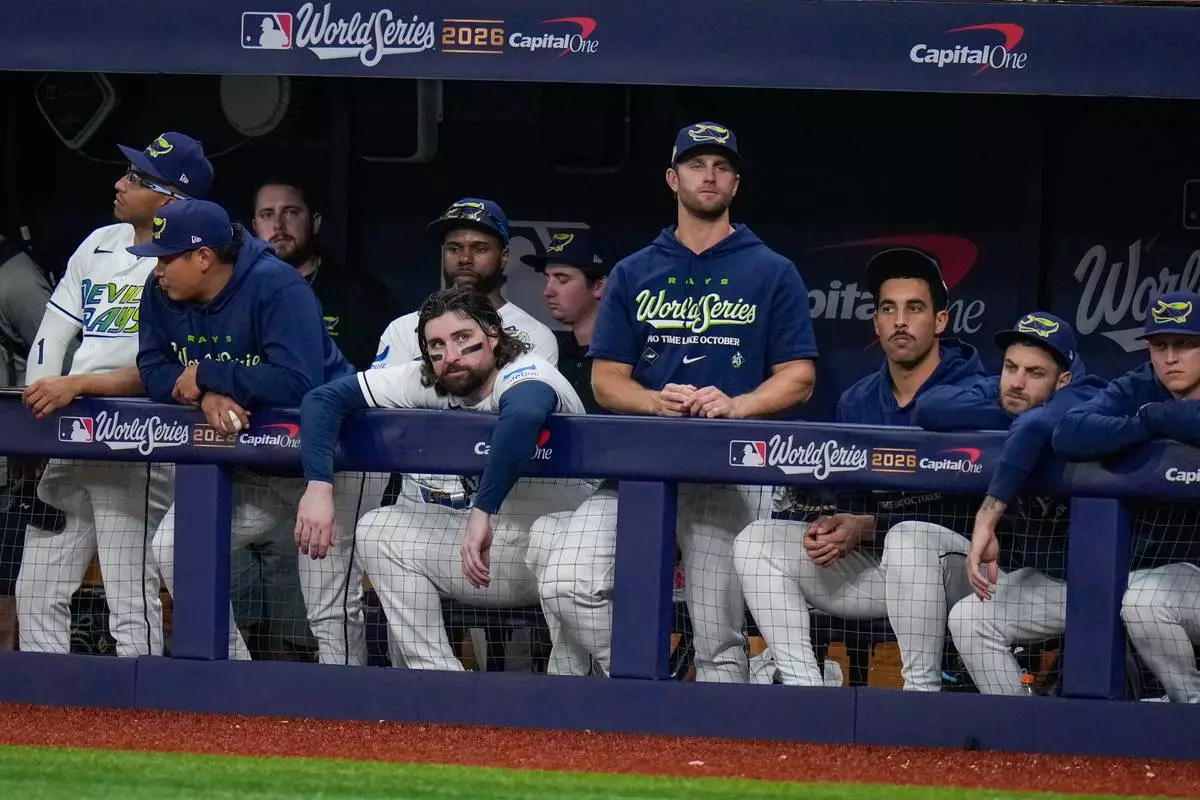
Tampa Bay Rays players watch from the dugout during the fifth inning of Game 3 of baseball's World Series, Monday, Oct. 26, 2026, in St. Petersburg, Fla., between the Milwaukee Brewers and the Tampa Bay Rays. (AP Photo/Chris O'Meara)
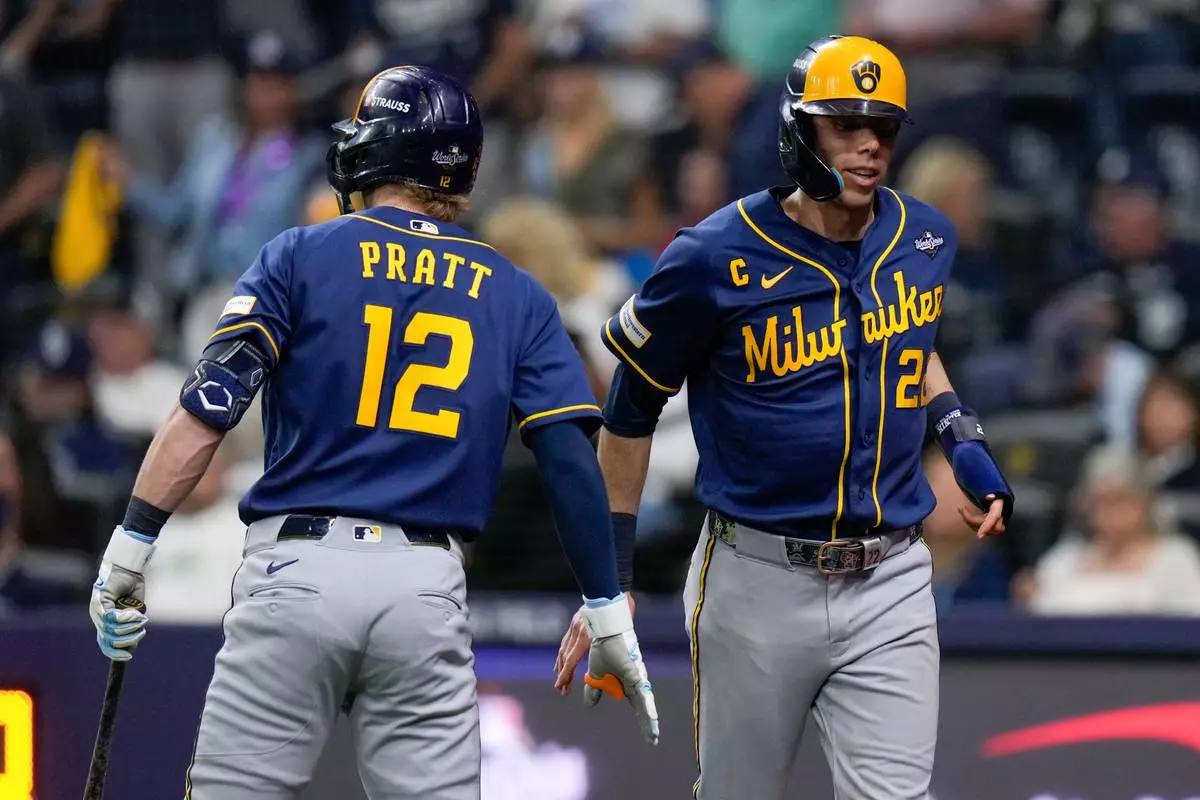
Milwaukee Brewers designated hitter Christian Yelich celebrates scoring with shortstop Cooper Pratt (12) off a base hit by second baseman Brice Turang during the fifth inning of Game 3 of baseball's World Series, Monday, Oct. 26, 2026, in St. Petersburg, Fla., between the Milwaukee Brewers and the Tampa Bay Rays. (AP Photo/Chris O'Meara)
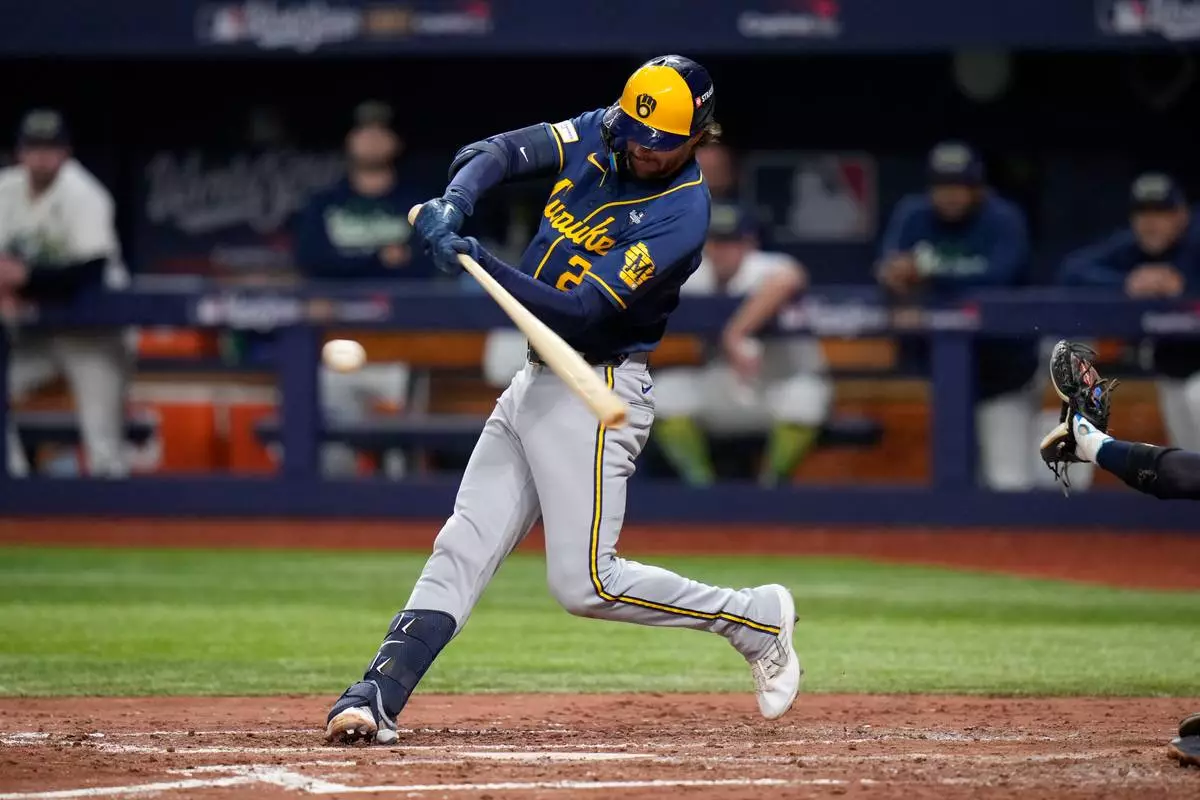
Milwaukee Brewers second baseman Brice Turang connects for a two-RBI base hit during the fifth inning of Game 3 of baseball's World Series, Monday, Oct. 26, 2026, in St. Petersburg, Fla., between the Milwaukee Brewers and the Tampa Bay Rays. (AP Photo/Chris O'Meara)
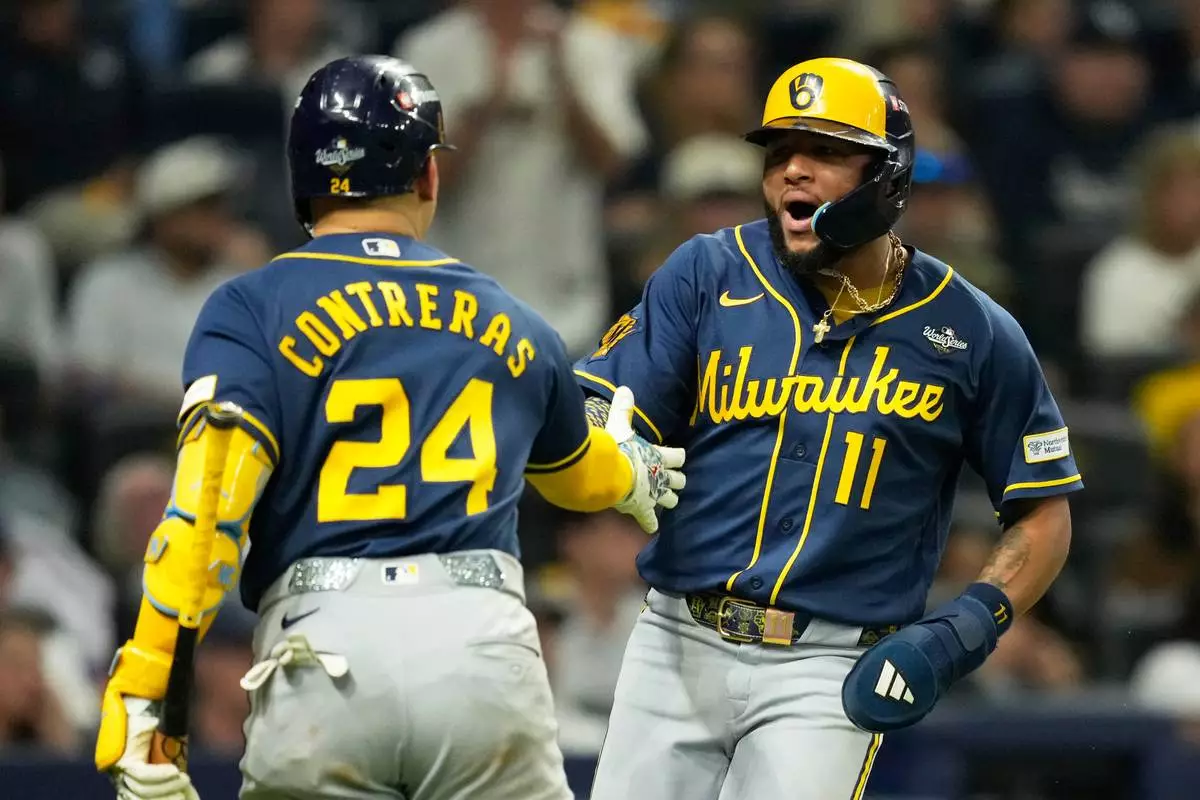
Milwaukee Brewers' Jackson Chourio (11) celebrates after scores on a hit by Christian Yelich during the third inning of Game 3 of baseball's World Series, Monday, Oct. 26, 2026, in St. Petersburg, Fla., between the Milwaukee Brewers and the Tampa Bay Rays. (AP Photo/Ashley Landis)
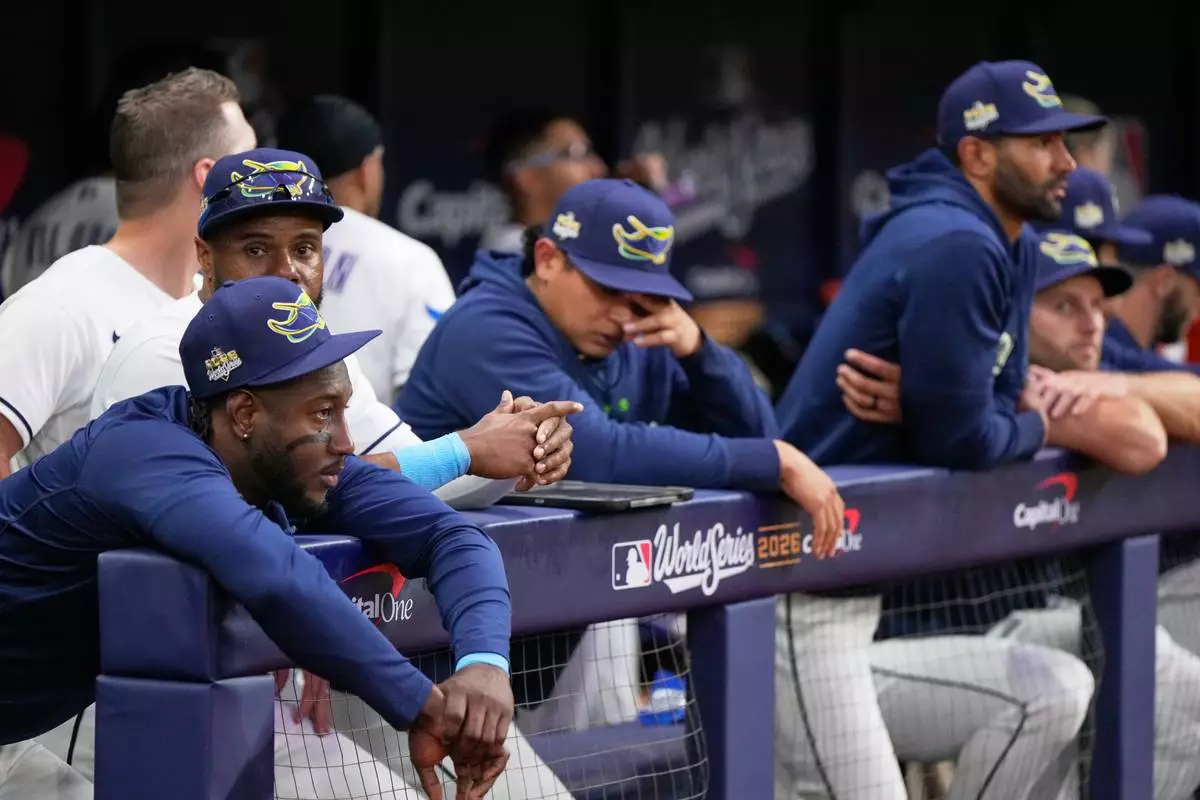
Members of the Tampa Bay Rays watch during the seventh inning of Game 3 of baseball's World Series, Monday, Oct. 26, 2026, in St. Petersburg, Fla., between the Milwaukee Brewers and the Tampa Bay Rays. (AP Photo/Ashley Landis)