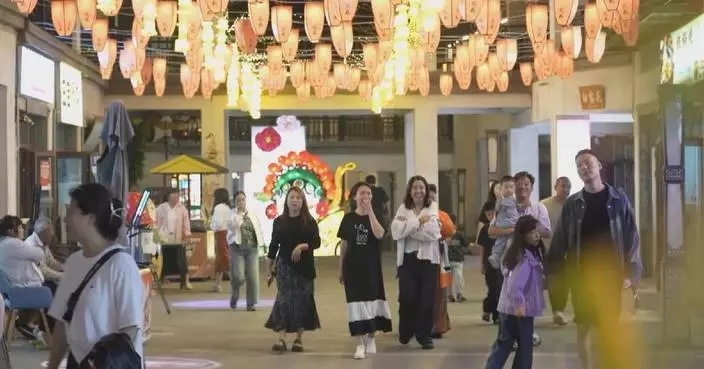
Lhasa City in southwest China's Xizang Autonomous Region on Tuesday presented a rich tapestry of performances with ethnic features, intangible cultural heritage, and folk traditions as it served as one of the host cities for the Spring Festival Gala.
Hosted by the China Media Group (CMG), the gala this year features four sub-venues in addition to the main stage in Beijing, namely Chongqing Municipality, Lhasa City in Xizang Autonomous Region, Wuhan City in Hubei Province, and Wuxi City in Jiangsu Province.
Click to Gallery
Lhasa sub-venue displays ethnic culture with spellbinding performances
Lhasa sub-venue displays ethnic culture with spellbinding performances
Lhasa sub-venue displays ethnic culture with spellbinding performances
Lhasa sub-venue displays ethnic culture with spellbinding performances
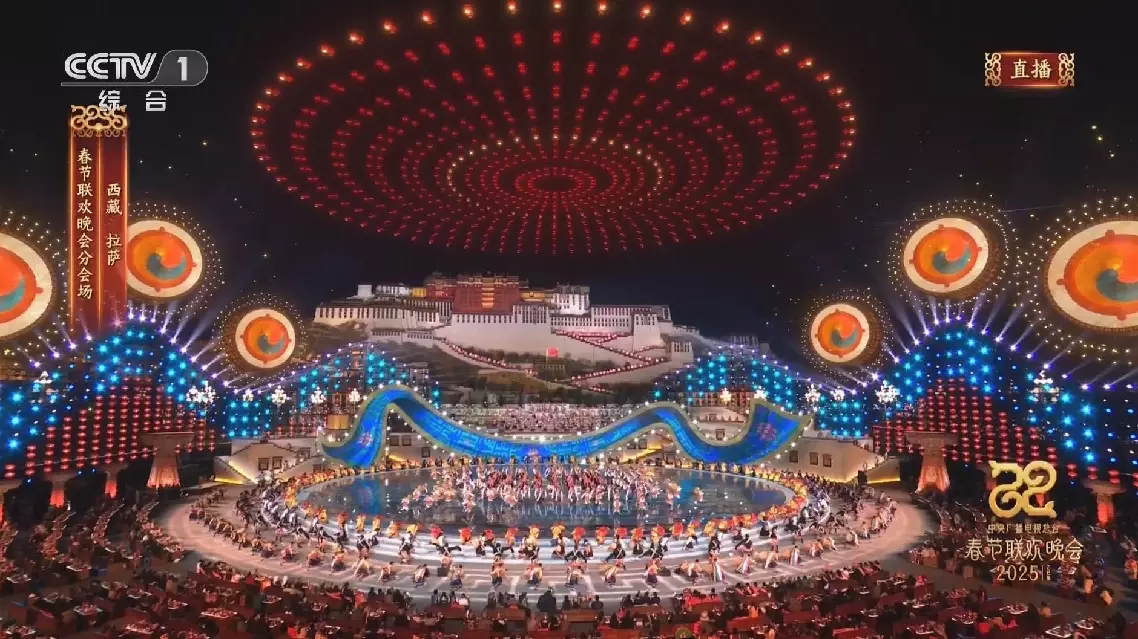
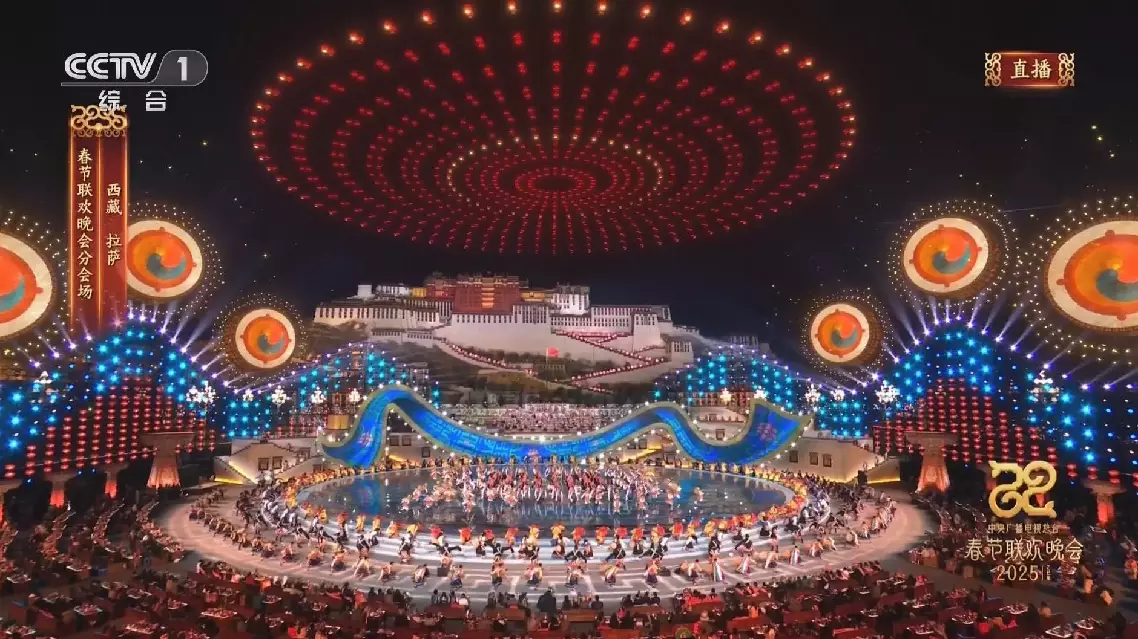
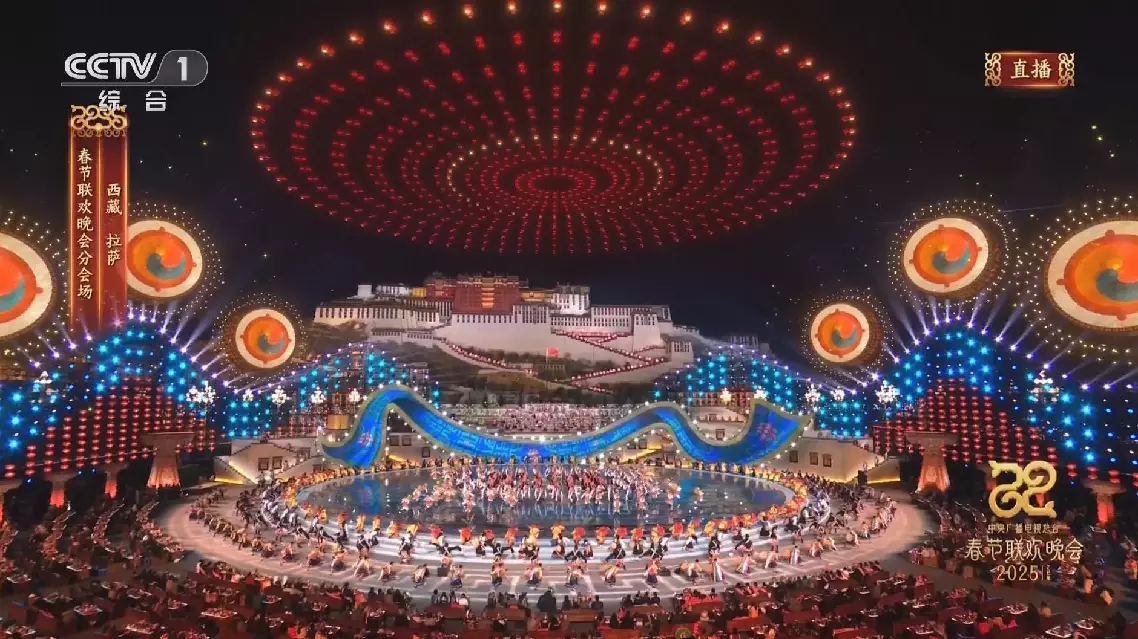
Lhasa is a 1,300-year-old ancient city situated on a snow-covered plateau, making it one of the highest cities in the world. The sub-venue's main stage, set up in front of the famous Potala Palace, offered a spectacular backdrop for the cultural showcase.
The performances in Lhasa seamlessly blended intangible cultural heritage with folk traditions, combining both traditional and modern elements. Leading the show was 88-year-old Tibetan soprano Tseten Dolma, who conducted a youth chorus alongside young soprano Baima Tsomo in a stirring rendition of the folk song "Serf, Arisen, Sing in Praise."
Other performances included the song "Eternal Blessings," led by actress Liu Tao and Tibetan singer Tsering Lhamo. Pop singer and dancer Liu Yu joined Tibetan artists in the lively performance of "Tashi Delek," which is a traditional Tibetan greeting.
To conclude the show on a high note, pop singers and dancers Hou Minghao, Wang Xingyue, and He Luoluo teamed up with Tibetan singer Zahi Bing Zo to perform "Dance On, Lhasa," bringing the evening to a rousing climax.
A standout moment of the evening was a performance of 'Lazi Duixie', a traditional type of tap dance from Xizang's Lazi County, which is recognized as a national intangible cultural heritage. The rhythmic dance left the audience spellbound, showcasing the region's rich cultural traditions.
The gala also paid tribute to those impacted by the deadly earthquake which struck Xizang's Dingri County last month, extending blessings and good wishes to residents who have been resettled in the affected areas.
The gala, also known as "Chunwan", was first broadcast back in 1983 and is seen as a major cultural symbol for the traditional Spring Festival celebrations in China.
Recognized by the Guinness World Records as the world's most-watched annual TV program, the hours-long television extravaganza attracts over a billion views every year.
The Spring Festival, or the Chinese New Year, falls on Wednesday this year, ushering in the Year of the Snake.
Lhasa sub-venue displays ethnic culture with spellbinding performances
Lhasa sub-venue displays ethnic culture with spellbinding performances
Lhasa sub-venue displays ethnic culture with spellbinding performances
Lhasa sub-venue displays ethnic culture with spellbinding performances
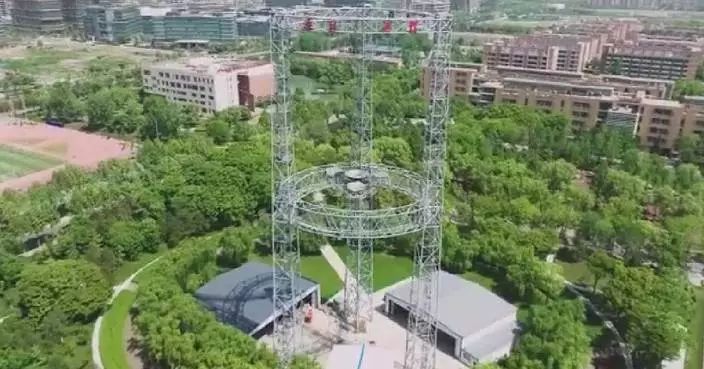
Major breakthroughs by Chinese scientists have laid the foundation for a future where space-based solar power stations are capable of wirelessly transmitting energy to Earth and spacecraft, though significant engineering problems remain.
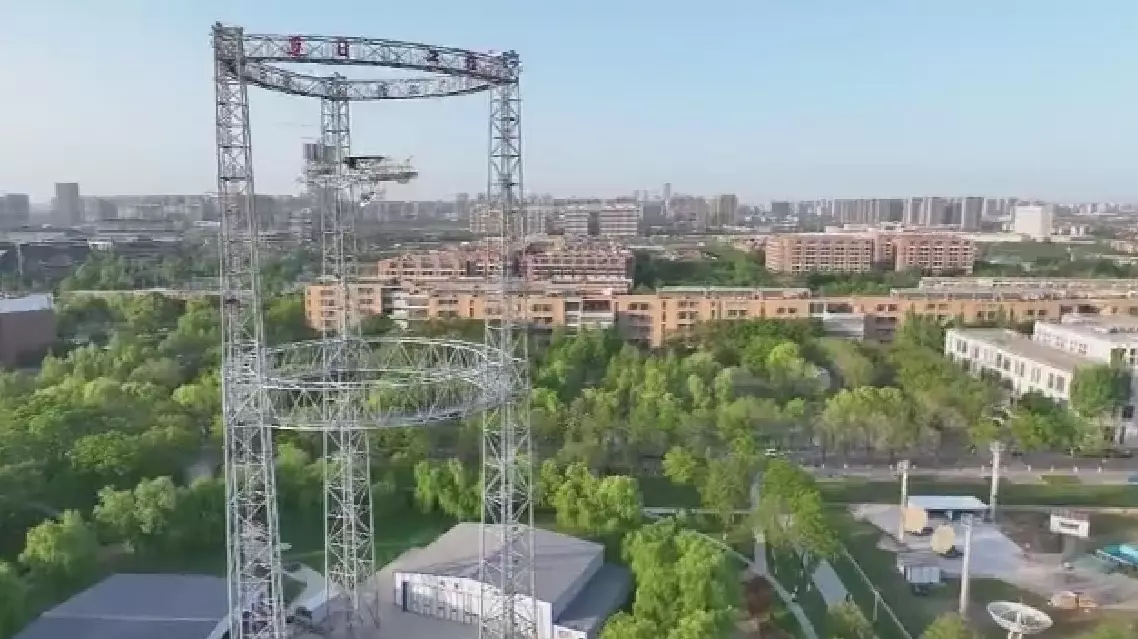
A research team from Xidian University in northwest China's Shaanxi Province has made significant progress on the Sun Chasing project, or "Zhuri" in Chinese. The team has developed a ground-based test system for wireless power transmission that can charge multiple moving targets at the same time.
In recent tests, the system achieved a wireless power transmission efficiency of 20.8 percent from direct current to direct current over a distance of 100 meters. It delivered 1,180 watts of power. The team has also built a wireless charging system for drones. In a test, a drone flying at 30 kilometers per hour was able to receive 143 watts of stable power from 30 meters away.
A space solar power station works exactly as its name suggests: a huge array of solar panels placed in orbit. It would collect sunlight in space, where the sun always shines, and then convert that energy into microwaves or lasers to beam down to Earth or directly to satellites and spacecraft. This could address two significant issues: supplying uninterrupted power for space missions and alleviating energy shortages on the ground.
"The construction of space solar power stations could become a major undertaking in the future. One potential benefit is access to a virtually unlimited power supply. Because energy can be collected continuously in space 24 hours a day, electricity could be supplied on an uninterrupted basis," said Fan Guanheng, an associate professor at the School of Mechano-Electronic Engineering at Xidian University.
"Secondly, it could reduce our dependence on fossil fuels, thereby lowering carbon emissions and helping protect the environment. Thirdly, it could support the development of charging infrastructure in space and enable wireless microwave charging for spacecraft, changing the way power is supplied to space vehicles," the professor added.
In 2018, the research team launched the first phase of the Sun Chasing project to build a ground test system. By June 2022, they had completed the world's first full-link, full-system ground validation system for a space solar power station. Now, the team has moved to phase two. The goal now is to solve the challenges of generating high power in space and transmitting it efficiently over long distances.
According to Duan Baoyan, an expert at Xidian University and an academician of the Chinese Academy of Engineering, recent breakthroughs include improving the efficiency of solar energy collection and conversion, increasing the precision of microwave beam control to reduce energy loss, and making the transmitting and receiving antennas smaller and lighter, which is critical for space application.
The team has also solved the problem of how to power multiple moving targets at once using a single transmitter. This means that in the future, one space power station could potentially supply electricity to several satellites or ground vehicles at the same time, Duan said.
Despite the advances in ground-based validation, a series of technical challenges must still be overcome before the technology can be deployed in space.
"The first issue that needs to be addressed is the adaptability of components to the space environment, as conditions in space are completely different from those on Earth, including radiation exposure and extreme temperatures. Another challenge involves the deployment and retraction design of transmitting and receiving antennas. We also need to develop thermal management systems to cope with extreme temperatures and temperature fluctuations in space. These are all areas where further breakthroughs are needed," said Qian Sihao, an associate professor at the School of Mechano-Electronic Engineering at Xidian University.
"We have now completed the development and validation of a ground-based test system, and our next step is to carry out in-orbit wireless microwave power transmission," Fan said.
With ground validation complete, the team now turns its attention to overcoming the harsh realities of space, aiming to demonstrate in-orbit wireless power transmission and bring the vision of orbital solar energy closer to reality.
Space-to-earth solar power moves closer to reality although hurdles remain: scientists