
CHARLESTON, W.Va. (AP) — A West Virginia couple accused of neglect and forced labor involving their adopted children was convicted by a jury on Wednesday after eight hours of deliberations.
Jeanne Kay Whitefeather and Donald Ray Lantz went on trial in mid-January and each faced over a dozen counts, including forced labor, civil rights violations, human trafficking and child neglect.
The couple, who are white, were accused of mistreating their children — all of whom are Black — by locking them in a shed, forcing them to sleep on the floor and use buckets as toilets, and more.
The Kanawha County Circuit Court jury convicted Whitefeather on all 19 counts against her, including the civil rights violations. Lantz was found guilty on 12 counts out of 16. He was acquitted of four counts of civil rights violations. Both showed little emotion as the verdict was read.
Kanawha County Prosecuting Attorney Debra Rusnak said she cried as she heard the word “guilty” repeated again and again.
“These cases mean a lot to us — we take a lot of this personally," she said at a news conference afterward. "This is our community, and these are the children of our community. If we’re not going to fight for them, then who will?”
Whitefeather and Lantz adopted the five siblings while living in Minnesota, moved to a farm in Washington state in 2018, and then brought the family to West Virginia in May 2023, when the children ranged in age from 5 to 16.
The couple was arrested in October 2023 after neighbors saw Lantz lock the oldest girl and her teenage brother in a shed and leave the property. A deputy used a crowbar to get them out.
Inside the main residence, a 9-year-old girl was found alone crying in a loft with no protection from falling, according to a criminal complaint. A fourth child was with Lantz when he eventually returned. Deputies were later led to the couple’s youngest daughter.
The children were found in dirty clothes and smelling of body odor, deputies said, and the eldest boy was found barefoot with what appeared to be sores on his feet.
All five were turned over to Child Protective Services after the couple's arrest.
During the trial, neighbors in Sissonville testified they never saw the children play and witnessed Lantz make them stand in line or perform difficult chores around the yard, including lifting heavy items. After Lantz noticed the curious neighbors, the children mostly stayed indoors.
The couple’s eldest daughter, now 18, testified that the outdoor work occurred mostly in Washington and that some of them were forced to use their hands for digging.
She also said the children were fed a steady diet of peanut butter sandwiches at scheduled times, some left over from a previous meal. Some kids were forced to stand in their rooms for hours and keep their hands on their heads. The oldest girl and boy shared a room, including the same bucket for using the bathroom while the other held up a sheet for privacy.
The couple and their attorneys pushed back on the accusations, with Lantz testifying that the chores were assigned to teach the children responsibility.
Whitefeather called the shed the children were found in a “teenager hangout” and said the teens had access to a key and were free to leave as they pleased.
Whitefeather’s attorney said the oldest boy had attempted to run away from home and the lock on the shed was meant to keep him from trying again.
Testimony showed the children didn’t know where a key was — detectives found one out of sight on a cabinet in the shed.
Prosecutors said the couple’s tactics were less about teaching responsibility and instead about control.
“The whole point of treating them this way is they become less than human,” Kanawha County Assistant Prosecutor Chris Krivonyak said.
Krivonyak added, “How do you do that to someone you love?”
Prosecutors also entered racist text messages into evidence that they said were from Whitefeather, who denied writing them. The oldest daughter testified the children were cursed at “all the time” and that Whitefeather used racist language.
Whitefeather also refused to eat off the same plates used by the children, whom she referred to as “dirty,” the girl testified.
“You want to know what racists look like?” Assistant Prosecutor Madison Tuck asked the jury, then pointed to the defendants. “Look at them.”
The defense argued the couple was simply overwhelmed with trying to get help for the children’s mental health issues, abuse and trauma from their biological home.
Lantz’s attorney, John Balenovich, said the state’s child welfare agency, which the family requested help from several times, “dropped the ball the most in this case.”
Tuck said the couple never sought help for the oldest boy despite a behavioral health clinic being just minutes from their home.
A forensic psychologist for the prosecution testified that the couple’s treatment of the children had worsened their conditions.
The eldest boy, whose physical altercation with Whitefeather in 2022 was cited by attorneys as the start of the family’s internal struggles, currently is receiving full-time care in a psychiatric facility.
Whitefeather’s attorney, Mark Plants, said during closing argument that the couple was only guilty of making poor parenting decisions.
“These are farm people that do farm chores,” Plants said. “It wasn’t about race. It wasn’t about forced labor.”
Whitefeather faces a maximum of 215 years in prison while Lantz could receive up to 75 years in prison.
The couple will return to Kanawha County Circuit Court for sentencing on March 19.
Associated Press reporter Leah Willingham contributed to this report.
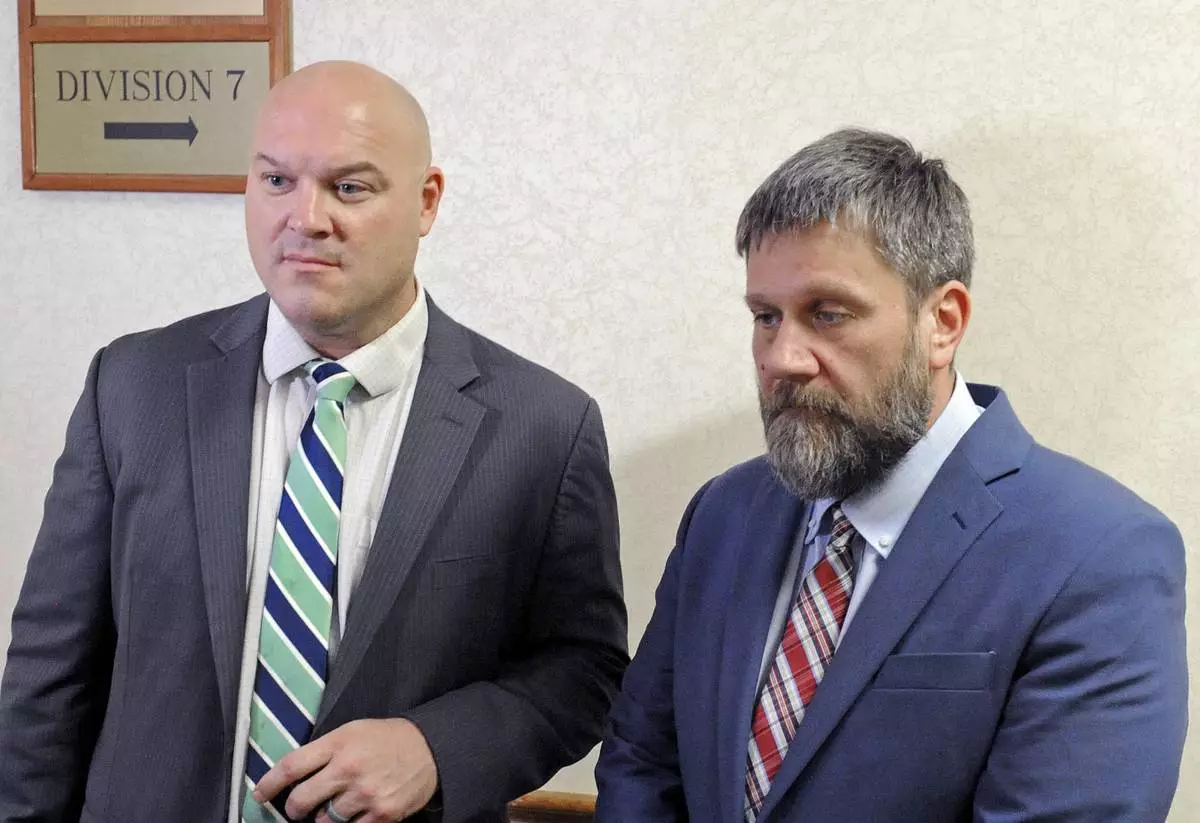
Defense attorneys Mark Plants, left, and John Balenovich, right, talk to the media following the trial of their clients Donald Lantz and his wife, Jeanne Whitefeather, in Kanawha County Circuit Court in Charleston, W.Va. on Wednesday, Jan. 29, 2025. (Christopher Millette/Charleston Gazette-Mail via AP)
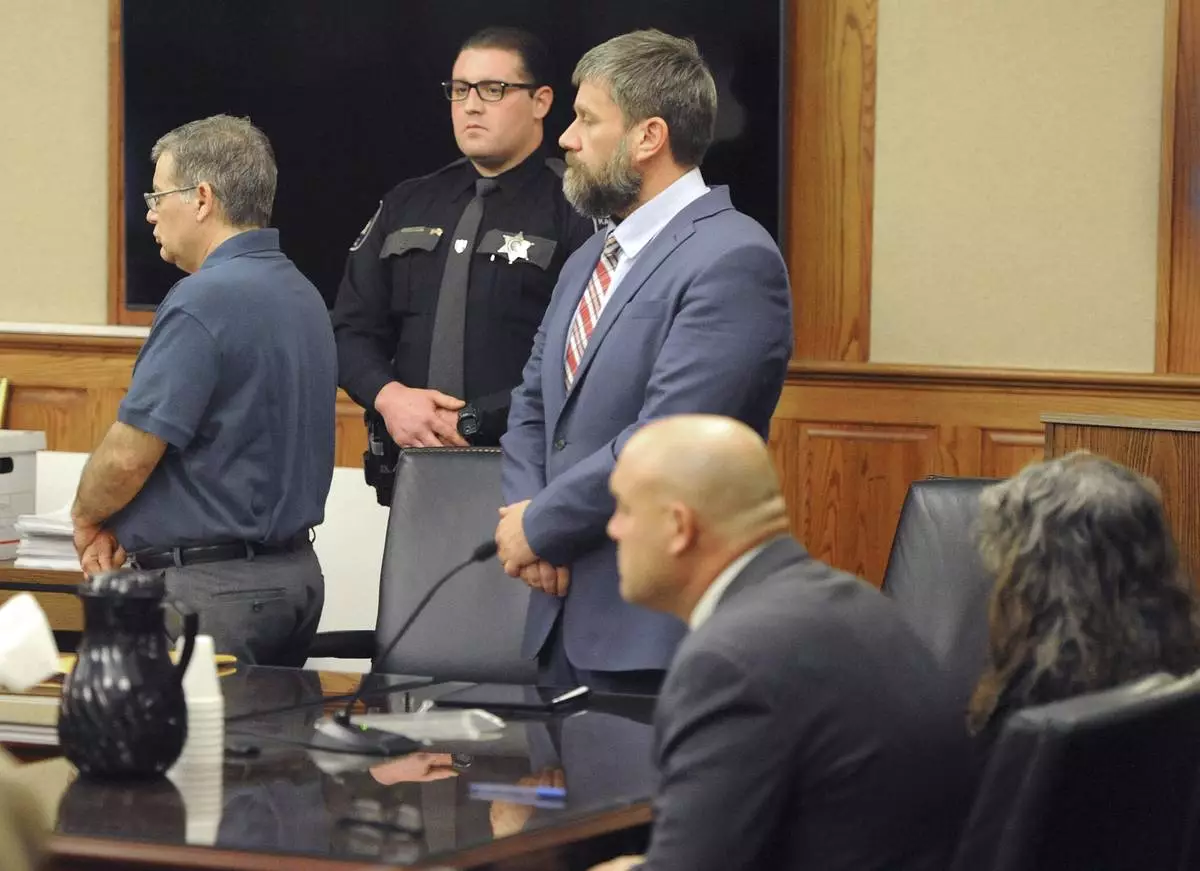
Donald Lantz, left, stands with his attorney John Balenovich as charges are read against him. His wife, Jeanne Whitefeather, seated right, is also shown in the in Kanawha County Circuit Court in Charleston, W.Va. on Wednesday, Jan. 29, 2025. (Christopher Millette/Charleston Gazette-Mail via AP)
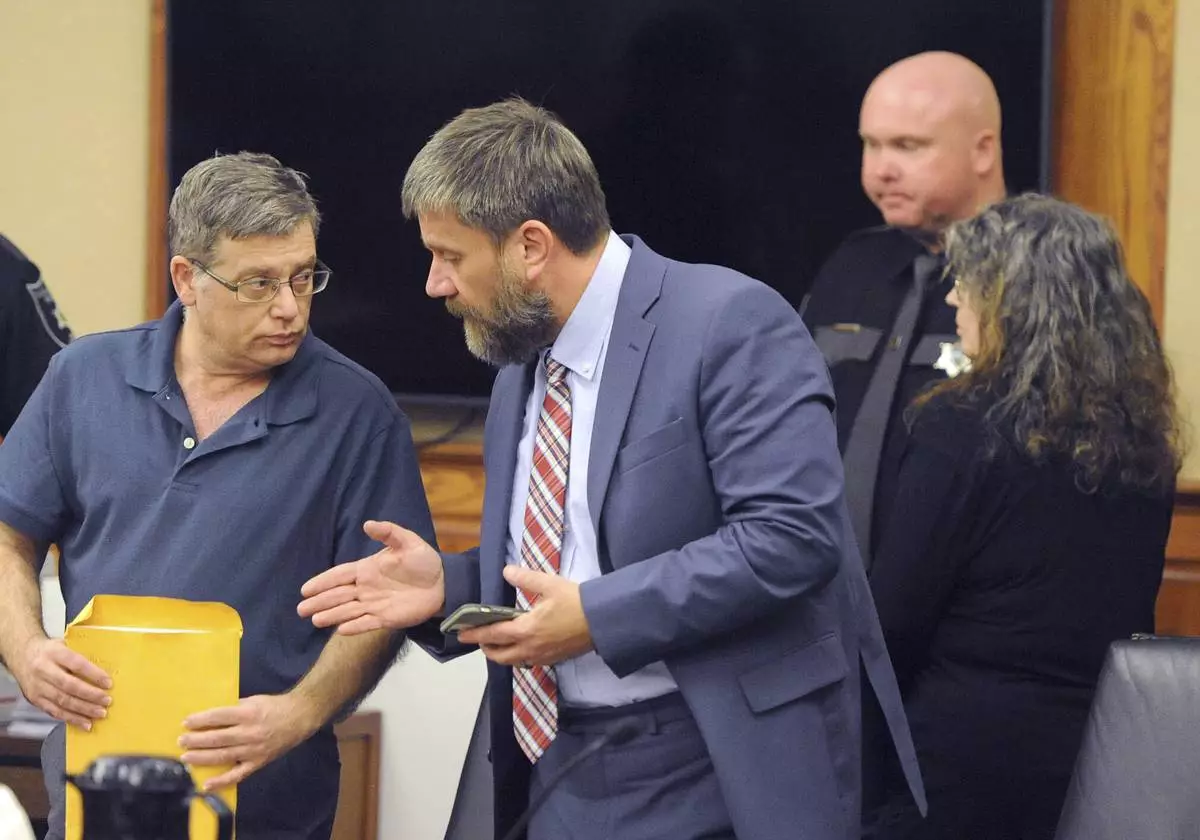
Donald Lantz, left, speaks with his attorney John Balenovich as his wife Jeanne Whitefeather, right, leaves the courtroom in Kanawha County Circuit Court in Charleston, W.Va. on Wednesday, Jan. 29, 2025. (Christopher Millette/Charleston Gazette-Mail via AP)