Scenic sites in southwest China's Yunnan Province are embracing an influx of international visitors who came to experience the vibrant Spring Festival vibes.
The 2025 Spring Festival fell on Wednesday. Chinese people are enjoying an eight-day official holiday season running from Jan. 28 to Feb. 4 featuring family reunions, festive celebrations and pastime activities.
The 2025 Chinese New Year marks the first one since the United Nations Educational, Scientific and Cultural Organization (UNESCO) inscribed the social practices of the Chinese people in celebration of the Spring Festival on the Representative List of the Intangible Cultural Heritage of Humanity on Dec 4, 2024, which has further enhanced the festival's global recognition.
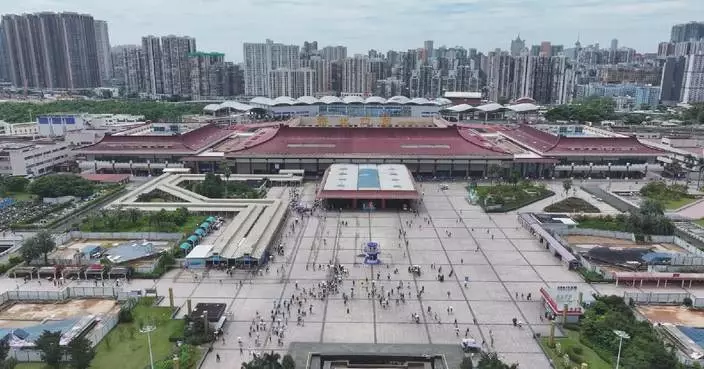
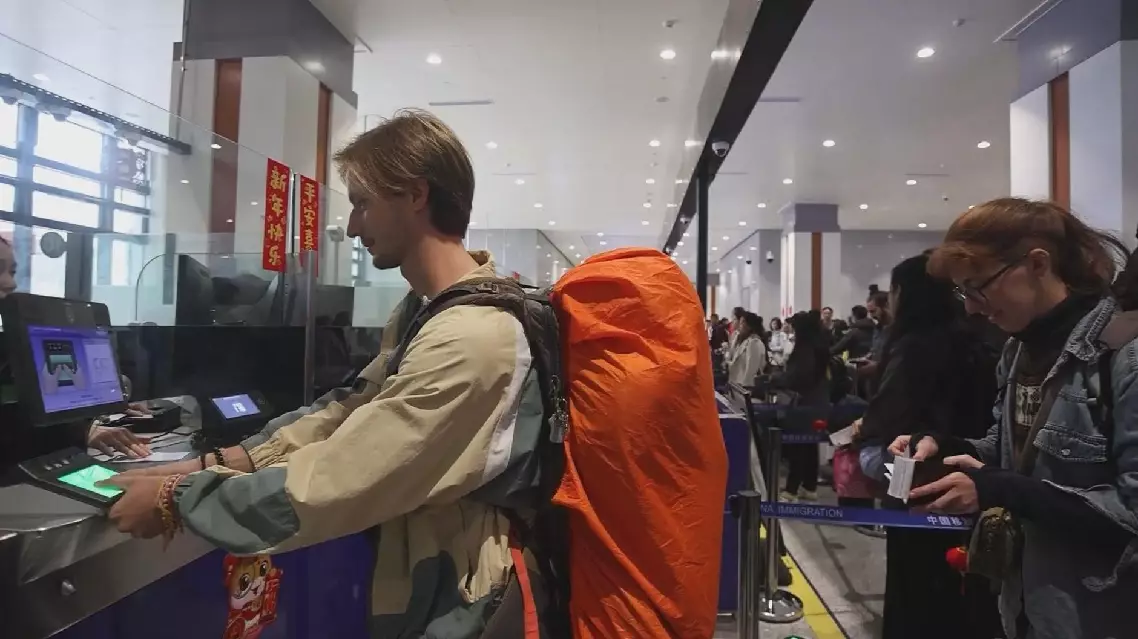
Many international visitors entered Yunnan via the China-Laos Railway that connects Yunnan's provincial capital city of Kunming with Vientiane, the Lao capital, to explore Chinese culture and experience the festive atmosphere.
The Mohan railway port experienced an entry-exit traffic peak during the first four days of the holiday, recording more than 17,000 cross-border trips, a year-on-year increase of 4 percent. In particular, it registered more than 3,300 inbound passenger entries from 22 countries and regions.
"I'm looking forward to being able to experience the Spring Festival in China at this time, so we're going to feel it. And I think it will be very great, so I'm excited," said a tourist from France.
"We came to China for the happy [Chinese] New Year. The fast train [ride] was an easy trip for us to come here, and [was] very interesting," said another tourist who came from Austria.
The local border inspection authority has further improved services according to different needs during the peak period, such as opening up special channels and helping the elderly and children to carry luggage. It has also strengthened collaboration with customs and railway departments to ensure smooth clearance at the port.
The Hekou Port on the China-Vietnam border has also seen a rise in tourist arrivals from outside China, with Vietnamese tourists making up the majority.
"The Chinese Spring Festival is very attractive to Vietnamese people. Up to now, our company has received nearly 100 tour groups [from Vietnam]. The booking volume has been growing sharply," said Huang Feng, head of Yunnan Zhongwang Travel Agency.
Bordering three Southeast Asian countries -- Vietnam, Laos and Myanmar -- and home to over 20 Chinese ethnic groups, Yunnan is a captivating destination for both domestic and international travelers with rich tourism resources, such as picturesque landscape, diverse cultures and a sound ecological environment.
Many scenic spots in Yunnan have upgraded their services and initiated new programs for the annual holiday, offering both Chinese and foreign visitors a unique festive atmosphere featuring local cultural deposits. Among them is the Manting Park in Xishuangbanna Dai Autonomous Prefecture, which was once the imperial garden of the Dai Kingdom, with a history of more than 1,300 years.
"For the Spring Festival holiday, we have especially launched a program of narrative long epic stage play of the Dai ethnic minority group, set up a border farmers' happiness market, as well as various experience projects of intangible cultural heritages. Meanwhile, we have launched an exploration tour intended for young people, which allows tourists to gain an in-depth understanding of the scenic spot via exploration," said Yang Xuan, service manager of Manting Park.
Southwest China's Yunnan embraces influx of int'l visitors attracted by Chinese New Year vibes
Southwest China's Yunnan embraces influx of int'l visitors attracted by Chinese New Year vibes