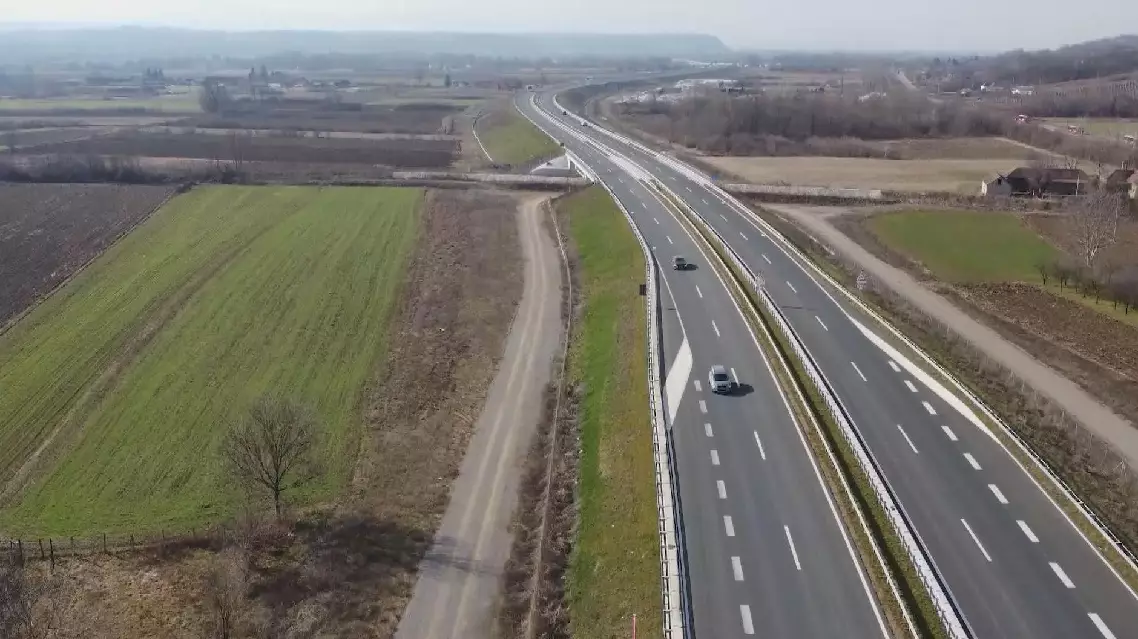
The Lajkovac-Valjevo motorway in Serbia, a major infrastructure project completed by China's Shandong Hi-Speed Group, was officially inaugurated on Saturday.
With its main route now fully completed, the motorway will officially open to traffic on Sunday.
At the inauguration ceremony, Serbian Prime Minister Milos Vucevic, Minister of Public Investments Darko Glisic, and Chinese Ambassador to Serbia Li Ming were in attendance, each delivering a speech to mark the occasion.
"This is a road of hope, a road of promise, a road of solutions and also a road of victory. Valjevo and the entire region will no longer be isolated, but closely connected with other regions and cities of Serbia," said Prime Minister Vucevic.
"We should thank those who have helped us, enabling us to achieve what we have long dreamed of. Thanks to President Aleksandar Vucic and to our brothers from China. Our friendship is not just words on paper, we practice our ironclad friendship through cooperation," said Glisic.
Glisic also highlighted the project's role in the region's development, stating that it will attract investment and boost local incomes.
Chinese Ambassador Li Ming commended the Chinese construction team for their outstanding work in completing the project on time and to a high standard, despite the challenges they faced. He expressed his confidence that the motorway's opening will have a positive impact on the local economy, attracting new investment and development along its route.
Spanning 18.3 kilometers, the motorway, with a design speed of 100 kilometers per hour, links the central-western Serbian cities of Valjevo and Lajkovac. It is expected to ease traffic congestion and further enhance Serbia's transport network.
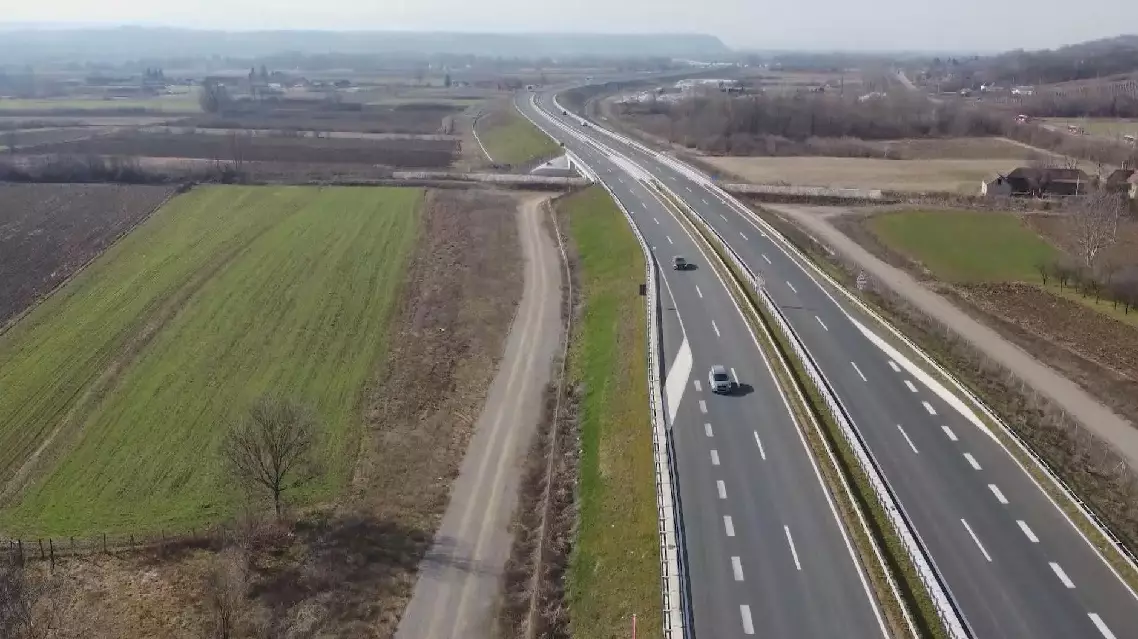
Chinese-built motorway inaugurated in Serbia
Chinese-built motorway inaugurated in Serbia
Artificial intelligence and robotics, both major topics of discussion at the ongoing Boao Forum this year, are also being widely adopted at the event as ways to improve the service inside and outside the venue.
The BFA Annual Conference 2026 is being held in Boao, south China's Hainan Province. Running from March 24 to 27, this year's conference is themed "Shaping a Shared Future: New Dynamics, New Opportunities, New Cooperation."
A water generator at the venue cools and condenses moisture from the air into water, then filters and sterilizes it. It can also run on solar power for a completely off-grid, zero-carbon operation.
Meanwhile, a special robot barista operates a coffee stand where guests can order a drink with the press of a button, prompting the robotic arm to get to work -- grabbing a cup, brewing, and frothing -- all in one smooth motion.
The venue has also adopted an AI-based management system, which can automatically adjust a range of factors based on current conditions and detect and respond to anomalies when they occur.
These sorts of systems are already being adopted at a wider scale across Hainan.
"This is our operational management center for the zero-carbon demonstration zone. It’s powered by an AI-driven system that manages all energy consumption and carbon emissions. From here, we can remotely control over three thousand devices across the island with a click, including air conditioners and lighting. It's smart management, done remotely," said Zeng Youwen, chief general engineer of the China Academy of Urban Planning and Design Hainan Branch.
Outside the venue, some smart equipment is also sharing the workload. On Boao's coastline, a beach-cleaning robot moves along the shore, sweeping up cigarette butts, debris, and coconut shells.
The robots can work before visitors arrive or after sunset, cleaning up to 3,000 square meters of beach per hour. In the water, a diving robot that clears debris and even has emergency rescue capabilities.
These on-site applications of emerging technologies have helped spur discussions at the forum on how the deep integration of technology and industry is gaining momentum as China enters the 15th Five-Year Plan period.
"Industries can only be upgraded by applying the new technologies, by applying AI, by applying other innovative technology, science and technology, there should all be injected into industries. And that's how the industries are going to produce high quality products. And you will have high quality productive forces that will change the lifestyle, the living standard of the Chinese people and the people living beyond," said Sohail Khan, deputy secretary-general of Shanghai Cooperation Organization.
Founded in 2001, the BFA is a non-governmental and non-profit international organization committed to promoting regional economic integration and bringing Asian countries closer to their development goals.
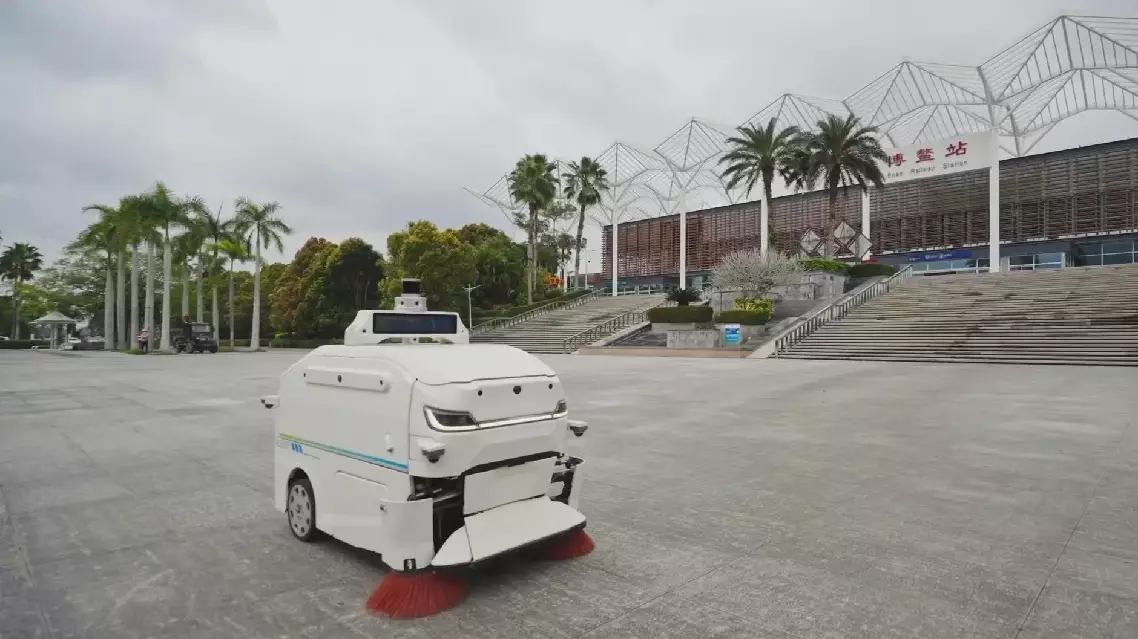
Robots, AI facilitate guest services at Boao Forum venue