Skip to Content Facebook Feature Image

China sees surges in return trips as Spring Festival holiday comes to end

China

China

China

China sees surges in return trips as Spring Festival holiday comes to end

2025-02-03 11:43 Last Updated At:21:47

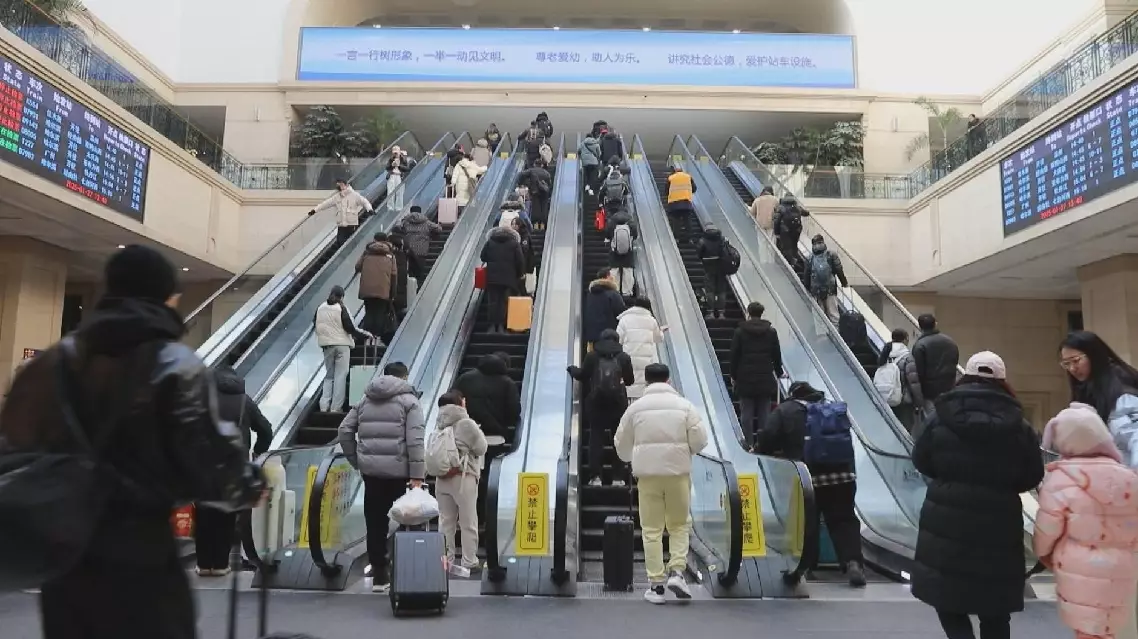
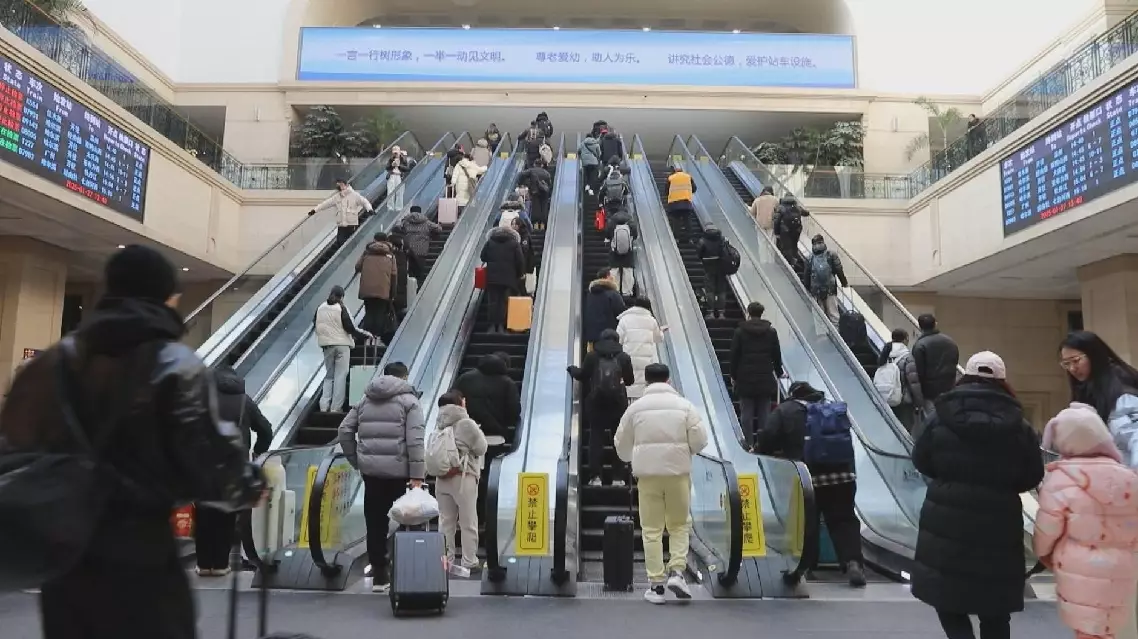
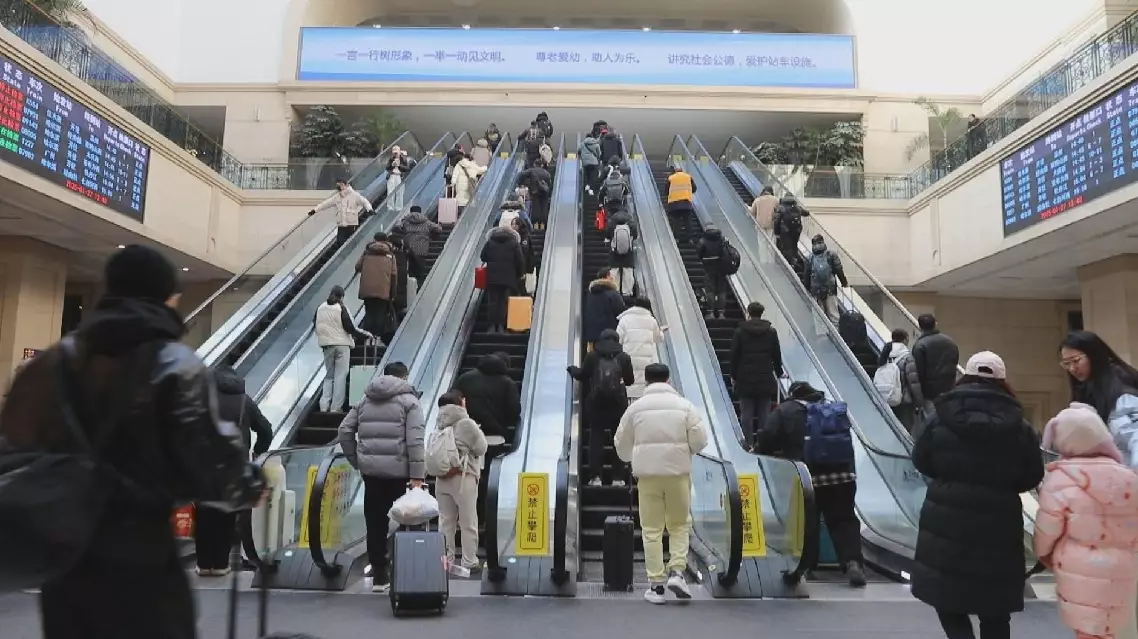
China's Spring Festival travel rush has reached its halfway point, with cross-regional trips totaling 4.8 billion, setting new daily records as return-to-work traffic flows pick up the pace, according to data released on Sunday.

The 40-day travel rush, known as "chunyun" in Chinese, runs from Jan 14 to Feb 22 this year. It is considered the world's largest annual human migration and coincides with China's biggest traditional festival celebrations, a time when Chinese people return home for family reunions to celebrate the Chinese New Year, which fell on Jan 29 this year.

Statistics show that China recorded 4.8 billion cross-regional trips from Jan 14 to Feb 2, a 7.2 percent year-on-year increase, with over 300 million trips made daily for three consecutive days from Friday to Monday, all surpassing last year's levels.

As return travel is peaking, railway passenger trips were estimated to reach 14.5 million on Sunday, up 1.2 million from the previous day. In response to freezing rain and snow, China Railway Nanchang Bureau Group Co., Ltd., a subsidiary of the China Railway, the country's railway operator, deployed 30 de-icing trains to conduct contact wire thermal running to remove ice.

"In sections of the Beijing-Kowloon Railway prone to icing due to high humidity and low temperatures, such as Jiujiang and Nanchang, we have four teams on 24/7 standby, ready to respond," said Shi Weibin, deputy head of the operations division at Yingtan section of China Railway Nanchang Bureau.

On highways, about 300 million passenger trips were recorded nationwide on Sunday. Transportation and power authorities have ramped up efforts to improve charging infrastructure for new energy vehicles (NEVs).

Measures include upgrading charging pile capacity and deploying emergency charging stations to ease the charging pressure at highway service areas. In cities of Huai'an and Xuzhou in east China's Jiangsu Province, local traffic and power departments have used big data from the Internet of Vehicles (IoV) to predict peak demand, issue charging guides, and direct vehicles to nearby service areas to reduce wait times.

"I planned my route using the Spring Festival charging guides before setting off, which helped me avoid peak hours and save time," said an NEV driver.

Air travel remained strong, with 2.38 million passenger trips recorded on Sunday. Airlines and airports have maximized wide-body aircraft operations to accommodate rising demand.

Meanwhile, authorities in south China's Guangdong and Hainan provinces have strengthened traffic management on key waterways, including the Qiongzhou Strait. Maritime officials are providing 24-hour supervision for roll-on/roll-off (ro-ro) passenger ferries and issuing regular updates to ensure smooth operations.
China sees surges in return trips as Spring Festival holiday comes to end
China sees surges in return trips as Spring Festival holiday comes to end
China sees surges in return trips as Spring Festival holiday comes to end
China sees surges in return trips as Spring Festival holiday comes to end

China sees surges in return trips as Spring Festival holiday comes to end
China sees surges in return trips as Spring Festival holiday comes to end
The Iranian government is focusing on public concerns and maintaining stable supplies of essential goods amid recent protests, Iranian President Masoud Pezeshkian said in a televised interview on Sunday.

In the city of Karaj, northwest of the capital Tehran, daily life has largely continued as normal. A video filmed by a local resident on Sunday shows food stores open and grocery shelves fully stocked.

"This is the block near my home, and there are some food stores here. Daily life continues here. Last night we did not see many protests in Karaj. Right now the city is very safe. This is a grocery store close to my home. All the food is available; nothing is in shortage. Here are noodles and different types of beans. Here are dairy products, cheese, and yogurt. I also checked other grocery stores and didn't see any shortages. Everything is available," said local resident Ali Reza.

Iranian officials have described recent disturbances as acts orchestrated by the "enemy," including some carried out by well-trained and armed "terrorists." The incidents have caused casualties among security personnel and civilians, as well as property damage.

The Secretary of Iran's Supreme National Security Council Ali Larijani has directed authorities to severely punish the "terrorists."

Meanwhile, Iran's police chief Ahmad-Reza Radan said on Sunday that the police had raised alert levels and arrested several leaders of the troublemakers during the operations on Saturday.

President Pezeshkian noted in the interview that the normal demands of the Iranian people are reasonable and justified, but they must realize that triggering riots and carrying out terrorist acts are the enemy's attempts to undermine the country. He urged the public to remain vigilant.

Also on Sunday, Iranian Parliament Speaker Mohammad Baqer Qalibaf warned that Tehran would regard U.S. and Israeli bases and facilities in the Middle East as "legitimate targets" if Washington takes military action against Iran. His remarks followed media reports saying U.S. President Donald Trump is "seriously considering authorizing a strike" against Iran.

Iranian state media reported that at least 109 members of Iran's security forces have been killed in clashes since the protests began 14 days ago. Meanwhile, human rights groups based outside the country said the number of protesters killed has exceeded 200, though the figure could not be independently verified.

The protests initially erupted over a sharp depreciation of the rial and sweeping subsidy reforms. Iranian authorities have blamed the unrest on foreign-linked agents and sanctions imposed by the United States.

Iranian president says government focusing on ensuring supplies amid protests

Iranian president says government focusing on ensuring supplies amid protests

Recommended Articles