Innovative technologies have been used in making sportswear for the 9th Asian Winter Games, which is set to open on Friday in Harbin City, northeast China's Heilongjiang Province.
Yang Hui, chief sportswear designer of the Games, has designed, together with her team, cutting-edge sportswear and accessories for seven key groups at the Games, including torchbearers and volunteers.
With temperatures between minus 20 and minus 40 degree Celsius in Harbin, these outfits will be tasked with keeping the wearers warm in extreme conditions.
According to Yang, the inner layer of the clothing is made from graphene, which is known for its ability to maintain temperature, lock in warmth, and suppress bacteria, and the outer layer features fluorine-free waterproof down technology, which prevents melted ice and snow from soaking in when the wearer enters a warmer environment.
"We also expanded the hat in both depth and width to accommodate users who may need to wear a helmet underneath. This garment is intended not just for regular skiers, but for our volunteers as well," Yang said.
Scheduled for eight days from Feb 7 to 14, the upcoming Asian Winter Games marks the second time for Harbin to host the Games and the third time for the country.
It is also the first major international ice and snow event in China since the 2022 Beijing Winter Olympics.
Following the surge in public participations in winter sports, the sales of snow gear and garment went from less than 5 billion yuan (about 700 million U.S. dollars) in 2015 to around 22 billion yuan (about 3.06 billion U.S. dollars) in 2023.
"Most of these technologies have already been incorporated into our products. From the winter of 2024 to the spring of 2025, winter sports have significantly boosted orders, contributing to a roughly 15-percent growth in business," said Liu Qiuhua, general manager of the Apparel Product Center of 361 Degrees.
According to Liu, both the volume and value of orders have seen substantial increases, and the Asian Winter Games selections will soon be available in the stores across China.
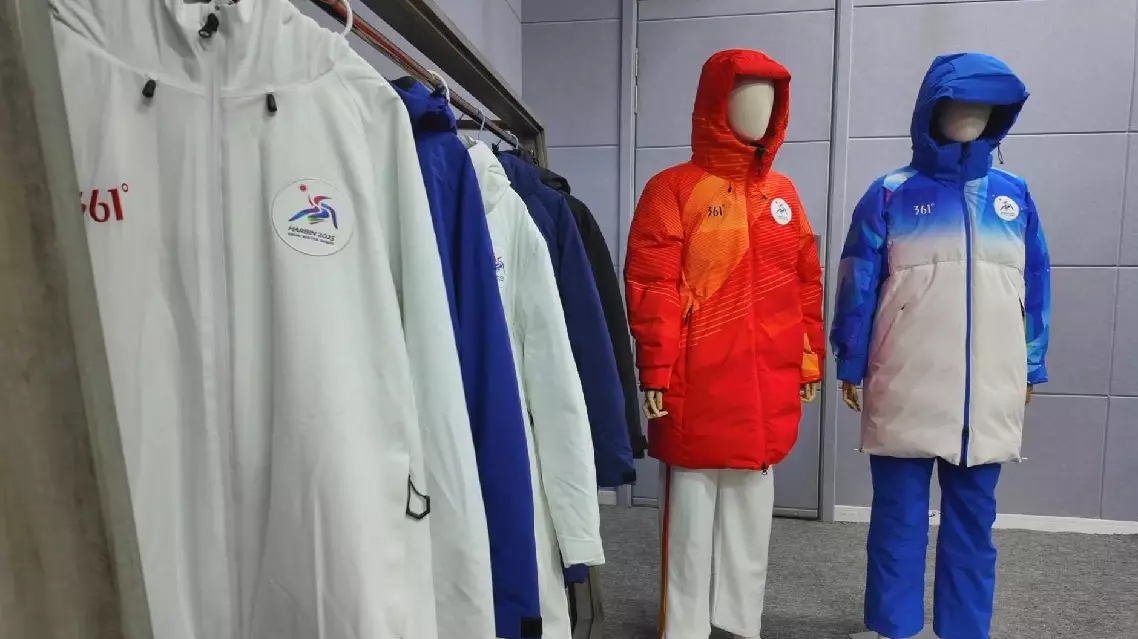
Asian Winter Games drives winter sports apparel innovations
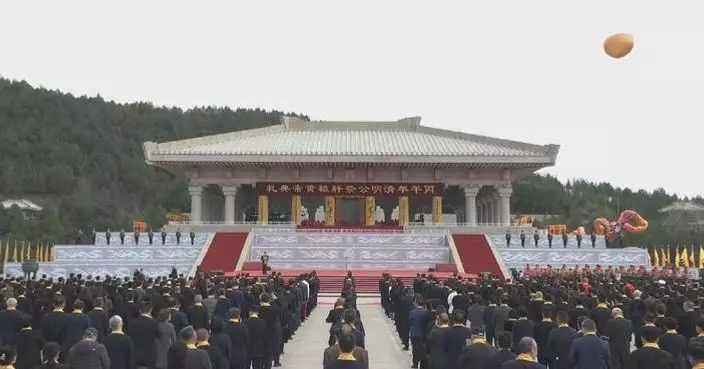
Scenic spots across China have all seen surging tourist flow during the Qingming Festival holiday as people are going outdoors to enjoy good springtime.
Falling on April 5 this year, the Qingming Festival, or the Tomb-Sweeping Day, is a traditional Chinese festival for honoring the deceased and paying tributes to ancestors. The three-day holiday from Saturday to Monday also provides a short break for Chinese citizens to enjoy outdoor activities and sightseeing in pleasant springtime temperatures.
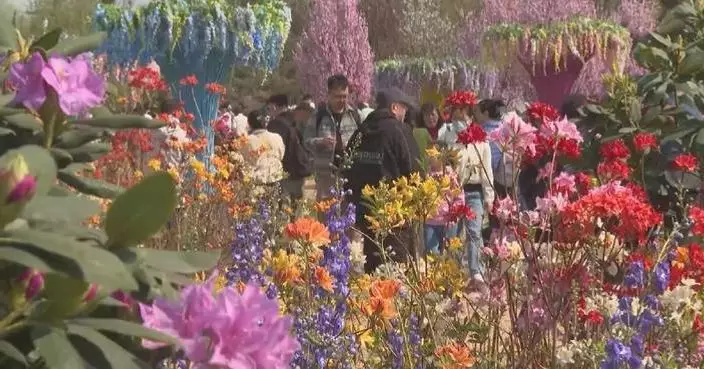
At the Fenghuanggou scenic spot in Nanchang City, east China's Jiangxi Province, a vast field of hydrangeas bloom across the hillsides. The colorful hydrangeas spread out in well-arranged patchwork, making visitors feel as if they have stepped into a dreamlike world of flowers.
Tourists stroll among the blossoms, with some slowing down to quietly take in the scenery and others raising cameras to capture memories, relaxing both body and mind amidst the fragrance of flowers and the spring sunshine.
"Walking through a sea of flowers like this and seeing such beautiful blossoms make me feel the vitality of spring while completely escaping the hustle and bustle of the city," said Xu Geyu, a tourist.
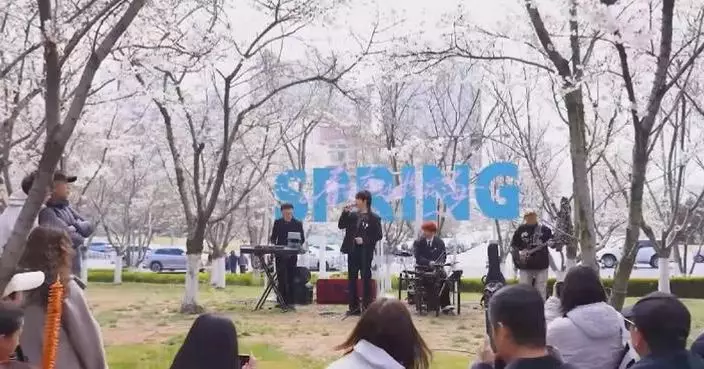
Continuing on from the hydrangea sea, the scenic spot's cherry blossom is also in the best viewing period. Unlike ordinary cherry blossom groves, the cherry trees here are interplanted among tea bushes that stretch across the mountainsides, creating distinct layers and forming a unique landscape.
This year, the scenic spot has leveraged its sericulture and other specialty ecological industries to create new business models that integrate agriculture and tourism, providing a variety of mulberry-leaf-flavored snacks and drinks for tourists.
"We tried mulberry-flavored coffee and mulberry-leaf-flavored ice cream -- both were delicious. They are the flavors that we've never tasted before. I think they are quite special," said Ye Zitong, another tourist.
Meanwhile, the Tianmen Mountain National Forest Park in central China's Hunan Province has also welcomed a peak in visitors. With fine weather and wild mountain flowers in full bloom, the scenic spot has become a popular destination for flower viewing and mountaineering, brimming with the liveliness and vitality of spring.
In springtime, The Tianmen Mountain features layered peaks covered in a profusion of flowers. Pink-white and bright red blossoms dot the dramatic mountain ridges, creating a stunning spring landscape painting.
"I feel it's quite magnificent. It's even more magnificent and beautiful after I climbed 999 steps to the Tianmen Cave. It's also very cool there. I really love it," said Ai Sichen, another tourist.
According to the preliminary statistics from the scenic spot, on the first day of the Qingming Festival holiday, the park welcomed over 20,000 visitors.
Furthermore, at the Hukou Waterfall scenic spot on the Yellow River at the border of the northern province of Shanxi and the northwestern province of Shaanxi, the roaring Yellow River water plunges dramatically. Illuminated by sunlight, a rainbow appears spanning both banks, creating a magnificent spring scene that draws many tourists.
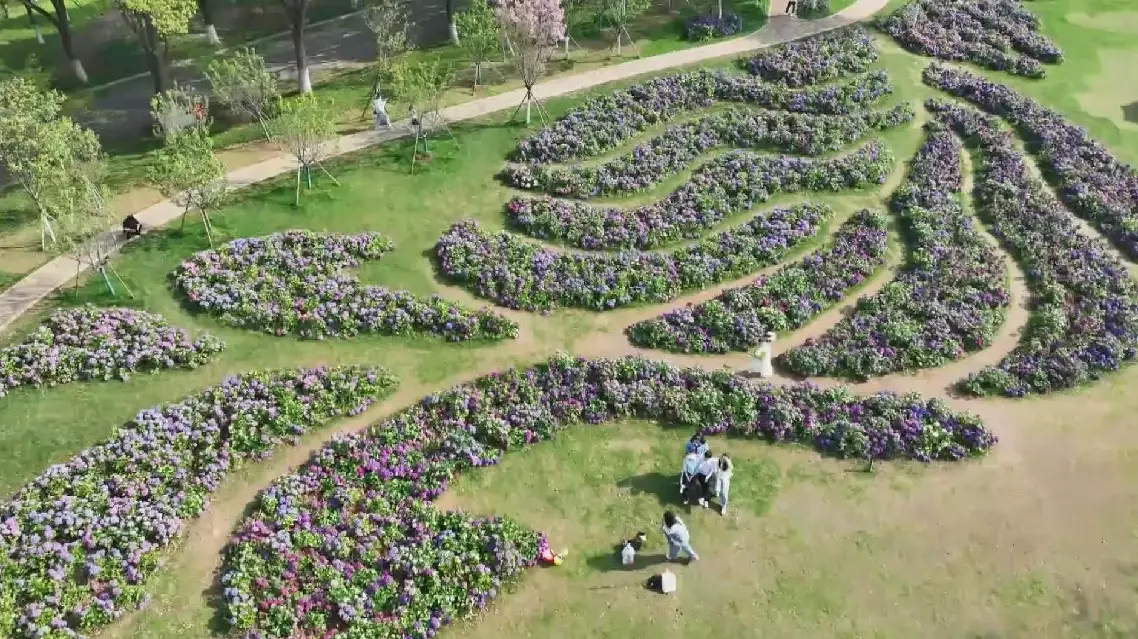
Scenic spots across China see surging tourist flow during Qingming Festival holiday