SYDNEY--(BUSINESS WIRE)--Feb 4, 2025--
Particular Audience has launched the third phase of its groundbreaking Retail Media platform, available now to existing clients on DiscoveryOS.
This press release features multimedia. View the full release here: https://www.businesswire.com/news/home/20250204012802/en/
This release introduces an expansive suite of new features designed to enhance ad placement precision, streamline campaign management, and unlock powerful first-to-market targeting capabilities. Available as an end-to-end platform, and/or as interoperable modules in any Retail Media technology stack.
Keyword-based retail media is dying. The future is AI-driven personalized eCommerce.
"In three years, manual targeting in Retail Media will be obsolete, just as Meta's Advantage+ and Google's PMAX have replaced outdated manual workflows," said James Taylor, Founder & CEO of Particular Audience. "We have been driving this change since 2020, with years of dedicated R&D."
Most retail media platforms are built on legacy systems that weren’t designed for true AI-driven, multi-modal personalization. Particular Audience predicts intent before the customer even expresses it. "Platforms that rely on outdated keyword targeting, miss up to 80% of revenue potential—especially from shoppers who don’t search. At Particular Audience, we built the market's only AI-first retail media platform. It automatically predicts what shoppers want—not just based on keywords," said Imon Hoque, CTO at Particular Audience.
Following the success of Adaptive Transformer Search, Particular Audience has now launched its most ambitious product update yet.
Launch Highlights
Automation That Works
Next-Generation Display
Data-Driven AdOps
“This is a massive expansion of DiscoveryOS,” said James Taylor. “PA isn’t just another retail media platform—it’s an AI company at its core. Every ad and recommendation should be hyper-personalized in real time. That’s what we’re delivering.”
Retailers unlock more revenue with less manual work. Brands see higher engagement and better ad performance.
"These aren’t minor optimizations," said Beth Smith, Head of Customer Success. "By replacing legacy keyword-first models with Adaptive Transformer Search, we've seen sponsored product fill rate more than double in the first week."
The Competitive Advantage
Retail Media is evolving, and Particular Audience is leading that transformation. PA's AI-driven approach enables retailers to drive ad revenue beyond what was previously possible, while brands achieve unmatched precision in their campaigns. This launch represents the next stage in retail media, shifting from manual processes to intelligent automation.
With this release, Particular Audience has eliminated friction, enhanced performance, and provided customers with tools that deliver undeniable revenue-driving outcomes. The future of eCommerce belongs to retailers who adopt AI-first strategies now.
The European Accessibility Act & Retail Media
With 87 million people in the EU living with disabilities, accessibility is essential. The European Accessibility Act (EAA) mandates compliance by June 28, 2025, with legal penalties for non-compliance.
Retailers who embrace accessibility early benefit from:
What’s Next?
Upcoming releases include:
For more information, visit www.particularaudience.com.
About Particular Audience
Particular Audience is the #1 AI-driven retail media platform, powering both organic and sponsored personalized product discovery. With operations across the U.S., U.K., Canada, and Australia, PA partners with the world’s most ambitious retailers including Target, Petbarn, and Hamleys.
Advanced search and recommendation technology is the foundation of successful Retail Media.
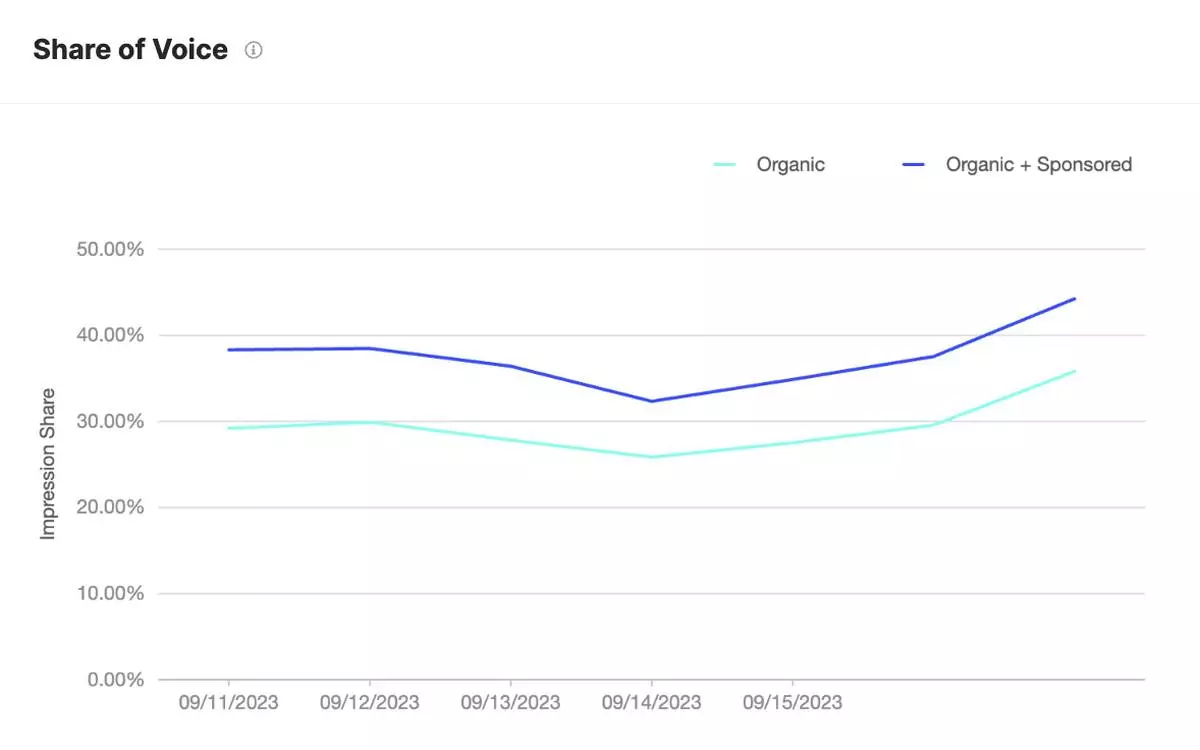
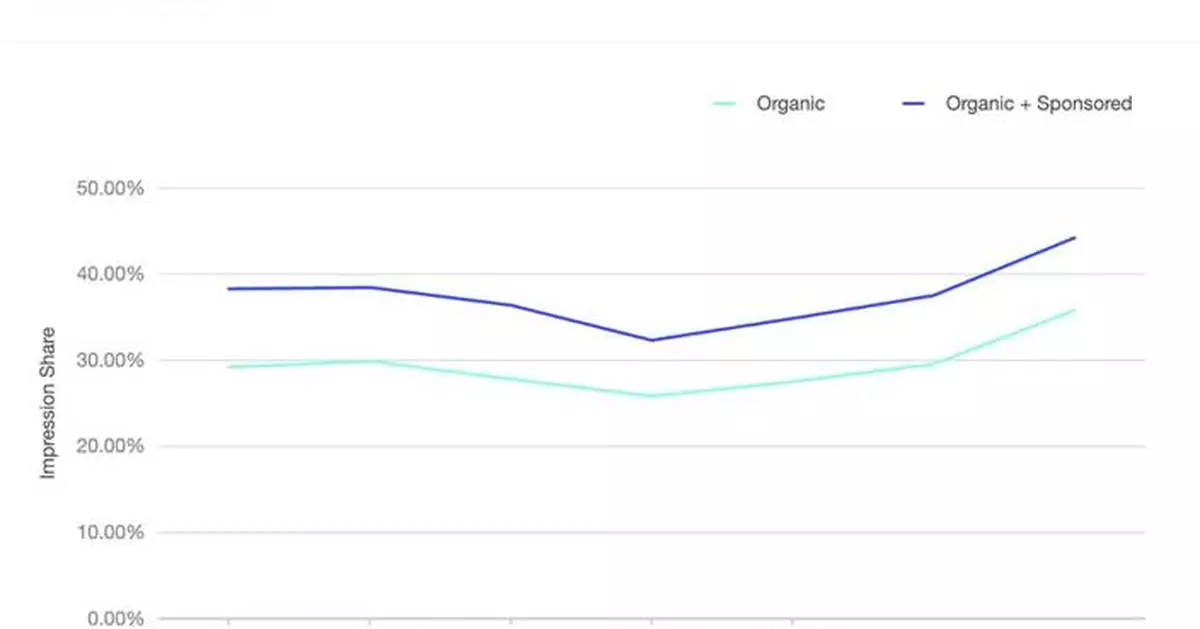
Incremental Share of Voice (Graphic: Business Wire)
WASHINGTON (AP) — A federal judge Thursday cleared the way for a New York offshore wind project to resume construction, a victory for the developer who said a Trump administration order to pause it would likely kill the project in a matter of days.
District Judge Carl J. Nichols, an appointee of President Donald Trump, ruled construction on the Empire Wind project could go forward while he considers the merits of the government’s order to suspend the project. He faulted the government for not responding to key points in Empire Wind’s court filings, including the contention that the administration violated proper procedure.
Norwegian company Equinor owns Empire Wind. Spokesperson David Schoetz said they welcome the court's decision and will continue to work in collaboration with authorities. It’s the second developer to prevail in court against the administration this week.
The Trump administration froze five big offshore wind projects on the East Coast days before Christmas, citing national security concerns. Trump has targeted offshore wind from his first days back in the White House, most recently calling wind farms “losers” that lose money, destroy the landscape and kill birds.
Developers and states sued seeking to block the order. Large, ocean-based wind farms are the linchpin of plans to shift to renewable energy in East Coast states that have limited land for onshore wind turbines or solar arrays.
New York Gov. Kathy Hochul applauded the court decision, telling reporters the projects had been “stopped under the bogus pretense of national security.”
“When I heard this I said one thing: I’m the governor of New York, if there is a national security threat off the coast of New York, you need to tell me what it is. I want a briefing right now. Well, lo and behold, they had no answer,” she said.
On Monday, a judge ruled that the Danish energy company Orsted could resume its project to serve Rhode Island and Connecticut. Senior Judge Royce Lamberth said the government did not sufficiently explain the need for a complete stop to construction. That wind farm, called Revolution Wind, is nearly complete. It’s expected to meet roughly 20% of the electricity needs in Rhode Island, the smallest state, and about 5% of Connecticut’s electricity needs.
Orsted is also suing over the pause of its Sunrise Wind project for New York, with a hearing still to be set. Dominion Energy Virginia, which is developing Coastal Virginia Offshore Wind, plans to ask a judge Friday to block the administration’s order so it can resume construction, too.
Trump has also dismissed offshore wind developments as ugly, but the Empire project is about 14 miles (22.5 kilometers) offshore and the Sunrise project is about 30 miles (48 kilometers) offshore.
The fifth paused project is Vineyard Wind, under construction in Massachusetts. Vineyard Wind LLC, a joint venture between Avangrid and Copenhagen Infrastructure Partners, joined the rest of the developers in challenging the administration on Thursday. They filed a complaint in District Court in Boston.
Robin Shaffer, president of Protect Our Coast New Jersey, said the administration was right to stop construction on national security grounds. He urged officials to immediately appeal the adverse rulings and seek to halt all work pending appellate review. Opponents of offshore wind projects are particularly vocal and well-organized in New Jersey.
Empire Wind is 60% complete and designed to power more than 500,000 homes. Equinor said the project was in jeopardy due to the limited availability of specialized vessels, as well as heavy financial losses.
During a hearing Wednesday, Judge Nichols said the government’s main security concern seemed to be over operation of the wind turbines, not construction, although the government pushed back on that contention.
In presenting the government’s case, Associate Attorney General Stanley Woodward, Jr. was skeptical of the perfect storm of horrible events that Empire Wind said would derail their entire project if construction didn’t resume. He disagreed with the contention that the government’s main concern was over operation.
“I don’t see how you can make this distinction,” Woodward said. He likened it to a nuclear project being built that presented a national security risk. The government would oppose it being built, and it turning on.
Molly Morris, Equinor’s senior vice president overseeing Empire Wind, said in an interview that the company wants to build this project and deliver a major, essential new source of power for New York.
McDermott reported from Providence, Rhode Island. Associated Press writer Anthony Izaguirre contributed to this report from Albany, New York.
The Associated Press’ climate and environmental coverage receives financial support from multiple private foundations. AP is solely responsible for all content. Find AP’s standards for working with philanthropies, a list of supporters and funded coverage areas at AP.org.
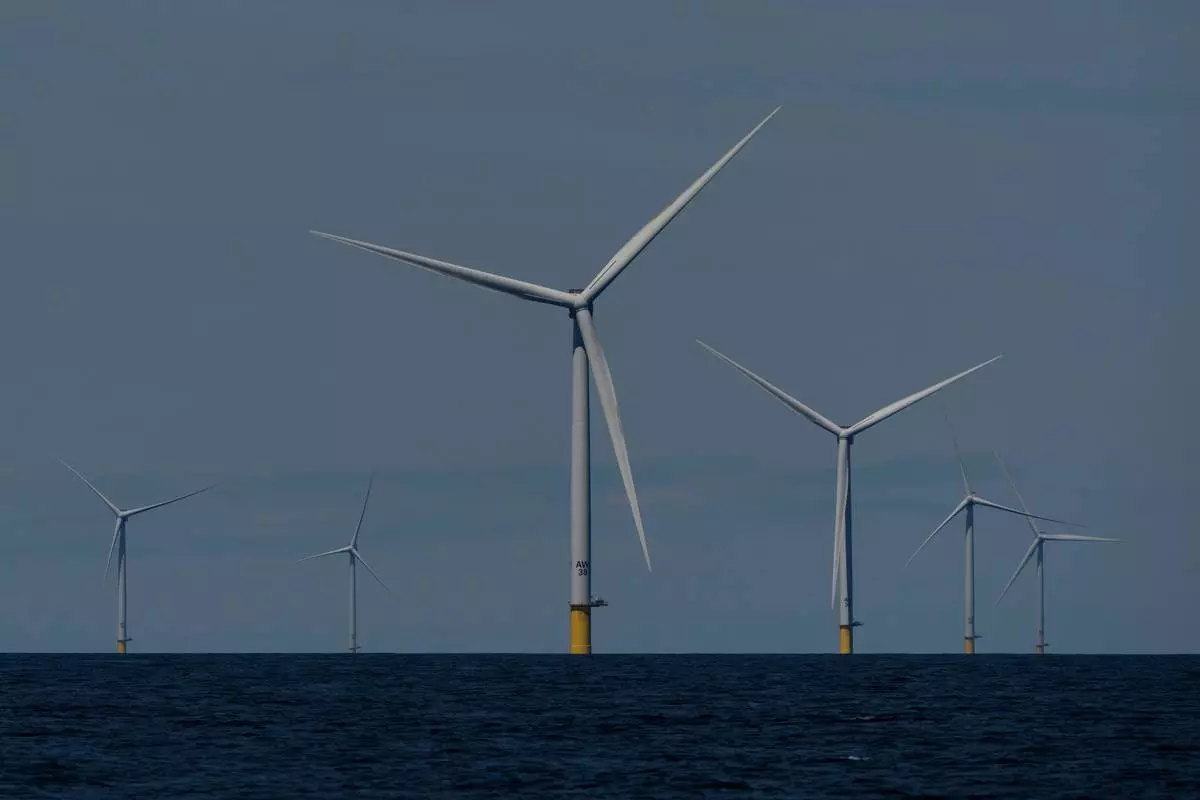
FILE - Wind turbines operate at Vineyard Wind 1 offshore wind farm off the coast of Massachusetts, July 19, 2025. (AP Photo/Carolyn Kaster, File)
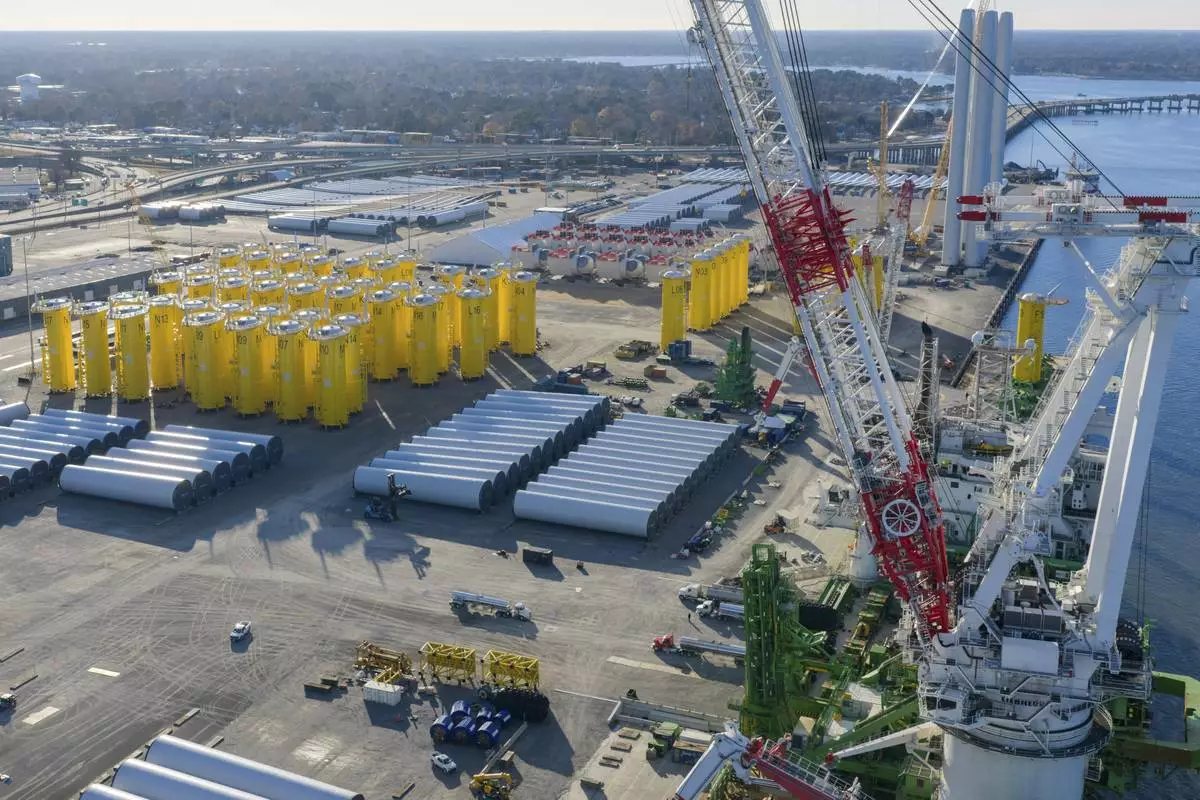
FILE - Wind turbine bases, generators and blades sit along with support ships at The Portsmouth Marine terminal that is the staging area for Dominion Energy Virginia, which is developing Coastal Virginia Offshore Wind, Dec. 22, 2025, in Portsmouth, Va. (AP Photo/Steve Helber, File)
FILE - A sign for the company Equinor is displayed on Oct. 28, 2020, in Fornebu, Norway. (Håkon Mosvold Larsen/NTB Scanpix via AP, File)
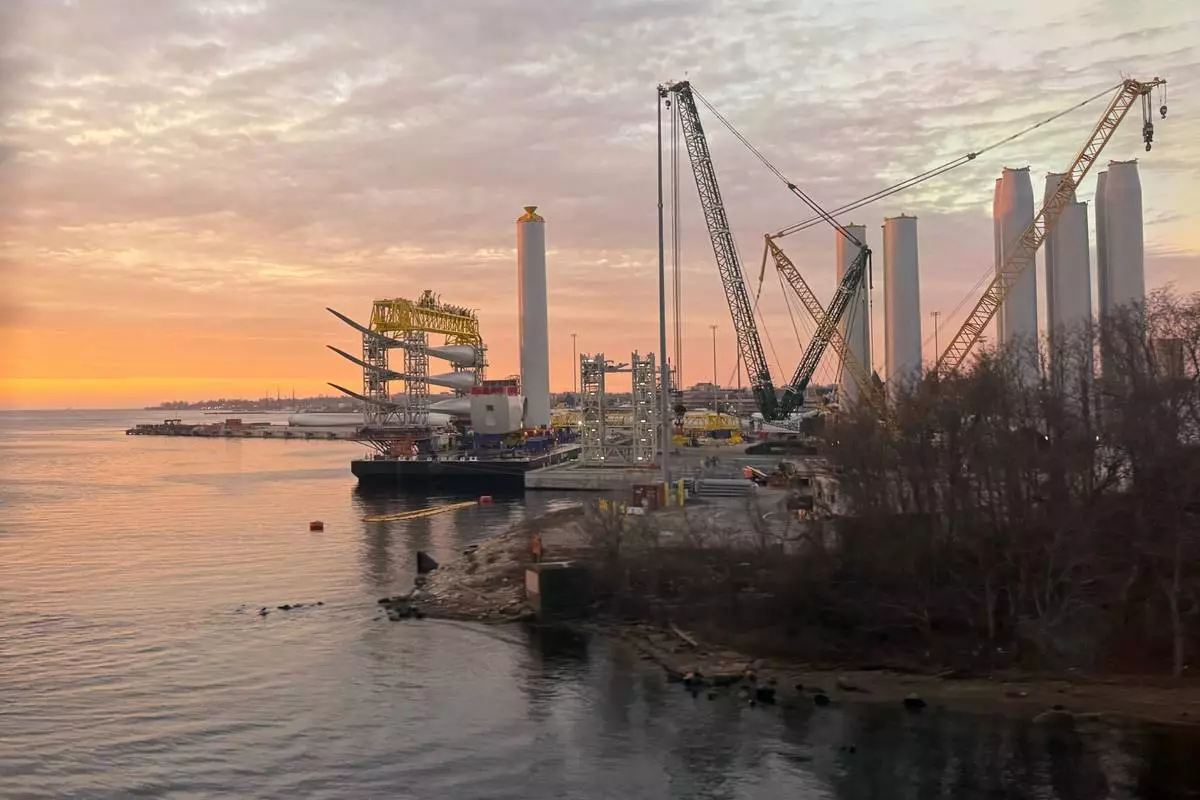
Blades and turbine bases for offshore wind sit at a staging area at New London State Pier, Wednesday, Jan. 14, 2026, in New London, Conn. (AP Photo/Matt O'Brien)