China's logistics costs steadily declined in 2024, with the ratio of logistics expenses to gross domestic product (GDP) dropping to the lowest level since 2006, the National Development and Reform Commission (NDRC) said on Tuesday.
The ratio of logistics expenses to GDP reached 14.1 percent in 2024, a 0.3 percentage point decrease from the previous year and the lowest since official data collection began in 2006, the NDRC said.
The NDRC attributes the reduction to a series of effective policy measures aimed at optimizing logistics resource allocation and improving efficiency across various sectors.
"The 0.3 percentage point reduction in the ratio of total logistics costs to GDP translates to savings of over 400 billion yuan (nearly 56 billion U.S. dollars) in logistics costs for the year, highlighting the steady progress of efforts to reduce logistics costs across society and the continuous optimization of logistics resource allocation," said Wu Junyang, deputy director-general of the Economic and Trade Department at NDRC.
Logistics costs encompass transportation, storage, handling, packaging, distribution, and other related activities, as well as losses during transport and management expenses, according to the China Federation of Logistics and Purchasing.
Looking ahead, the NDRC plans to accelerate key infrastructure projects, including railway freight networks and inland waterway system connectivity, while supporting the development of international logistics hubs and bulk commodity resource allocation centers.
The agency is aiming to reduce the ratio of logistics costs to GDP to approximately 13.5 percent by 2027.

China's logistics costs drop to record low in 2024
John Lee, chief executive of China's Hong Kong Special Administrative Region (HKSAR), on Tuesday welcomed the white paper "Hong Kong: Safeguarding China's National Security Under the Framework of One Country, Two Systems" released by the State Council Information Office.
Lee said in a statement that he will fully support and implement the content and requirements of the white paper.
The white paper detailed how the fight for safeguarding national security in Hong Kong is an unrelenting one. Lee said that since Hong Kong's return to the motherland, the manipulation of anti-China agitators in Hong Kong and hostile external forces had long stalled legislation under Article 23 of the Basic Law of the HKSAR, creating destabilizing opportunities.
Today, while Hong Kong is making every effort to boost the economy, pursue development, undertake construction and improve people's livelihood, it must be remembered that national security risks still exist among us and can arise all of a sudden, he added.
The white paper stated that the central government has the fundamental responsibility for national security matters concerning Hong Kong. Lee expressed support and gratefulness for the central government's decisive act at a critical moment in Hong Kong, formulating the national security law in Hong Kong at the state level for the HKSAR's promulgation and implementation locally.
The national security law in Hong Kong ended the state of defenselessness regarding national security that had persisted for over two decades since Hong Kong's return, and ended the "black-clad violence" prevailing in Hong Kong at the time, Lee said, adding that the HKSAR government has been combating acts and activities endangering national security with full force and in accordance with the law, and as a result, order returned to the community.
The white paper illustrated the HKSAR's achievements in fulfilling its constitutional responsibility for safeguarding national security. Lee said that the national security law in Hong Kong and the Safeguarding National Security Ordinance function as an integral whole to build a solid shield for safeguarding national security in Hong Kong, effectively protecting the rights and freedoms enjoyed by Hong Kong residents in accordance with the law and providing a solid foundation for Hong Kong's security and development.
The white paper stated that Hong Kong is progressing from disorder to stability and prosperity. Lee said that under the auspices of the national security law in Hong Kong and the Safeguarding National Security Ordinance, Hong Kong society is stable and prosperous, the normal lives and development of the people of Hong Kong are firmly guaranteed, and international rating agencies continue to give Hong Kong positive assessments.
The white paper laid down the practical requirements of creating high-standard security for the high-quality development of the "one country, two systems." Lee said that Hong Kong must work under the guidance of a holistic approach to national security, firmly safeguard national sovereignty, security and development interests, safeguarding of national security throughout the entire process of the implementation of the "one country, two systems" principle.
Lee said that security is the prerequisite for development, and development is the guarantee of security. The HKSAR government will steadfastly safeguard national security and promote economic development and is committed to advancing the high-quality development of the cause of "one country, two systems" under the auspices of high-level security, and to achieving high-level security through high-quality development.
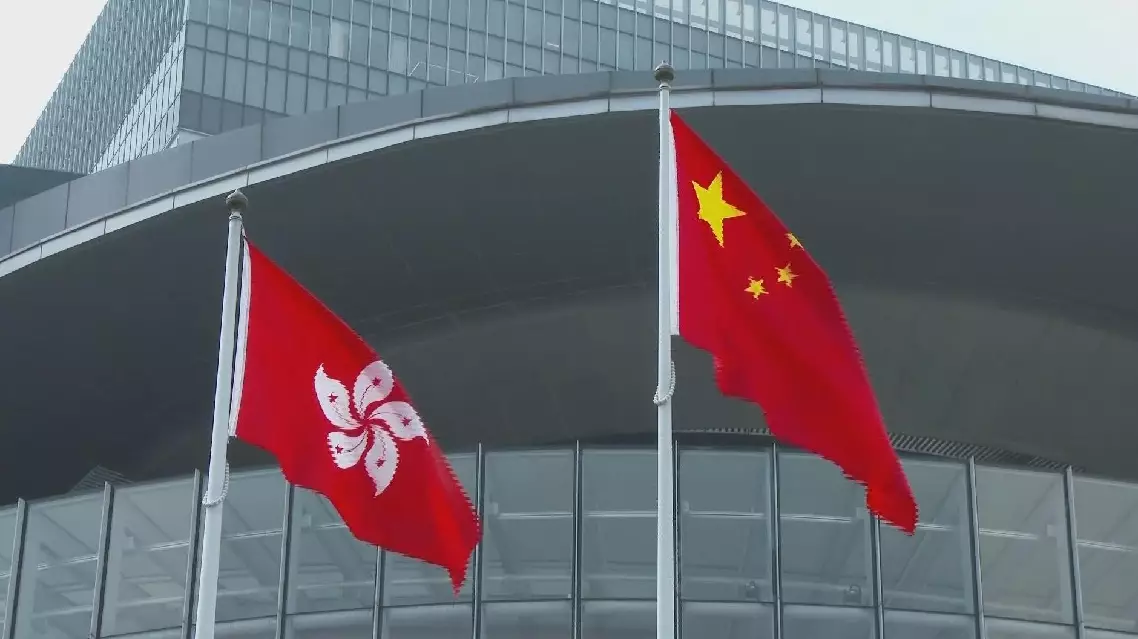
HKSAR chief executive welcomes white paper on Hong Kong's efforts in safeguarding national security