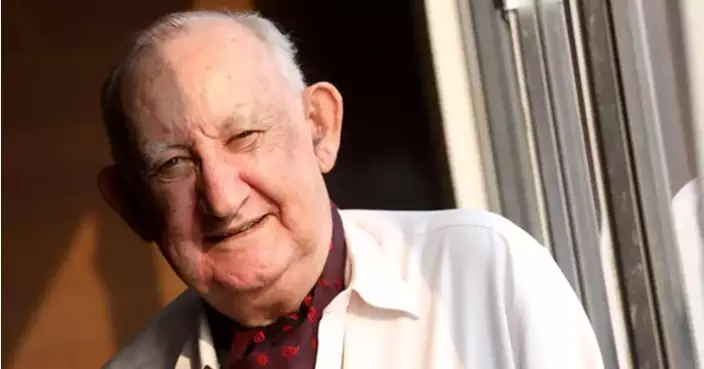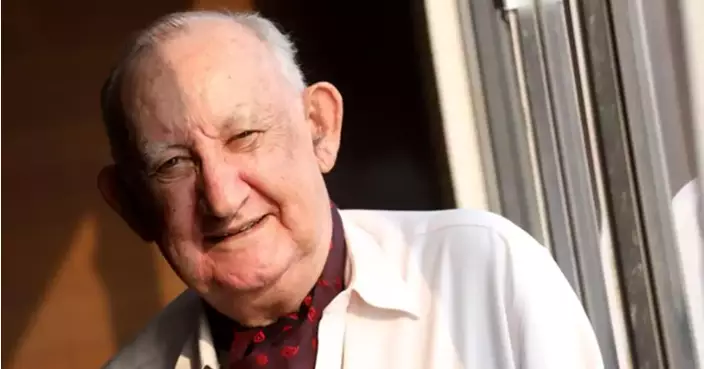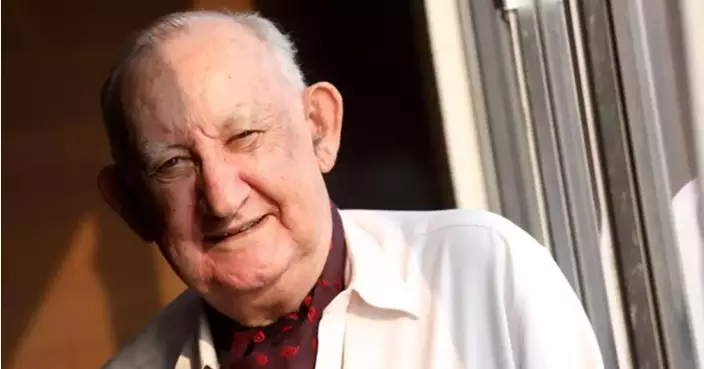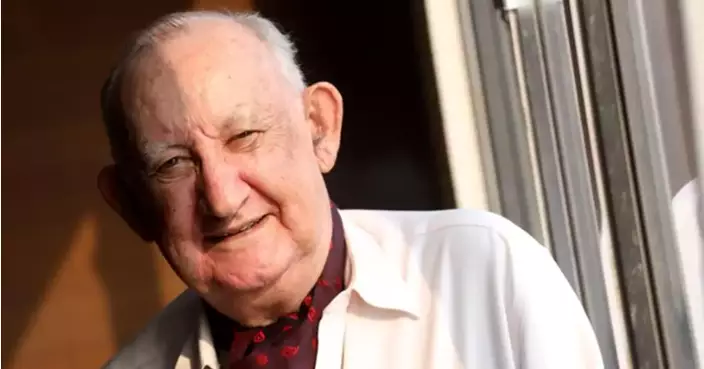
Mark Pinkstone/Former Chief Information Officer of HK government
The American dictatorship of President Donald Trump and his sidekick, Secretary of State Marco Rubio is nothing short of a litany of lies told to Panamanian President Jose Raul Mulino to break off Belt and Road Initiative (BRI) ties with China.
Before taking over the presidency of the US, Trump told the press, “China is running the Panama Canal that was not given to China, that was given to Panama foolishly, but they violated the agreement, and we’re going to take it back, or something very powerful is going to happen,”
With that mindset, Trump sent China hawk Rubio off to Panama with the threat of taking back the canal unless the Chinese were kicked out.
The only problem with the plan is that China has never had any interest, let alone control over the Panama Canal.
A sole Hong Kong conglomerate, Hutchison Port Holdings, controlled by Hong Kong billionaire Li Ka-shing, has two ports at either end of the canal operated by its subsidiary Panama Ports Company. There are also three other ports along the canal operated by private companies, all of which are used for loading and unloading cargo and providing fuel for vessels vying the waterway. They have no control over which vessels can use the canal, nor do they collect tolls for its use. This is the responsibility of the Panama Canal Authority, whose administrator, deputy administrator, and 11-member board are selected by Panama’s government but operate independently.
Hutchison Port Holdings (PH) is the world’s largest port operator across Europe, the Americas, Asia, the Middle East, and Africa. It operates in five of the seven busiest container ports in the world, handling 13 per cent of the world's container traffic. Revenue in 2023 amounted to US$4.2 billion.
HPH has routinely topped the list of port terminal operators ever since it expanded worldwide in 1991. It currently operates nearly 300 berths across 48 important ports around the world including the Port of Barcelona, Port of Buenos Aires, Port of Busan, the Thames Port of London, and the Port of Botany (Sydney)
During his visit to Panama, Rubio wrote in a post on X that "the United States cannot, and will not, allow the Chinese Communist Party to continue with its effective and growing control over the Panama Canal area."
Trump has complained that China exerts control over the canal and charges the U.S. ships six-figure premiums to cross Panama's isthmus. The canal was built over several decades by the U.S. and completed in 1914 but handed over to Panama during the Carter administration.
Immediately after Rubio’s fleeting visit to the central American country, President Mulino said Panama would not renew participation in China’s BRI and two Panamanian lawyers filed a complaint in the country’s Supreme Court to cancel the concession of Hutchison’s two ports on the canal. Mulino also ordered an audit into the company.
Mulino, after the talks with Rubio, dismissed any immediate threat of US retaliation and reiterated Panama’s ownership of the canal. He ruled out any negotiations with the US over the canal’s control. Chinese officials, on the other hand, have expressed that they have always respected Panama’s sovereignty and have no intention of infringing on it.
The BRI, launched by China in 2013, aims to build infrastructure and improve global trade. Panama was the first Latin American country to sign on to the initiative, and as part of the scheme, a two-party Chinese-led consortium is building a US$1.3 billion bridge over the waterway.
"The announcement by President Jose Raul Mulino that Panama will allow its participation in the CCP's Belt and Road Initiative to expire is a great step forward for US -Panama relations, a free Panama Canal, and another example of POTUS (President of the United States) leadership to protect our national security and deliver prosperity for the American people," Rubio posted on X after departing the country and hailing his visit as a “great success.”
Norman Castro, one of the lawyers in the case brought before the Supreme Court, told reporters the contract "violates what the constitution says in about 10 articles."
"After a detailed analysis of the contract... we decided that an action for unconstitutionality was the appropriate means" to challenge the concession," said Julio Macias, another lawyer behind the suit.
The complaint also accuses the Hong Kong subsidiary of not paying taxes and benefits due to a series of advantages that are allegedly against the law. So far, no evidence has been offered to back up the allegations, but it will be required for the courts. Time will tell.
There were also allegations of corruption which prompted Mulino to order an investigation into the company.
Such is the strength of the venom Rubio spews up to get his way. Hopefully, the Mulino investigations and court actions will reveal the truth: that Hutchison Ports is just a bona fide company, conducting its business in a respectful and peaceful way as it does with dozens of companies around the world.
The attack on Hutchison is nothing more but a show of sinophilia paranoia by the so-called most powerful man on Earth, Donald Trump, and lacky Marco Rubio. Together, they are stalking the world like a bull in a china shop, using bullying tactics to force the world leaders to their knees in a kowtow manner.
On his Truth Social network, Trump has also claimed – without proof – that Chinese soldiers have been deployed to the canal and that “Panama is, with great speed attempting to take down the 64 per cent of signs which are written in Chinese. “They are all over the Zone,” he said.
But the “Zone” – a former American enclave bordering the canal – hasn’t existed since 1979.
Prime US TV network CNN fact-checking Trumps usual blabberings said that if the scenario Trump describes sounds like the plot of a movie, well, it was. In the 2001 movie “The Tailor of Panama,” which starred Pierce Brosnan and Geoffrey Rush, the US invaded Panama after receiving bogus intelligence that China was trying to secretly buy the canal.
Mark Pinkstone
** 博客文章文責自負,不代表本公司立場 **