The Chinese electric vehicle giant BYD has officially entered the South Korean market, aiming to compete with dominant local and international brands in the country.
As the first Chinese automaker attempting to vie in the South Korean market, the company has set up exhibitions to showcase its cutting-edge EV models, and hosted press conferences, where it has committed to focus on innovation, affordability, and customer satisfaction.
Long before its recent attempt at a full market entry, BYD has been cooperating with local companies to provide electric buses, forklifts, and other vehicle types.
"We are proud to be back in the South Korean market. We introduced our all-electric buses to the market in April 2018. So far these buses have been in service for nearly seven winters, accumulating over 500,000 kilometers in single-vehicle mileage, with a total fleet mileage exceeding 120 million kilometers. We believe our products have been well-tested in South Korea, and we welcome consumers to choose and use our products," said David Ding, General Manager of BYD Korea.
BYD is now gaining attention among South Korean consumers for its affordable prices, but many remain cautious of the newcomer.
"I think the price is quite competitive. But when it actually enters the market, I'm particularly interested in how it compares to Tesla, especially in terms of autonomous driving, since I currently drive a Tesla," said Ji Eun-Gil, a local auto enthusiast.
According to Ji, to compete with the dominant local and foreign brands in South Korea like Hyundai, Kia, and Tesla, it is not enough for BYD to provide quality vehicles - it must also establish connectivity services and other ancillary facilities.
"It is not just about product satisfaction, but rather about how many connectivity services can be built around the product within South Korea. That is the real challenge for them. If any of these factors are overlooked, the brand may gain some initial attention in the country, but probably would not sustain significant consumer interest," said Kwon Yong-Joo, a professor from the Department of Automotive and Transportation Design of Kookmin University.
As BYD takes its first steps in the South Korean automobile market, more global automakers are eyeing the country's growing EV market, where pricing, vehicle quality and customer satisfaction will help determine the winners.

BYD faces challenges as it attempts to enter South Korea market
Yemen's Houthi group said that it had carried out multiple attacks on Saudi and Saudi-led coalition targets, while the Saudi-led coalition said it intercepted a Houthi missile, and Yemeni government forces reported operations against the group on several fronts.
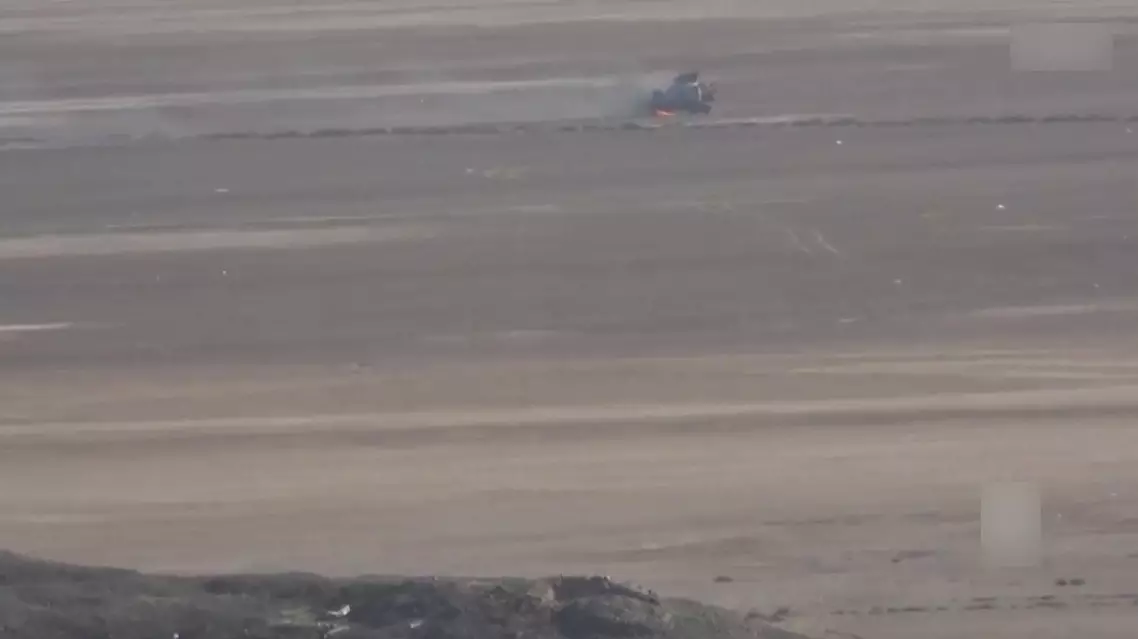
In a statement released early Thursday, the Houthis said they used a surface-to-air missile to hit a Saudi Typhoon fighter jet. The aircraft, they said, had taken off from Saudi Arabia's Taif Air Base and was hit over Yemen's Sa'adah Province. Saudi Arabia has not yet responded to the claim.
Earlier on Wednesday, the Houthis said they launched a large-scale attack using ballistic missiles, cruise missiles and drones against oil facilities of energy giant Saudi Aramco in Dhahran in eastern Saudi Arabia, as well as King Khalid International Airport and a Saudi Aramco refinery in the Saudi capital, Riyadh.
The Houthis said in a separate statement released Wednesday evening that the group had fired one more ballistic missile at King Khalid International Airport and launched three ballistic missiles at Saudi-led coalition targets in southern Yemen.
Turki al-Maliki, spokesman for the Saudi-led coalition, said on Wednesday that they had intercepted and destroyed a Houthi ballistic missile fired toward Riyadh. Saudi Arabia's General Directorate of Civil Defense said in a statement on Wednesday that fragments from the intercepted missile fell in Riyadh, injuring one person.
Meanwhile, the Houthi-run al-Masirah TV reported that late on Wednesday the Saudi-led coalition carried out an airstrike on a residential building in the Al Maravi'ah area of Hodeidah province, which is under Houthi control. Early on Thursday, al-Masirah also reported that Yemen's capital, Sanaa, had come under Saudi attack.
According to a Houthi statement issued on Wednesday evening, the Saudi-led coalition launched 42 airstrikes and missile attacks on Houthi-controlled areas in the previous 24 hours. The Houthis said that Saudi attacks on islands in the Bab el-Mandeb Strait directly threatened the safety of maritime shipping routes.
Separately, Yemeni government forces said on Wednesday that they continued to strike Houthi targets and personnel on the eastern and southern fronts.
Yemen has been mired in conflict since late 2014, when the Houthis seized the capital Sanaa and much of northern Yemen, prompting a Saudi-led coalition to intervene in 2015 in support of the Yemeni government.
Houthis, Saudi-led coalition report fresh military actions against each other