Athletes have shared their excitement at finally being able to hit the snow and ice as the 9th Asian Winter Games officially opened in northeast China's "ice city" of Harbin on Friday, with many aiming to deliver their best performances in their quest for glory.
The week-long event has gathered over 1,200 competitors from 34 countries and regions who will compete in a total of 64 events across 11 winter sports disciplines, making this the largest ever edition of the Games in terms of overall participation.
For all competitors, whether seasoned veterans or eager first-timers, the Asian Winter Games provides an opportunity to showcase their dedication and enthusiasm in their chosen sport.
Alexandra Skorokhodova, a young alpine skier representing Kazakhstan, said she is keen to get out there and show what she can do. The 19-year-old admits she was too young to properly remember the 2011 Asian Winter Games in Kazakhstan, but is now hoping to make a big impression in Harbin.
"I wasn't really a professional athlete yet when it was 2011, I was still a kid. I wasn't even in the big sport yet, so I didn't actually see how it was like in Almaty, in Kazakhstan. But here it's really pretty, everything is really organized, the mountains are perfect, and I think we're going to have a really nice race. And yes, it's my first time here in China and also in Harbin. And it's also my first time when I'm racing in the Asian Games, so my expectations are really big. And hopefully I am going to show my best result here," she said.
Meanwhile, home hopes are high for Chinese freestyle ski star Liu Mengting after she claimed her first freeski Big Air World Cup championship in Austria last month. The 20-year-old Liu was also thrilled to have the honor of being chosen as one of China's flag bearers at Friday night's opening ceremony.
She also expressed her pride at representing Team China on the international stage and is aiming to continue her successful start to the year.
"did not expect that I could be the flag bearer. I was quite delighted and excited. My goal is to stand on the podium, and I aim to be on the highest step," said Liu.
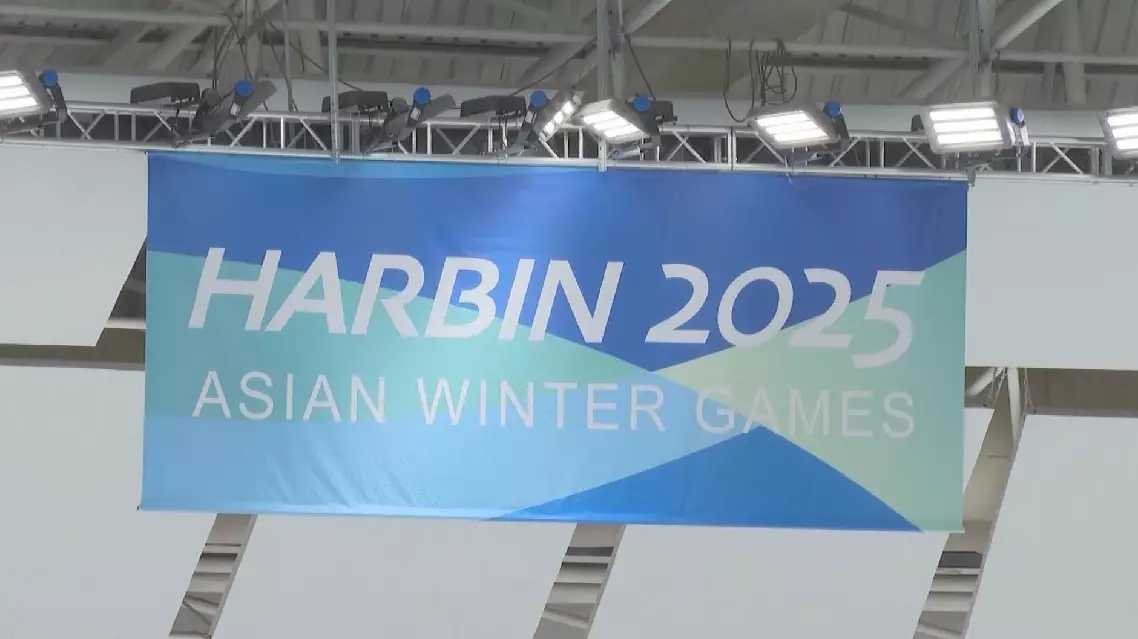
Athletes aim to deliver best performances in pursuit of glory at Asian Winter Games
An artificial intelligence (AI) foundation model specialized for analyzing human genetic diversity was launched at Shanghai's cutting-edge Model Speed Space innovation hub on Tuesday.
Named SNPBAG, it is the world's first large model built specifically for genomic analysis, promising to precisely predict diseases and advance personalized health care.
The model focuses on single nucleotide polymorphisms (SNPs), the most common type of genetic variation among people, which influence traits such as height, intelligence and personality.
Currently, SNPBAG can be used for ancestry tracing and kinship identification. In the future, with further training, it is expected to predict disease risks at various life stages based on DNA sequences, offering higher screening accuracy than existing genetic testing methods.
"As far as we know, traditional methods examine SNPs point by point for correlations with traits like height or intelligence, without taking into account, for example, interactions between or among genes. Therefore, we need a model that can autonomously identify these complex relationships. Now, we've found such a tool that can bring close two gene expressions [of the human body] that are far away from each other and provide biological interpretations," said Tang Kun, an expert of computational biology and founder of Shanghai Feipu Intelligent Technology Co., Ltd.
Looking ahead, the model will support the development of China's sovereign genomic database, promote its domestic self-reliance, enhance AI-driven drug discovery and improve the target screening success rates by over 200 percent. It also aims to make precision health care more accessible.
"The most well-known application is non-invasive prenatal screening. Currently, only a few conditions are covered by national insurance, but there are over 20,000 rare diseases in children. We are now collaborating with Shanghai Children’s Hospital to expand screening coverage," said Lu Sitong, CEO of Shanghai Feipu Intelligent Technology.
With SNPBAG, non-invasive prenatal screening is expected to detect a broader range of rare diseases in the future. The company said it also plans to launch consumer-facing products to benefit the general public.

China launches world's first foundation model for genomic analysis