The ongoing Asian Winter Games has sparked a skiing boom in its host city of Harbin in northeast China's Heilongjiang Province, with Yabuli, the venue for the Games' snow sports events, seeing a particularly high number of tourist arrivals.
Lasting from Feb. 7 to 14, the Games are proceeding in two competition zones, one in Harbin City and the other in Yabuli County of Harbin.
While two of Yabuli's six ski resorts are temporarily closed to serve as venues for the Games, the remaining four are fully operational and open to tourists.
One of these resorts has seen a record-breaking number of visitors this winter.
Usually, the number of visitors at the resort drops after the Spring Festival holiday, but it is not the case this year. Data showed that the resort is currently receiving around 20,000 visitors daily, a 20 percent increase from the same period last year.
Since the start of the skiing season in November 2024, it has welcomed a total of 900,000 visitors and set a single-day record of 32,000 visitors.
The Games has clearly ignited the public's passion for skiing and boosted the Yabuli's popularity, as it has attracted many beginners from southern China.
To cater to these newcomers, the ski resorts there have added four new beginner slopes and increased the number of ski instructors from 500 to 900.
With professional guidance, first-time skiers can quickly pick up the basics and enjoy the sport in just half a day.
The event also has greatly spurred the development of local rural tourism. Many guesthouses near ski resorts in Yabuli have been fully booked, with most rooms occupied until the Lantern Festival on Feb. 12.
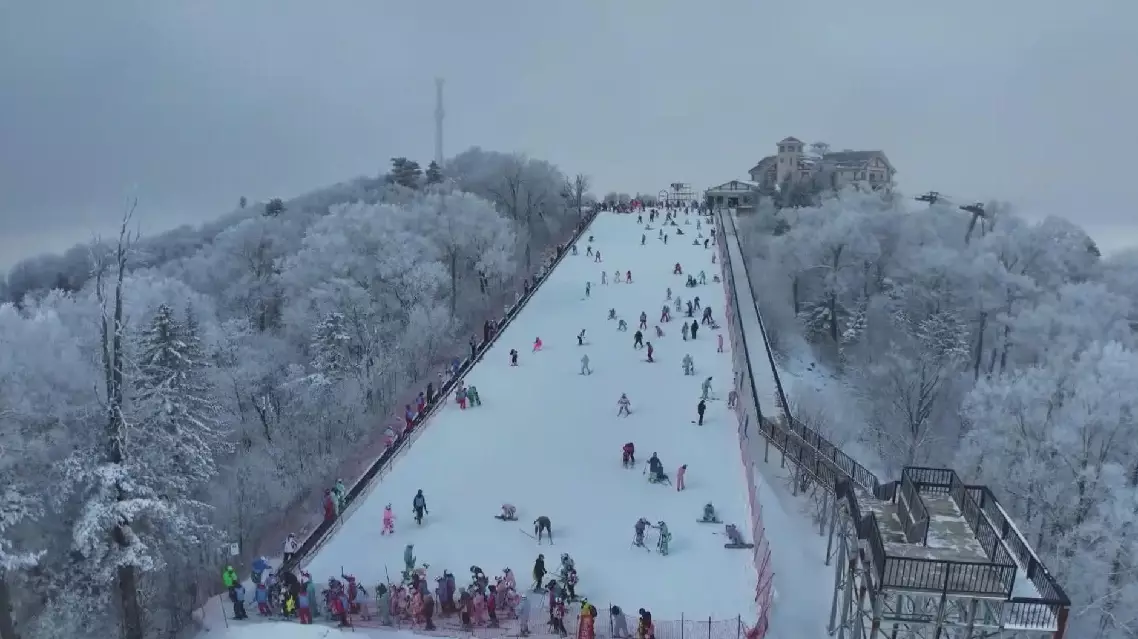
Asian Winter Games ignites skiing frenzy in Harbin's Yabuli Ski Resort
At least eight civilians were killed and 95 others wounded in U.S. and Israeli attacks on a bridge in Iran's northern Alborz province on Thursday, the official news agency IRNA reported.
According to the report, the B1 bridge, located in the provincial capital Karaj, is one of the highest bridges in the Middle East and among the most complicated projects in Iran. It was targeted twice with missiles on Thursday.
IRNA cited Qodratollah Seif, the province's deputy governor for political, security and social affairs, as saying that among those killed and injured were inhabitants of Bileqan village, passengers and the families who had gathered in the nearby areas for the Nature Day, a traditional Iranian holiday marking the end of the Nowruz holidays.
He added that there were no military activities in the areas surrounding the bridge, stressing that the structure was under construction and scheduled to be inaugurated in the coming days.
Seif said those injured in the strikes were immediately transferred to nearby medical centers, and some of them were hospitalized.
U.S. President Donald Trump posted a video on the social media Truth Social, showing smoke rising from the B1 bridge in Karaj, hours after threatening to bomb the country "back to the Stone Ages," warning of further destruction unless Iran comes to the table to end the five-week war.
Trump delivered a speech earlier on Wednesday in which he argued that the war launched by the United States and Israel was almost over -- even as he threatened to bomb Iran "extremely hard" if it did not bow to his demands.
Condemning the attacks in a post on X, Iran's Foreign Minister Seyed Abbas Araghchi said, "Striking civilian structures, including unfinished bridges, will not compel Iranians to surrender."
He added, "It only conveys the defeat and moral collapse of an enemy in disarray. Every bridge and building will be built back stronger. What will never recover: damage to America's standing."
On Feb 28, Israel and the United States launched joint attacks on Tehran and several other Iranian cities, killing Iran's then Supreme Leader Ali Khamenei, along with senior military commanders and civilians. Iran responded with waves of missile and drone strikes targeting Israel and U.S. assets in the Middle East.
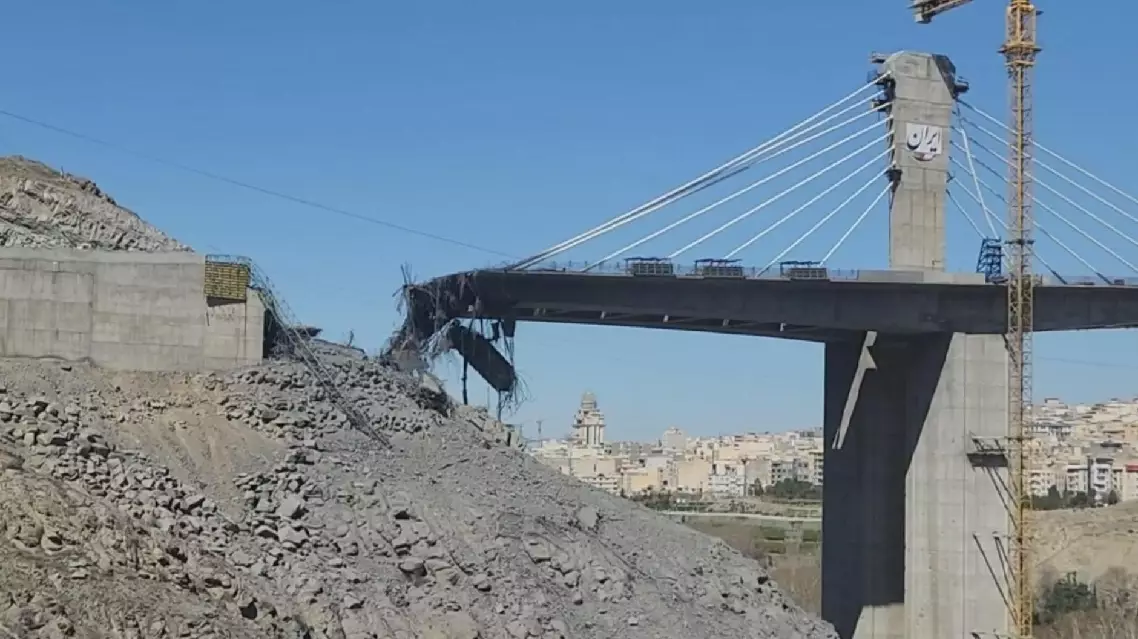
8 killed, 95 wounded in US-Israeli attacks on Iran bridge