Baquan, a village that boasts a long history of silkworm breeding in east China's Zhejiang Province, came alive on Saturday with a vibrant celebration of the upcoming Lantern Festival, featuring a unique "silkworm dragon" parade.
Over 600 villagers participated in the event, parading as each held a silkworm cocoon-shaped lantern. The lanterns, when combined, formed a 1,200-meter-long dragon.
The villagers paraded through the village streets before gathering in a square to form multiple concentric circles, with the dragon swirling around the center in a dazzling field of lanterns under the night sky.
"This event is incredibly lively. With a representative from every household, we're all filled with joy and excitement," said Lu Yueping, a local villager.
The special event is not just a celebration of the region's silkworm farming heritage, but also a symbol of hope for a prosperous year and a bountiful harvest.
Symbolizing family reunion, the Lantern Festival falls on Wednesday this year and wraps up celebrations of the Spring Festival, the most important festival in China.

Unique "silkworm dragon" parade staged in Zhejiang to celebrate Lantern Festival
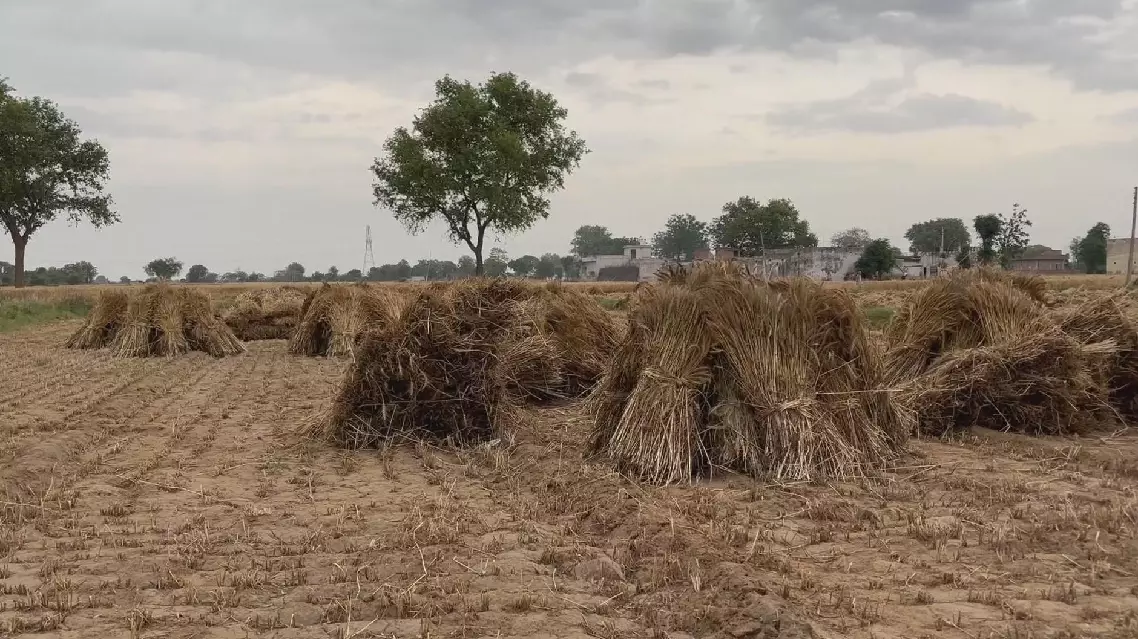
Farmers in India, a major agricultural producer and fertilizer importer, are raising concerns over fertilizer availability ahead of the planting season, as the escalating Middle East conflict and disruptions to shipping through the Strait of Hormuz put global supplies at risk.
The Middle East serves as both a vital energy hub and a major global fertilizer supplier, yet the ongoing U.S.-Israeli war with Iran has heightened risks of disruption to international supplies.
Chand Singh Yadav, a farmer in Haryana, a northern Indian state, said poor crop yields would be disastrous for the country and called on the government to ensure adequate supplies of fertilizers, agrochemicals and seeds to prevent a food crisis. "Without fertilizers, our crops will not grow well, and this would be disastrous for the entire country. If farmers cannot grow crops, people will not be able to buy food in the market. We urge the government to improve the supply system for fertilizers, agrochemicals and seeds to prevent the country and society as a whole from sliding into a food crisis," he said.
The Indian government is stepping up subsidies for farmers and optimizing fertilizer distribution and allocation to stabilize the supply. Prices have remained broadly stable, but demand is expected to surge ahead of the planting season, potentially exacerbating supply pressures.
"The current situation is worrying for us farmers. Spring sowing has not yet started, and the rainy season has not arrived. Fertilizer prices are temporarily stable, but in two months, demand for agricultural fertilizers will become pressing. Without fertilizers, it will be difficult to properly cultivate various types of crops. Urea and diammonium phosphate are especially critical. Crops can only grow normally when these fertilizers are applied. As these fertilizers are largely imported, if the conflict persists, supplies cannot be guaranteed," said Santosh Mishra, a farmer in India's eastern state of Odisha.
Escalating Middle East conflict strains India’s fertilizer supply
Escalating Middle East conflict strains India’s fertilizer supply