WASHINGTON (AP) — President Donald Trump said Monday he is banning federal use of paper straws, saying they “don’t work” and don't last very long. Instead he wants the government to exclusively move to plastic.
“It’s a ridiculous situation. We’re going back to plastic straws,” Trump said as he signed an executive order to reverse federal purchasing policies that encourage paper straws and restrict plastic ones. The order directs federal agencies to stop buying paper straws “and otherwise ensure that paper straws are no longer provided within agency buildings.”
Click to Gallery
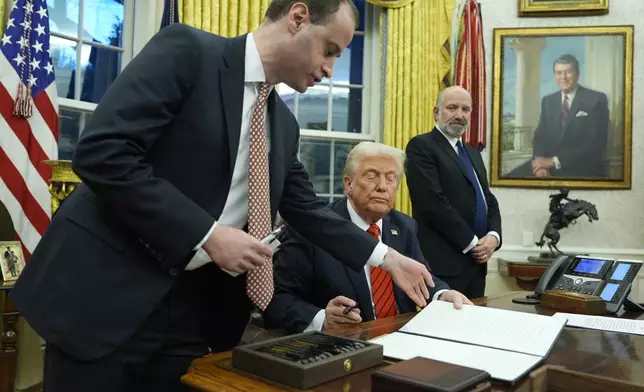
White House staff secretary Will Scharf hands President Donald Trump an executive order to sign in the Oval Office at the White House, Monday, Feb. 10, 2025, in Washington, as Commerce Secretary nominee Howard Lutnick watches. (Photo/Alex Brandon)
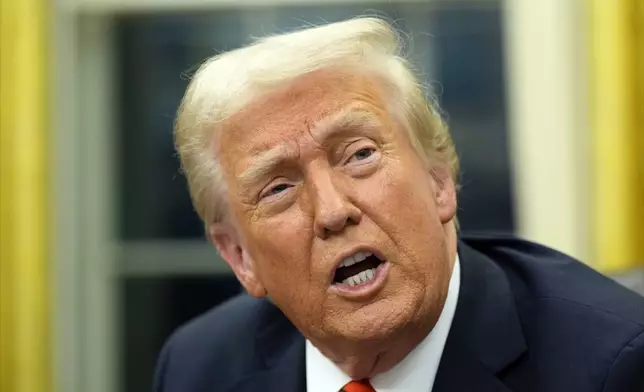
President Donald Trump speaks with reporters as he signs executive orders in the Oval Office at the White House, Monday, Feb. 10, 2025, in Washington. (Photo/Alex Brandon)
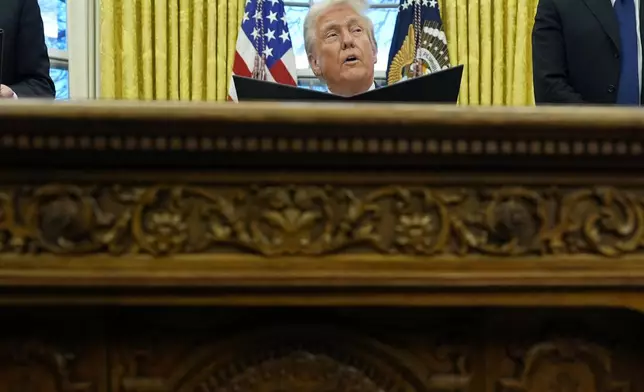
President Donald Trump speaks with reporters as he signs an executive order in the Oval Office at the White House, Monday, Feb. 10, 2025, in Washington. (Photo/Alex Brandon)
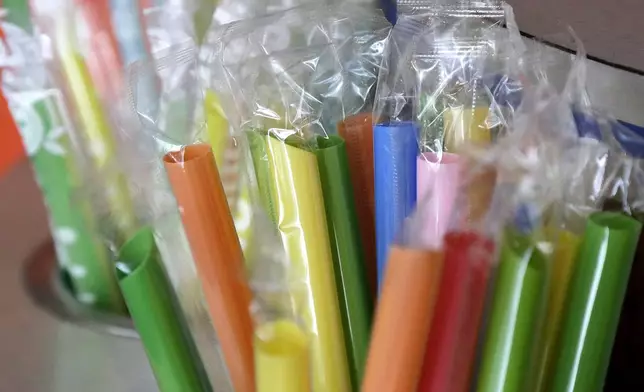
FILE - Wrapped plastic straws are seen at a bubble tea cafe in San Francisco, July 17, 2018. (AP Photo/Jeff Chiu, File)
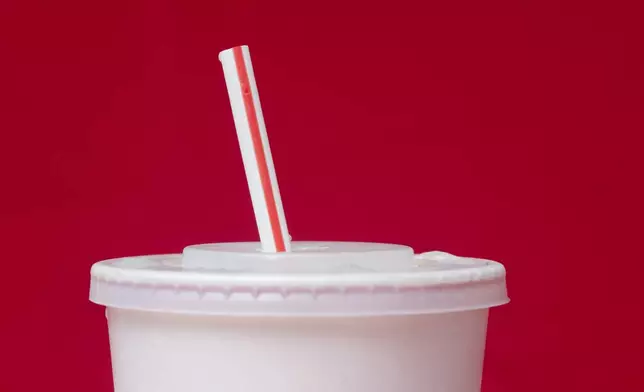
FILE- A large soft drink with a plastic straw from a McDonald's restaurant is shown in Surfside, Fla., May 24, 2018. (AP Photo/Wilfredo Lee, File)
The move by Trump — who has long railed against paper straws, and whose 2019 reelection campaign sold Trump-branded reusable plastic straws for $15 per pack of 10 — targets a Biden administration policy to phase out federal purchases of single-use plastics, including straws, from food service operations, events and packaging by 2027, and from all federal operations by 2035.
Trump declared President Joe Biden’s policy “DEAD!” in a social media post over the weekend.
While plastic straws have been blamed for polluting oceans and harming marine life, Trump said Monday that he thinks "it's OK” to continue using them. “I don’t think that plastic is going to affect the shark very much as they’re eating, as they’re munching their way through the ocean,'' he said at a White House announcement.
Several U.S. states and cities have banned plastic straws, and some restaurants no longer automatically give them to customers. But plastic straws are only a small part of the problem. The environment is littered with single-use plastic food and beverage containers — water bottles, takeout containers, coffee lids, shopping bags and more.
Around the world, the equivalent of one garbage truck of plastic enters the ocean every minute from a range of sources, including plastic bags, toothbrushes, bottles, food packaging and more, experts say. As those materials break down in the environment, microplastics are turning up in the stomachs of fish, birds and other animals, as well as in human blood and tissue.
And plastic manufacturing releases planet-warming greenhouse gases and other dangerous pollutants. More than 90% of plastic products are derived from fossil fuels such as oil and natural gas, and millions of tons of plastic waste enter the world’s oceans every year. Many multinational companies have moved away from plastic straws and have made reducing plastic use across their operations central to their sustainability goals, making Trump's decision an outlier in the business world.
Trump’s order is “more about messaging than finding solutions,″ said Christy Leavitt, plastics campaign director for the environmental group Oceana, noting that most U.S. voters support requiring companies to reduce single-use plastic packaging and foodware.
“President Trump is moving in the wrong direction on single-use plastics,'' Leavitt said. “The world is facing a plastic pollution crisis, and we can no longer ignore one of the biggest environmental threats facing our oceans and our planet today.”
The plastic manufacturing industry applauded Trump's move.
“Straws are just the beginning,” Matt Seaholm, president and CEO of the Plastics Industry Association, said in a statement. “‘Back to Plastic’ is a movement we should all get behind.”
More than 390 million straws are used every day in the United States, mostly for 30 minutes or less, according to advocacy group Straws Turtle Island Restoration Network. Straws take at least 200 years to decompose and pose a threat to turtles and other wildlife as they degrade into microplastics, the group says.
"To prevent another sea turtle from becoming a victim to plastic, we must make personal lifestyle alterations to fight for these species,'' the group said in a statement.
Every year, the world produces more than 400 million tons of new plastic. About 40% of all plastics are used in packaging, according to the United Nations.
Globally, nations are creating a treaty to address plastic pollution. Leaders met for a week in South Korea late last year but didn’t reach an agreement. Talks resume this year as more than 100 countries pursue a pact that limits plastic production as well as tackles cleanup and recycling.
The U.S., China and Germany are the biggest players in the global plastics trade. U.S. manufacturers have asked Trump to remain at the negotiating table, and to revert to Biden’s previous position that focused on redesigning plastic products, recycling and reuse.
White House staff secretary Will Scharf, who presented the executive order to Trump, told him the push for paper straws has cost the government and private industry “an absolute ton of money and left consumers all over the country wildly dissatisfied with their straws. It really is something that affects ordinary Americans in their everyday lives."
Associated Press writer Jennifer McDermott in Providence, Rhode Island, contributed to this story.

White House staff secretary Will Scharf hands President Donald Trump an executive order to sign in the Oval Office at the White House, Monday, Feb. 10, 2025, in Washington, as Commerce Secretary nominee Howard Lutnick watches. (Photo/Alex Brandon)
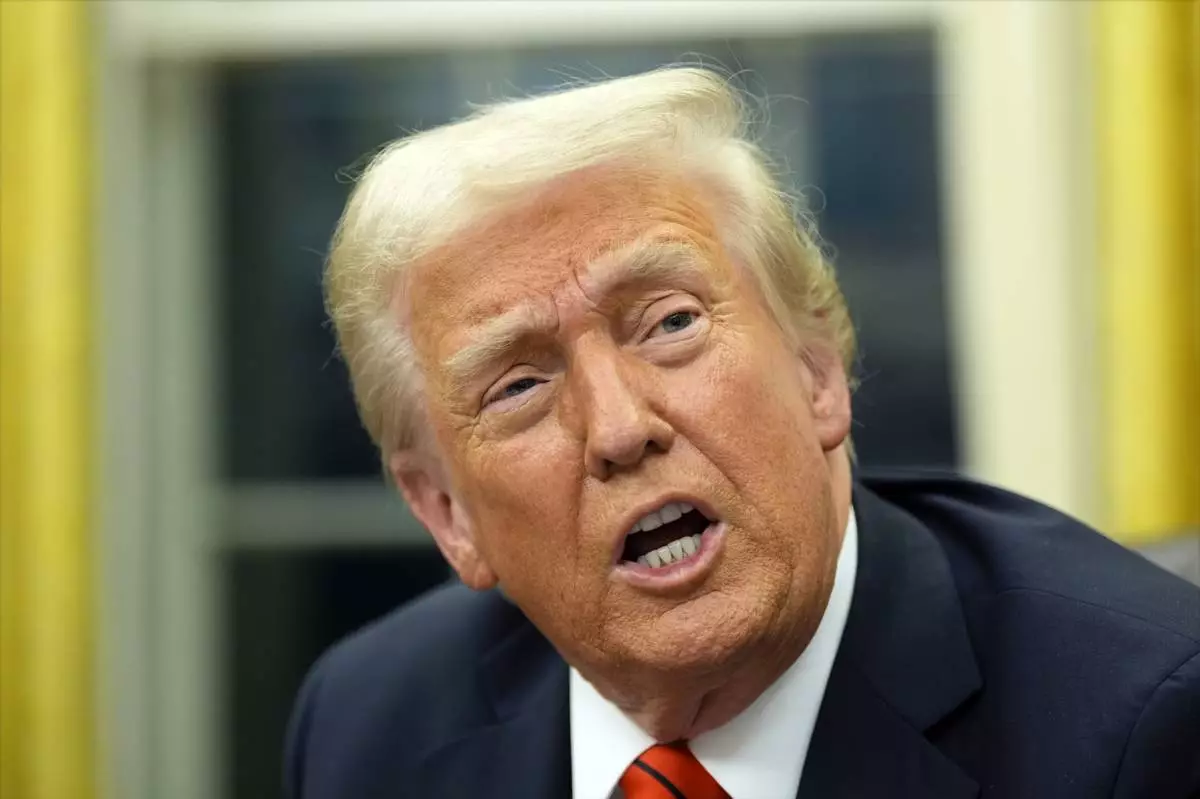
President Donald Trump speaks with reporters as he signs executive orders in the Oval Office at the White House, Monday, Feb. 10, 2025, in Washington. (Photo/Alex Brandon)
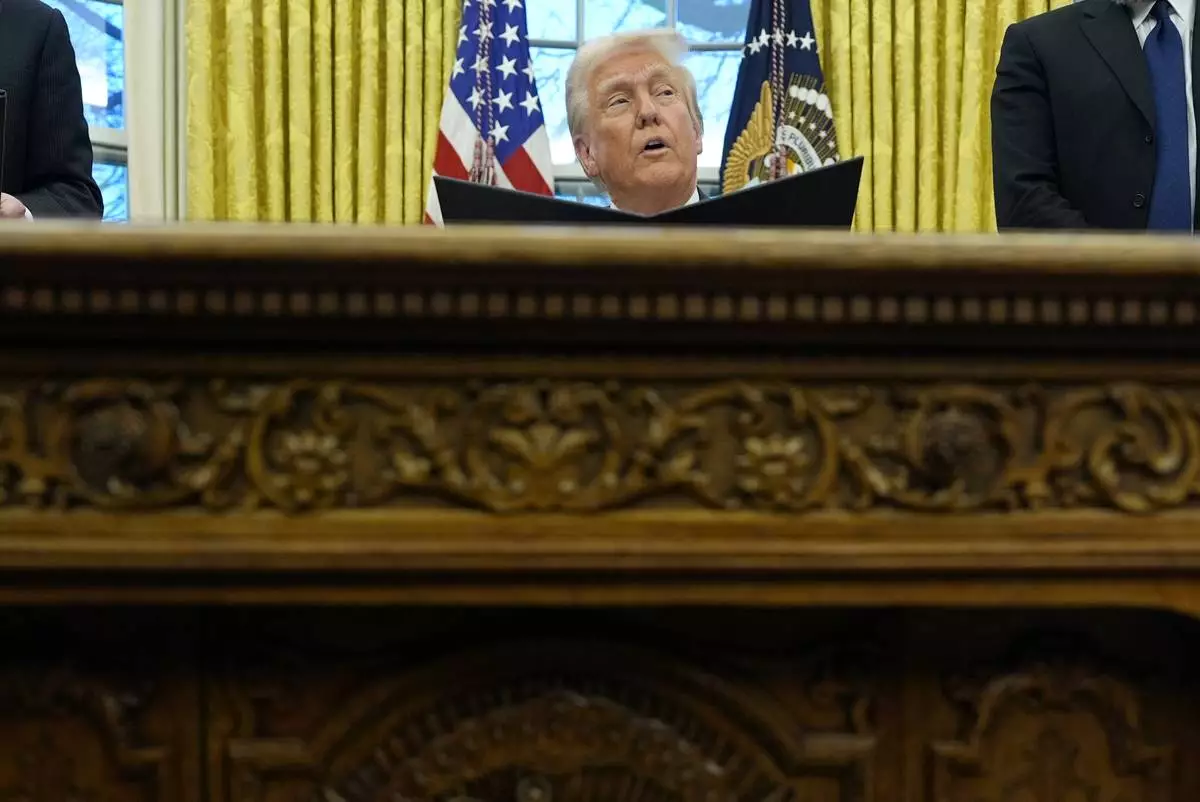
President Donald Trump speaks with reporters as he signs an executive order in the Oval Office at the White House, Monday, Feb. 10, 2025, in Washington. (Photo/Alex Brandon)
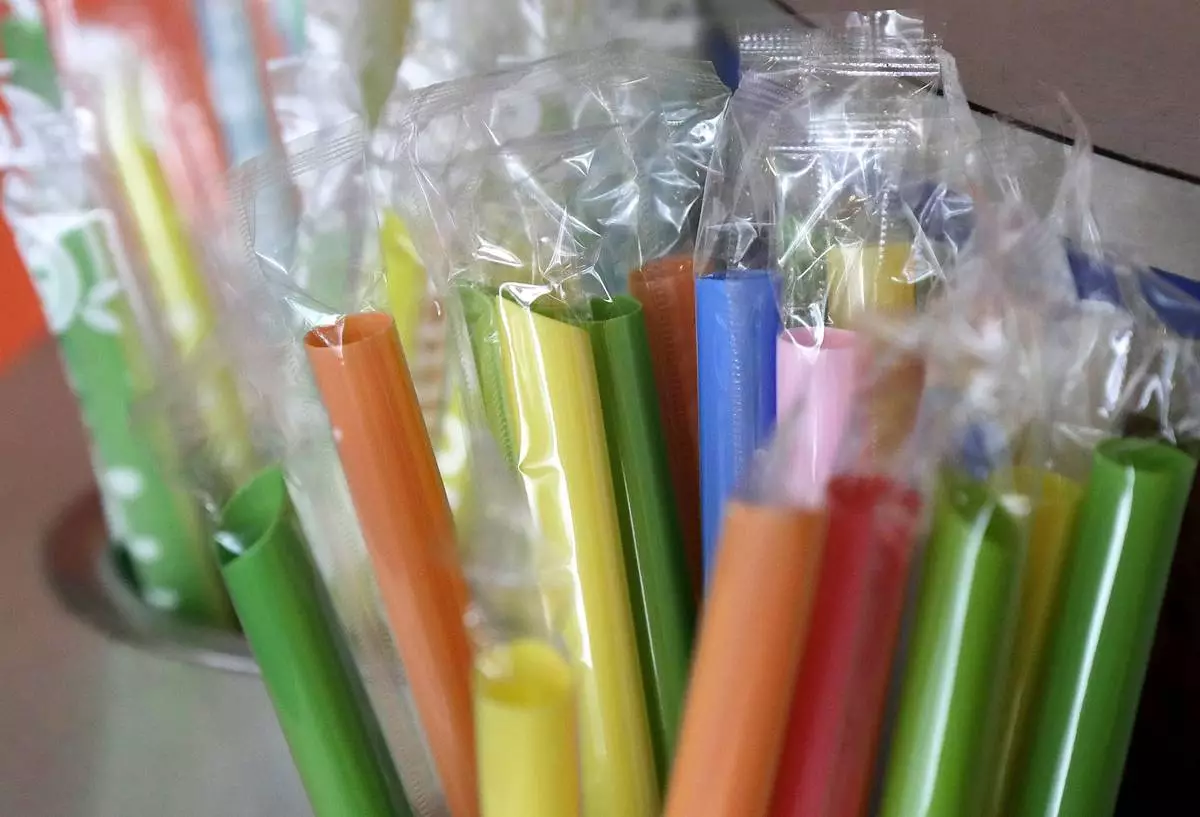
FILE - Wrapped plastic straws are seen at a bubble tea cafe in San Francisco, July 17, 2018. (AP Photo/Jeff Chiu, File)
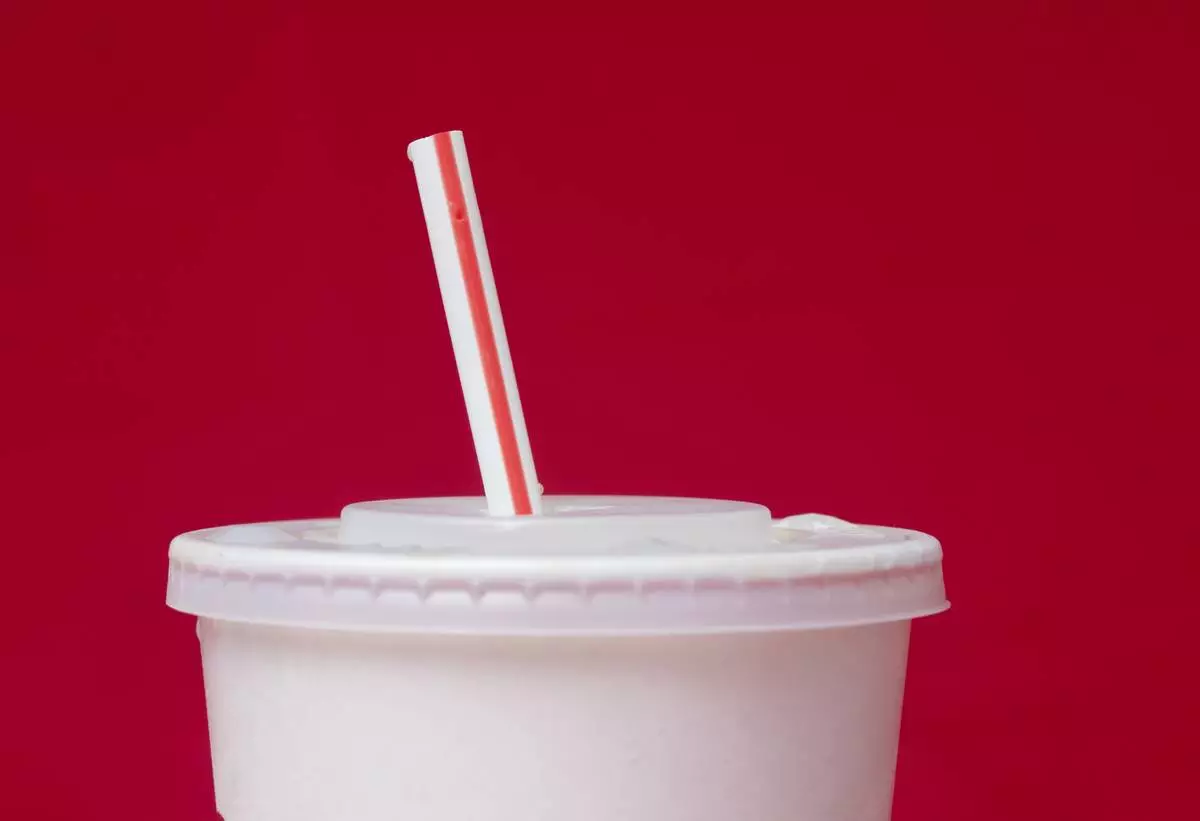
FILE- A large soft drink with a plastic straw from a McDonald's restaurant is shown in Surfside, Fla., May 24, 2018. (AP Photo/Wilfredo Lee, File)