A Chinese business delegation of 32 enterprises set off to Kazakhstan on Monday, hoping to explore new economic and trade opportunities in the Central Asian country.
The delegation covers a diverse range of industries, including minerals, energy, petrochemicals, finance, trade, logistics, and mechanical manufacturing.
The delegation is the first of its kind organized by the China Council for the Promotion of International Trade (CCPIT) after this year's Spring Festival, the most important holiday in Chinese culture.
"The CCPIT has organized a delegation of Chinese entrepreneurs to conduct a four-day trip to Kazakhstan on economic and trade exchanges, hoping to achieve more practical outcomes," said Yang Xiaojun, director of the CCPIT's promotion department.
During the visit, an array of events will be held, providing businesses from both countries the opportunity to explore cooperation in such sectors as oil and gas trade, clean energy, and e-commerce.
In addition, the delegation will advocate for the third China International Supply China Expo, boost international cooperation in industrial and supply chains, and foster mutual benefits.
"Through this group trip, I hope that we can have in-depth exchanges on equipment manufacturing and intelligent technology with our partners from Kazakhstan," said Tan Xue, general manager of Tai'an Jiuzhou Jincheng Machinery Company.
Bilateral trade between China and Kazakhstan surpassed 43.8 billion U.S. dollars in 2024, up 6.8 percent from the previous year.
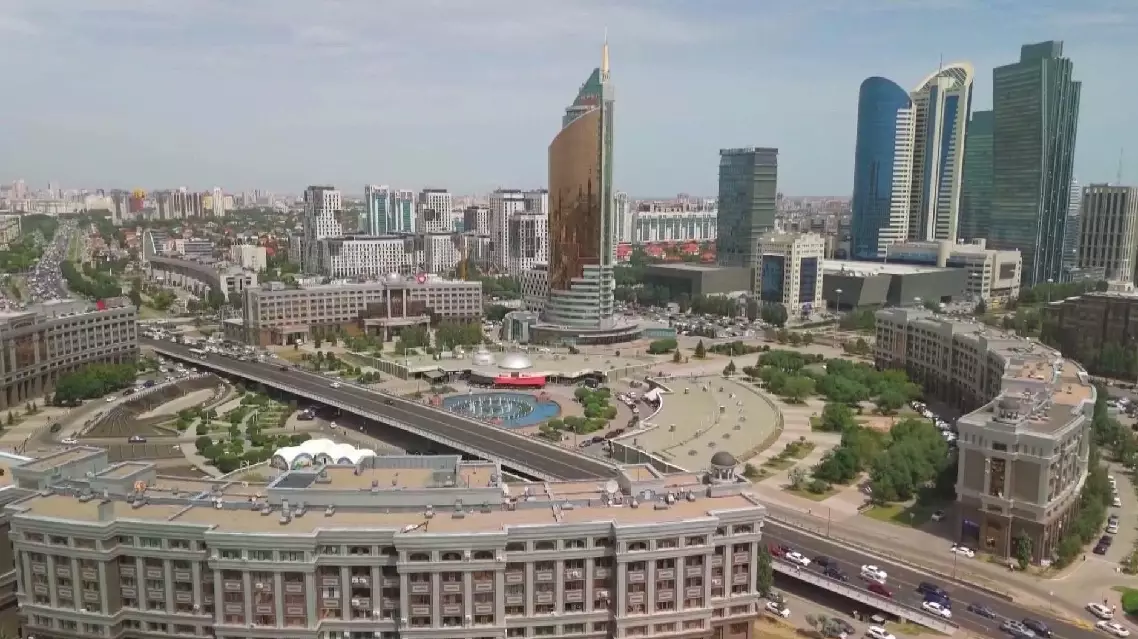
Chinese business delegation departs for Kazakhstan in serach of new opportunities
China's development has never been a "threat" to anyone but the source of growth advancing common development of all countries, Foreign Ministry spokesman Lin Jian said at a regular press conference in Beijing on Friday.
Some Western media and think tanks are peddling so-called "China Shock 2.0," saying that "China is achieving fast development in high-tech sectors such as renewable energy and AI and relies on foreign markets to absorb its overcapacity, thus reducing the market share of developed countries and sending more serious shock waves to the global economy compared with the era of traditional manufacture industry," while there are foreign commentators saying that the "China Shock 2.0" argument ignores the genuine innovation occurring within the Chinese industrial ecosystem and that Chinese export is the exact booster of the global economy that is needed in the turbulent period and more indispensable than ever.
Commenting on that, Lin said: "From the world's factory to the world's market and innovation powerhouse, China's development is achieved through strong performance driven by innovation and brings tangible cooperation opportunities and space to the world. High-quality Chinese products represented by the 'old three' of textiles, furniture and home appliances have stabilized the global industrial and supply chain, lowered the living cost of global consumers and eased the inflationary pressure worldwide. China's green production capacity represented by the 'new three' of electric vehicles, batteries and solar panels has bridged the gap between supply and demand in global green development and bolstered the global energy transition and low-carbon development. Moreover, China's high-tech products represented by the 'new new three' of robots, AI and innovative drugs have broken high-tech barriers and monopoly and enabled people in more countries to access affordable new technologies," said the spokesman.
"Openness and cooperation bring about progress and win-win result. China's development has never been a 'threat' to anyone but the source of growth advancing common development of all countries. What really creates 'shocks' to the world has never been the innovation of Chinese companies and efficiency of Chinese industrial capacity, but protectionist moves of setting up barriers, decoupling and severing industrial and supply chains. China will stay committed to high-standard opening up, defend the multilateral trading system and provide more certainty and new impetus to the world economy with its own steady development," said Lin.
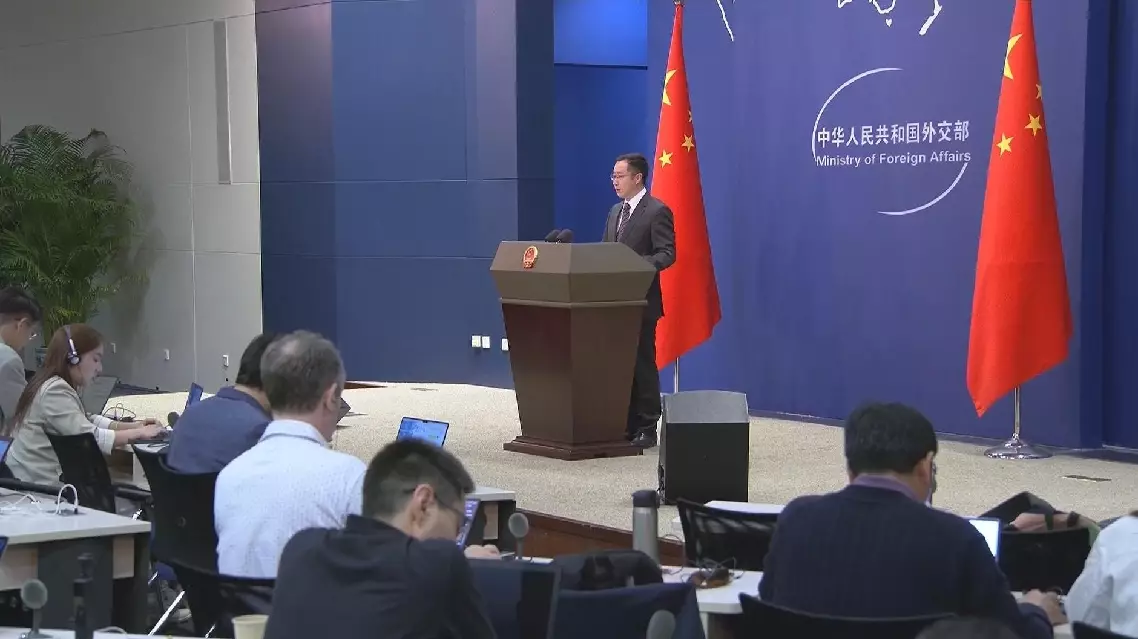
China's development never a threat: FM spokesman