HONG KONG, Feb. 12, 2025 /PRNewswire/ -- This Valentine's Day, Bernhard H. Mayer, a luxury brand available exclusively through QNET, introduces the Alto Ceramic Watch and the Insignia Heart Jewelry Set, both exemplifying the brand's commitment to timeless design and exceptional craftsmanship.
The Alto Ceramic Watch, crafted in Switzerland, features a scratch-resistant ceramic bezel, stainless-steel case, and sapphire crystal glass. It operates on precision quartz movement with luminous hands for low-light readability and is water-resistant up to 50 meters—blending durability with refined aesthetics for everyday wear.
The global luxury watch market, valued at USD 42.21 billion in 2022, is projected to grow at a CAGR of 5.0% through 2030, driven by increasing demand for premium timepieces and evolving consumer preferences. Ceramic watches, known for their durability, lightweight design, and hypoallergenic properties, have become a standout choice. Their resistance to scratches and fading, along with advancements in ceramic technology, enhances their appeal among modern consumers.
The Insignia Heart Jewelry Set, featuring a pendant and matching earrings with heart-shaped motifs and gemstone accents, is crafted from high-quality materials for versatile wear, either as a set or individually.
"Valentine's Day is more than just a date on the calendar; it's a time when people seek meaningful ways to express their emotions," said Trevor Kuna, QNET's Chief Marketing Officer. "Jewelry and timepieces, with their timeless appeal, become powerful symbols of heartfelt sentiments. The Alto Ceramic Watch, with its enduring craftsmanship and sleek design, represents the strength and resilience of lasting connections, while the Insignia Heart Jewelry Set captures the essence of love and emotional resonance. Together, they reflect the depth and beauty of relationships, making them meaningful choices to celebrate Valentine's Day."
The new collection is available exclusively through QNET, a global wellness and lifestyle company that uses a direct selling business model. QNET's craftsmanship and attention to detail make Bernhard H. Mayer's collections stand out in a crowded marketplace. The Alto Ceramic Watch represents enduring love with its high-quality materials and timeless design, while the Insignia Heart Set symbolizes deep emotional connections. This Valentine's Day, gift more than just beauty—gift a symbol of commitment and elegance. Explore the collection at QNET's official website at www.qnet.net and celebrate love with purpose.
ABOUT QNET
QNET, a global lifestyle and wellness company, uses a direct selling business model to promote unique products that enable people to take charge of their health, well-being, and lifestyle.
Since 1998, QNET's innovative products and e-commerce-driven business model have helped build a global community of satisfied customers and microentrepreneurs, who are driven by the mission of RYTHM – Raise Yourself To Help Mankind. Popular product brands offered by QNET include the Bernhard H. Mayer range of luxury watches and jewelry, HomePure range of home care products, the Amezcua wellness range, Physio Radiance personal care range, and QVI branded holiday packages.
QNET proudly exemplifies high industry standards and is a member of numerous Direct Selling Associations worldwide. Its active engagement in several global sports sponsorships including in its role as the official direct selling partner of the Manchester City Football Club (MCFC) and the Confederation of African Football (CAF), highlights the company's commitment to excellence.
Discover a world of new possibilities with QNET by visiting www.qnet.net
** The press release content is from PR Newswire. Bastille Post is not involved in its creation. **

Timeless Love: QNET's Bernhard H. Mayer Showcases Elegant Craftsmanship for Valentine's Day

Timeless Love: QNET's Bernhard H. Mayer Showcases Elegant Craftsmanship for Valentine's Day
|
NINGBO, China, April 9, 2026 /PRNewswire/ -- The Shanghai Cooperation Organization's (SCO) Green and Sustainable Development Forum was held in Ningbo, Zhejiang province, April 28–30. At this international event focused on green, low–carbon transition, Ningbo showcased concrete examples of harmonious coexistence between people and nature.
An abandoned quarry has been converted into an international racetrack, whose engine roars have stimulated a growing cultural and tourism sector. A once–barren "firewood trail" has been upgraded into a national mountaineering route, spawning distinctive local industries now known as the "Hometown of China's Sports Walking Sticks" and the "Capital of China's Flashlights." Ningbo continues to advance its "Eco+" integration model, turning ecological assets into industrial momentum, development potential and measurable gains in shared prosperity. The city has developed a practical path for realizing the value of lucid waters and lush mountains, offering a replicable "Ningbo model" for green, low–carbon urban transformation worldwide.
In Beilun, more than 500 species have been recorded, and the district has been designated a UN "Biodiversity Charming City." From the revitalized Meishan Bay in Beilun to the misty expanse of Dongqian Lake in Yinzhou and the historic allure of Moon Lake in Haishu, local authorities are using the "golden key" of ecological governance to revive dormant green mountains and clear waters. Notably, Ningbo's ecological governance goes beyond mountain repair and water treatment: it integrates "Eco+" development from the source through unified planning and coordinated implementation—protecting ecological foundations while preserving space for industry. This forward–looking approach has produced a win–win outcome for ecology and development; along Meishan Bay's shore, cultural tourism and leisure industries have rapidly clustered, receiving more than 2 million visitors annually.
In Fenghua, the "Common Prosperity Studio" initiative has built a full–chain platform integrating "5G + IoT + Agriculture," and introduced a model that combines village–collective fixed–rent leasing, professional enterprise operation and flexible farmer participation. In Yuyao, Hemudu pioneered China's first ecological integrated farming of breeding soft–shelled turtles in water oat fields, balancing ecological protection, food security and farmers' income growth. Zhenhai Refining & Chemical has established China's first "Zero–Waste Petrochemical Base," recognized as a national model case of a "Zero–Waste Industrial Park."
Leveraging its mountain and sea resources, Ningbo has deepened chain–based integration of "Ecology + Cultural Tourism + Sports + Manufacturing," continuously converting ecological value into tangible benefits for residents. Ninghai has transformed abandoned ancient paths into a 500–km national mountaineering trail and established a national sports–industry demonstration base. Xiangshan has used the Asian Games to invigorate coastal tourism and open channels for converting marine ecological value. Yinzhou and Haishu have developed biodiversity–friendly districts and townships, fostering new sectors such as educational tourism and cultural–creative industries.
To ensure green development proceeds steadily and sustainably, Ningbo is building a multi–stakeholder governance system that includes government, enterprises and the public. Ninghai has pioneered a "Soil and Forestland Bank," using financial instruments to unlock the value of forestry resources. Yinzhou, Cixi and other areas have mobilized broad public participation in ecological protection, creating a co–construction and shared–benefits model that supports ongoing ecological value realization.
NINGBO, China, April 9, 2026 /PRNewswire/ -- The Shanghai Cooperation Organization's (SCO) Green and Sustainable Development Forum was held in Ningbo, Zhejiang province, April 28–30. At this international event focused on green, low–carbon transition, Ningbo showcased concrete examples of harmonious coexistence between people and nature.
An abandoned quarry has been converted into an international racetrack, whose engine roars have stimulated a growing cultural and tourism sector. A once–barren "firewood trail" has been upgraded into a national mountaineering route, spawning distinctive local industries now known as the "Hometown of China's Sports Walking Sticks" and the "Capital of China's Flashlights." Ningbo continues to advance its "Eco+" integration model, turning ecological assets into industrial momentum, development potential and measurable gains in shared prosperity. The city has developed a practical path for realizing the value of lucid waters and lush mountains, offering a replicable "Ningbo model" for green, low–carbon urban transformation worldwide.
In Beilun, more than 500 species have been recorded, and the district has been designated a UN "Biodiversity Charming City." From the revitalized Meishan Bay in Beilun to the misty expanse of Dongqian Lake in Yinzhou and the historic allure of Moon Lake in Haishu, local authorities are using the "golden key" of ecological governance to revive dormant green mountains and clear waters. Notably, Ningbo's ecological governance goes beyond mountain repair and water treatment: it integrates "Eco+" development from the source through unified planning and coordinated implementation—protecting ecological foundations while preserving space for industry. This forward–looking approach has produced a win–win outcome for ecology and development; along Meishan Bay's shore, cultural tourism and leisure industries have rapidly clustered, receiving more than 2 million visitors annually.
In Fenghua, the "Common Prosperity Studio" initiative has built a full–chain platform integrating "5G + IoT + Agriculture," and introduced a model that combines village–collective fixed–rent leasing, professional enterprise operation and flexible farmer participation. In Yuyao, Hemudu pioneered China's first ecological integrated farming of breeding soft–shelled turtles in water oat fields, balancing ecological protection, food security and farmers' income growth. Zhenhai Refining & Chemical has established China's first "Zero–Waste Petrochemical Base," recognized as a national model case of a "Zero–Waste Industrial Park."
Leveraging its mountain and sea resources, Ningbo has deepened chain–based integration of "Ecology + Cultural Tourism + Sports + Manufacturing," continuously converting ecological value into tangible benefits for residents. Ninghai has transformed abandoned ancient paths into a 500–km national mountaineering trail and established a national sports–industry demonstration base. Xiangshan has used the Asian Games to invigorate coastal tourism and open channels for converting marine ecological value. Yinzhou and Haishu have developed biodiversity–friendly districts and townships, fostering new sectors such as educational tourism and cultural–creative industries.
To ensure green development proceeds steadily and sustainably, Ningbo is building a multi–stakeholder governance system that includes government, enterprises and the public. Ninghai has pioneered a "Soil and Forestland Bank," using financial instruments to unlock the value of forestry resources. Yinzhou, Cixi and other areas have mobilized broad public participation in ecological protection, creating a co–construction and shared–benefits model that supports ongoing ecological value realization.
** This press release is distributed by PR Newswire through automated distribution system, for which the client assumes full responsibility. **
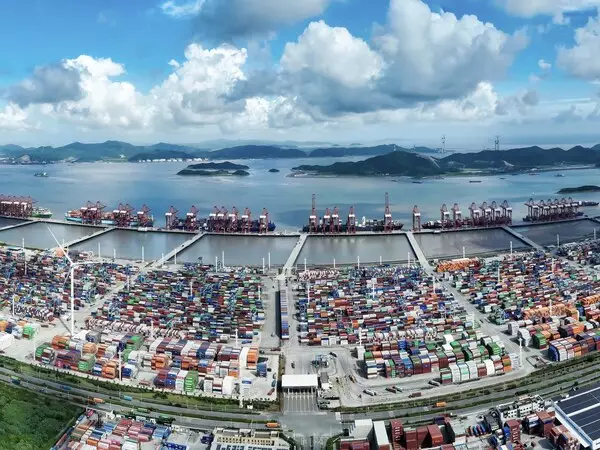
Ningbo's "Eco+" Integration Practice showcased at SCO forum