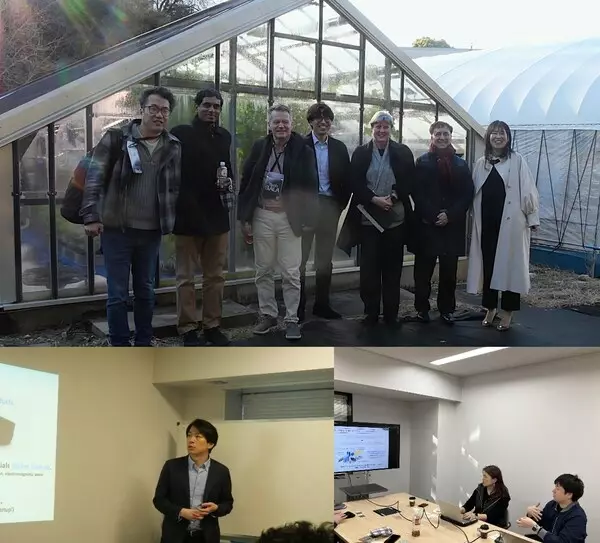
Participants also visited Nagoya University Startup Laboratory, learning firsthand about what some of the region's most promising startups are developing
NAGOYA, Japan , Feb. 12, 2025 /PRNewswire/ -- JETRO and Central Japan Startup Ecosystem Consortium held a media event for overseas and English-language media on February 4, coinciding with the opening day of TechGALA, one of Japan's largest startup events from February 4-6, in Nagoya City, Aichi Prefecture. TechGALA is the first global startup event organized by the Central Japan Startup Ecosystem Consortium.
Akira Odoi, Director of the Innovation Promotion Department at the Chubu Economic Federation, opened the media event with an in-depth overview of the Central Japan Startup Ecosystem and its strategic initiatives. Mr. Odoi highlighted how the Central Japan Startup Ecosystem provides an excellent environment for startups and its needs. He also discussed accelerator programs, financial support systems, innovative university seeds, and collaborative partnerships with ecosystems outside of Japan that are attracting a wide range of entrepreneurs to this region.
When introducing the initiatives and achievements of the Aichi-Nagoya Startup Consortium, Mr. Odoi said, "We exceeded our 5-year KPI set in 2020, doubling entrepreneurial and innovative talent to 20,327, increasing the number of business matching cases between overseas startups and local companies to 589, as well as increasing the number of startups established." He added, "There are currently 848 startups in Central Japan and with the region's strong industrial background, Central Japan presents significant potential for startups. Our ecosystem offers an excellent environment for startups to grow."
In the latter half of the media event, Kazuya Takeda, PhD, Tokai National Higher Education and Research System Professor, and Special Presidential Advisor at Nagoya University talked about the "Start-up Co-growth Package", including entrepreneur programs at Nagoya University and Tokai Higher Education and Research System (THERS).
The Central Japan Startup Ecosystem was established in July 2020 when Aichi, Nagoya, and Hamamatsu were designated as "Global Startup Ecosystem Hub Cities". Since its establishment, growth has been accelerating and Dr. Takeda said, "2024 saw some epoch-making events such as the opening of STATION Ai, which is not only the largest incubation hub in Japan, but it is also connecting itself to the world through exchange activities with the National University of Singapore."
To conclude his presentation, Dr. Takeda outlined the Nagoya University "Start-up Co-growth Package". In order to back up more startups, he explained how it wants to combine them in a holistic manner, across various sectors. It starts with "Entrepreneurship Education" (extra-curricular activities) and so far about 8,000 students in the Tokai area have taken this course. Nagoya University's mission is to cultivate "individuals possessing intellectual courage," as well as a set of compulsory courses. The next step is "Network, with academia and private sector, globally and locally. Third, is "Facilities" in the University, as well as the recently opened STATION Ai, which will also help the region grow startups further. The final part of the "Start-up Co-growth Package" is "Risk Money," which is supporting startups through Partner VC and University Capital Funds.
Dr. Takeda also talked about Tongali, an entrepreneurial platform for Central Japan's academic communities, serving 26 participating universities. It fosters entrepreneurial spirit, equips students with skills, ideation through an idea pitch content, as well as practice through overseas training, and a business development plan contest.
Media tour of Nagoya University Startup Laboratory
After the media event, participants took a tour of the Nagoya University Startup Laboratory, visiting up-and-coming startups. This fully immersive experience included visits to emerging startups such as GRA&GREEN, U-MAP, and SORA materials. Participants witnessed groundbreaking innovations, from genome editing technology in agriculture to advanced heat-dissipating materials and ultra-lightweight fibers with diverse applications. Participants toured the following Nagoya based startups:
GRA&GREEN
Participants visited an on-site laboratory and greenhouse to learn about the cultivation and oil pressing of Egoma (Perilla frutescens var. frutescens) along with a tasting session. The creation of superior species through genome editing, which is completely different from genetic modification, is a unique technology. GRA&GREEN provides joint development utilizing this gene-editing technology according to various needs and applications such as agriculture and forestry, and raw materials for food processing.
https://www.gragreen.com/en
U-MAP
The company is developing innovative materials to manage critical thermal issues. Participants listened to an explanation on heat dissipation changes in electronic devices using new materials developed by U-Map, which is improving the efficiency of heat dissipation from circuit boards and ICs without using heat sinks or electric fans.
https://umap-corp.com/en/
SORA materials
Participants had a demonstration of an ultra-light material which is lighter than air. The material is made from fibers in sheet form and has a wide range of uses. Currently, many companies are showing their attention, including major corporations.
https://sora-materials.com/en/
Background on Central Japan
Located in the Chubu region, also known as Central Japan – right in the middle of Japan's main island, Honshu, this region is proud of playing a vital role in the history of Japan's manufacturing craftsmanship. It was where Toyota first began, and as a tech pioneer, it is now the home to a wide range of sectors such as automobiles, photonics, and aerospace, using advanced, cutting-edge technologies.
Central Japan continues to invite entrepreneurs and capitalists from all corners of the world to facilitate state-of-the-art open innovation by infusing new ideas with local craftsmanship. And as a result, take part in playing a crucial role in paving the path towards the Homeland of Mobility 5.0 –the future of mobility.
About the Central Japan Startup Ecosystem
In July 2020, Aichi prefecture, Nagoya City and Hamamatsu City in Shizuoka-prefecture became one of the four regional Startup Ecosystem Global Base Cities groups designated nationwide by the Japanese Cabinet Office.
There are 848 startups in Central Japan, of which 209 are university-launched. An estimated 100.8 billion yen (from 2020 to 2024) of funds have been raised, in addition to accelerator programs, financial support systems, and innovative university seeds.
Collaborative partnerships with Station F, INSEAD, BLOCK71, Paris &Co, Bpifrance, Venture Café, Plug and Play, Israel Innovation Authority, Tsinghua University, China Medical University, National University of Singapore, the University of Texas at Austin, Stanford University, North Carolina State University, University of Nebraska and the Indian Institute of Technology Hyderabad attract a diverse range of entrepreneurs to the region.
For more information, please visit https://central-startup.jp/en/
** The press release content is from PR Newswire. Bastille Post is not involved in its creation. **
Central Japan Startup Ecosystem Holds Media Event During TechGALA, One of Japan's Largest Startup Events

Central Japan Startup Ecosystem Holds Media Event During TechGALA, One of Japan's Largest Startup Events
|
- Global DMS mandates: Europe requires DMS in new vehicles from 2026 while the U.S., China, and Japan actively pursue mandates in the autonomous driving era.
- AI image restoration: Delivers sharp visuals via AI, increasing design freedom and image quality.
- Growth of sensing business: Expands camera/LiDAR/Radar solutions, targeting USD 1.4 billion in sales by 2030.
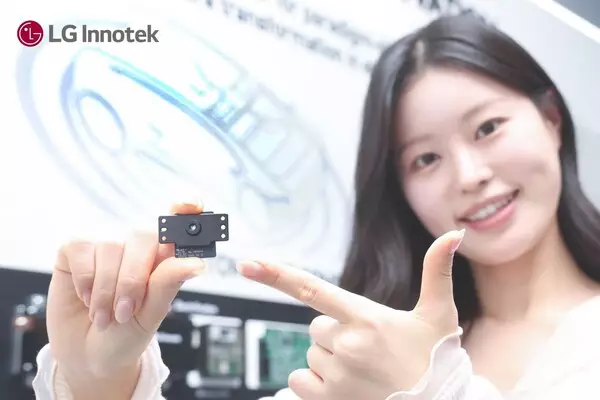
SEOUL, South Korea, Dec. 29, 2025 /PRNewswire/ -- On December 26, LG Innotek (CEO Moon Hyuksoo) announced its success in developing a 'Next-Generation Under-Display Camera Module(UDC)' installed behind a vehicle's instrument cluster to monitor the driver, with plans to unveil it at CES 2026.
The UDC is a core component of the Driver Monitoring System (DMS), which integrates a camera and software within the vehicle to continuously monitor the driver. Mounted behind the vehicle's instrument cluster display, which serves as the dashboard, the UDC remains invisible to the driver and passengers while sensing and monitoring key status indicators such as drowsiness and attention level while on the road.
DMSs are gaining significant attention as essential safety devices to prevent careless driving, particularly as autonomous driving technologies advance. Europe now mandates DMSs in new vehicles from July 2026 under the General Safety Regulation, while the U.S., China, and Japan are considering similar requirements.
The market is increasingly focusing on cameras as the core component of DMSs. The demand for invisible UDCs is thus surging, driven by the need for sophisticated, refined vehicle interior designs that prioritize seamless aesthetics, particularly in the premium and advanced autonomous vehicle segments. The invisible UDC is gaining popularity by alleviating drivers' psychological discomfort and privacy concerns associated with visible, protruding cameras in DMSs.
Overcoming image quality degradation in DMS cameras, caused by the dashboard display blocking light transmission, has long been a critical industry challenge for under-display technologies. Carmakers have hesitated to adopt UDCs due to such persistent image quality degradation.
To address this challenge, LG Innotek partnered with LG Display—a leader in automotive displays—to launch the joint development of a next-generation UDC in 2024. After about one year of intensive research and development, LG Innotek successfully introduced the industry's first 'Next-Generation UDC', which solves the problem of poor image quality while neatly concealing the camera behind the display.
- AI image restoration: Delivers sharp visuals via AI, improving design freedom and image quality
Existing DMS cameras typically protrude from the dashboard or steering wheel. By remaining visible to the driver, they hinder clean and refined interior designs.
LG Innotek's 'Next-Generation UDC' mounts seamlessly behind the vehicle display panel serving as the dashboard, rendering the camera completely invisible and undetectable. LG Innotek expects this differentiated invisible design to strongly appeal to high-end automakers seeking premium aesthetics.
LG Innotek's 'Next-Generation UDC' also delivers image quality equivalent to that of existing products. It achieves image fidelity of at least 99% compared to unobstructed cameras positioned directly in front of the driver, without display panel interference. It near-perfectly resolves the inevitable image quality degradation caused by mounting a camera behind the display panel.
Clear picture quality stands as a key element of DMS camera performance, requiring the ability to accurately detect the driver's facial expressions, eye blinking, and head movements. However, existing UDCs suffer from views obscured by the display panel, degrading image quality by about 30% compared to standard DMS cameras.
LG Innotek applied its independently developed 'AI image restoration software' to resolve the persistent image quality degradation issue. The company's software perfectly recovers degraded image quality using algorithms such as deblur (converting fuzzy images to clear ones) and denoise (removing noise captured during imaging). Carmakers are closely watching LG Innotek's 'Next-Generation UDC' for its breakthrough performance.
The company plans to continuously enhance this 'Next-Generation UDC' capabilities. An LG Innotek official stated, "Going forward, the 'Next-Generation UDC' will recognize colors and passengers as well as the driver, enabling customized conveniences such as seat adjustment and interior temperature setting."
- Growth of sensing business Expands camera/LiDAR/Radar solutions, targeting USD 1.4 billion in sales by 2030
With the development of this 'Next-Generation UDC', LG Innotek has strengthened its lineup of autonomous driving sensing solutions, covering both in-cabin and exterior vehicle monitoring.
The company aims to lead the global market by launching integrated solutions that combine vehicle camera modules, LiDAR, and Radar, leveraging its leadership in smartphone camera modules to establish itself as a 'leading provider of autonomous driving sensing solutions'.
Last year, LG Innotek launched a high-performance heated camera that halves snow and frost removal time as well as an 'RGB-IR in-cabin camera module' that monitors both driver and passengers through a single unit.
In July this year, LG Innotek signed a strategic partnership with Aeva, a leading U.S. LiDAR technology company. In September, it also made an equity investment in Smart Radar System, a Korean firm specializing in 4D imaging radar technology, to secure advanced autonomous driving sensing solutions.
CEO Moon Hyuksoo stated, "LG Innotek aims to grow its vehicle sensing solutions business to USD 1.4 billion in sales by 2030. By continuously delivering innovative components that provide distinguished customer value, we will become a trusted technology partner that realizes our customers' visions."
According to S&P Global, the global in-cabin camera module market is projected to grow from USD 1.8 billion in 2025 to USD 5.1 billion in 2035, at a CAGR of 11%.
- Global DMS mandates: Europe requires DMS in new vehicles from 2026 while the U.S., China, and Japan actively pursue mandates in the autonomous driving era.
- AI image restoration: Delivers sharp visuals via AI, increasing design freedom and image quality.
- Growth of sensing business: Expands camera/LiDAR/Radar solutions, targeting USD 1.4 billion in sales by 2030.
SEOUL, South Korea, Dec. 29, 2025 /PRNewswire/ -- On December 26, LG Innotek (CEO Moon Hyuksoo) announced its success in developing a 'Next-Generation Under-Display Camera Module(UDC)' installed behind a vehicle's instrument cluster to monitor the driver, with plans to unveil it at CES 2026.
The UDC is a core component of the Driver Monitoring System (DMS), which integrates a camera and software within the vehicle to continuously monitor the driver. Mounted behind the vehicle's instrument cluster display, which serves as the dashboard, the UDC remains invisible to the driver and passengers while sensing and monitoring key status indicators such as drowsiness and attention level while on the road.
DMSs are gaining significant attention as essential safety devices to prevent careless driving, particularly as autonomous driving technologies advance. Europe now mandates DMSs in new vehicles from July 2026 under the General Safety Regulation, while the U.S., China, and Japan are considering similar requirements.
The market is increasingly focusing on cameras as the core component of DMSs. The demand for invisible UDCs is thus surging, driven by the need for sophisticated, refined vehicle interior designs that prioritize seamless aesthetics, particularly in the premium and advanced autonomous vehicle segments. The invisible UDC is gaining popularity by alleviating drivers' psychological discomfort and privacy concerns associated with visible, protruding cameras in DMSs.
Overcoming image quality degradation in DMS cameras, caused by the dashboard display blocking light transmission, has long been a critical industry challenge for under-display technologies. Carmakers have hesitated to adopt UDCs due to such persistent image quality degradation.
To address this challenge, LG Innotek partnered with LG Display—a leader in automotive displays—to launch the joint development of a next-generation UDC in 2024. After about one year of intensive research and development, LG Innotek successfully introduced the industry's first 'Next-Generation UDC', which solves the problem of poor image quality while neatly concealing the camera behind the display.
- AI image restoration: Delivers sharp visuals via AI, improving design freedom and image quality
Existing DMS cameras typically protrude from the dashboard or steering wheel. By remaining visible to the driver, they hinder clean and refined interior designs.
LG Innotek's 'Next-Generation UDC' mounts seamlessly behind the vehicle display panel serving as the dashboard, rendering the camera completely invisible and undetectable. LG Innotek expects this differentiated invisible design to strongly appeal to high-end automakers seeking premium aesthetics.
LG Innotek's 'Next-Generation UDC' also delivers image quality equivalent to that of existing products. It achieves image fidelity of at least 99% compared to unobstructed cameras positioned directly in front of the driver, without display panel interference. It near-perfectly resolves the inevitable image quality degradation caused by mounting a camera behind the display panel.
Clear picture quality stands as a key element of DMS camera performance, requiring the ability to accurately detect the driver's facial expressions, eye blinking, and head movements. However, existing UDCs suffer from views obscured by the display panel, degrading image quality by about 30% compared to standard DMS cameras.
LG Innotek applied its independently developed 'AI image restoration software' to resolve the persistent image quality degradation issue. The company's software perfectly recovers degraded image quality using algorithms such as deblur (converting fuzzy images to clear ones) and denoise (removing noise captured during imaging). Carmakers are closely watching LG Innotek's 'Next-Generation UDC' for its breakthrough performance.
The company plans to continuously enhance this 'Next-Generation UDC' capabilities. An LG Innotek official stated, "Going forward, the 'Next-Generation UDC' will recognize colors and passengers as well as the driver, enabling customized conveniences such as seat adjustment and interior temperature setting."
- Growth of sensing business Expands camera/LiDAR/Radar solutions, targeting USD 1.4 billion in sales by 2030
With the development of this 'Next-Generation UDC', LG Innotek has strengthened its lineup of autonomous driving sensing solutions, covering both in-cabin and exterior vehicle monitoring.
The company aims to lead the global market by launching integrated solutions that combine vehicle camera modules, LiDAR, and Radar, leveraging its leadership in smartphone camera modules to establish itself as a 'leading provider of autonomous driving sensing solutions'.
Last year, LG Innotek launched a high-performance heated camera that halves snow and frost removal time as well as an 'RGB-IR in-cabin camera module' that monitors both driver and passengers through a single unit.
In July this year, LG Innotek signed a strategic partnership with Aeva, a leading U.S. LiDAR technology company. In September, it also made an equity investment in Smart Radar System, a Korean firm specializing in 4D imaging radar technology, to secure advanced autonomous driving sensing solutions.
CEO Moon Hyuksoo stated, "LG Innotek aims to grow its vehicle sensing solutions business to USD 1.4 billion in sales by 2030. By continuously delivering innovative components that provide distinguished customer value, we will become a trusted technology partner that realizes our customers' visions."
According to S&P Global, the global in-cabin camera module market is projected to grow from USD 1.8 billion in 2025 to USD 5.1 billion in 2035, at a CAGR of 11%.
** The press release content is from PR Newswire. Bastille Post is not involved in its creation. **
"Hidden Behind the Dashboard"… LG Innotek Unveils 'Next-Generation Under-Display Camera' at CES 2026