Vibrant intangible cultural heritage activities and time-honored folklore performances have been unfolded across China to celebrate the millennium-old Lantern Festival.
The traditional festival is celebrated on the 15th day of the first month on the Chinese lunar calendar, marking the end of the Chinese New Year celebrations. This year it falls on Wednesday.
The festival is peppered with colorful red lanterns meant to bring good fortune. Various customs include visiting colorful lantern fairs, solving lantern riddles and enjoying energetic folk performances. Families will unite in the joyful atmosphere and eat glutinous rice balls known as "yuanxiao" or "tangyuan."
"Chinese people rejoice the Lantern Festival with exuberant revelry, which reveals the uniqueness of the festival. Various folklore activities are held during the Lantern Festival, featuring noisy sounds and dazzling lights, making the festival very lively. That's why the Lantern Festival is often referred to as the carnival of the Chinese people, a celebration that marks the end of the Chinese New Year festivities on a high note and a time to refresh ourselves and embrace a new beginning as we return to our daily life with a renewed spirit," said Zhang Bo, deputy secretary-general of the Chinese Folklore Society.
Spectacular lantern fairs have been a part of every Lantern Festival celebration. In Quanzhou of south China's Fujian Province, roads and streets have been decorated with colorful lanterns, attracting local residents and tourists to share the festive joy in a romantic atmosphere.
In Taijiang County of southwest China's Guizhou Province, a "fire dragon" performance - the grandest folklore event of local Miao ethnic minority group - was staged to mark the annual festival. Hundreds of dragons swayed in glaring fireworks, carrying people's expectations for a bumper year.
Jincheng City of north China's Shanxi Province saw the mesmerizing performance of "iron flower." Craftsmen put molten iron at 1600 degrees into a special container and hurled them into the air, creating a cascade of glowing sparks.
In Shanxi's Huairen City, 44 performing teams composed of more than 5,000 dressed up people staged splendid folk performances including rural Yangge dances, tricky stilts walking and "riding land boats," in which performers dance in prop boats made of paper, cloth and other materials, turning the square into a sea of festive joy.
Popular dragon and lion dances as well as gong and drum music were also played during the big celebration.
In Jimsar, a county of northwest China's Xinjiang Uygur Autonomous Region at the foot of the Tianshan Mountains, a grand carnival-like Shehuo parade kicked off at 11:00 on Wednesday.
The Shehuo parade, a time-honored performance prevalent in rural areas across China, originated from ancient sacrificial activities to pray for a good harvest about 2,000 years ago. Later on, as dancing and singing performances were absorbed into the parade, it gradually evolved into a folk custom staged during the Spring Festival, believed to remove bad luck and bring a fresh start in the new year.
This year's Lantern Festival Shehuo parade is the grandest Chinese New Year celebration event held in Jimsar in the past five years, with more than 3,000 performers from eight townships participating and tens of thousands of spectators watching along the route.
Typical Shehuo events include a variety of performances such as dragon and lion dances, Yangge dancing, and stilt walking accompanied by the deafening sound of firecrackers and the rhythmic beating of gongs and drums, but in Xinjiang, a multicultural region, the Shehuo parade is featured by performers dressed in the costumes of various ethnic groups.
The jubilant gathering in Jimsar County also displayed a special grass dragon that is included in Xinjiang's regional-level intangible cultural heritage list, and a traditional dance of Kazakh people called "Heizouma," referring to black horse in English, which is one of China's national intangible cultural heritages.
The 2025 Guangfu Temple Fair kicked off on Wednesday in Guangzhou City of south China's Guangdong Province, revitalizing traditional customs with new energy.
The energetic "awakening lion" dance performances opened the traditional folk shows at the annual fair.
The awakening lion dance is the southern style of China's traditional lion dance performances. Not limited to Spring Festival celebrations, it has been an essential performance for all festivals and event celebrations in Guangdong for over 1,000 years. Combining Chinese martial arts with the movements of lions, the performance symbolizes strength, vitality and the spirit of striving and flourishing.
As part of the temple fair, an open-air market of intangible cultural heritage items offers on-site demonstration of exquisite craftsmanship while integrating designer toy art with local Cantonese culture to energize new vitality in the collision of tradition and modernity.
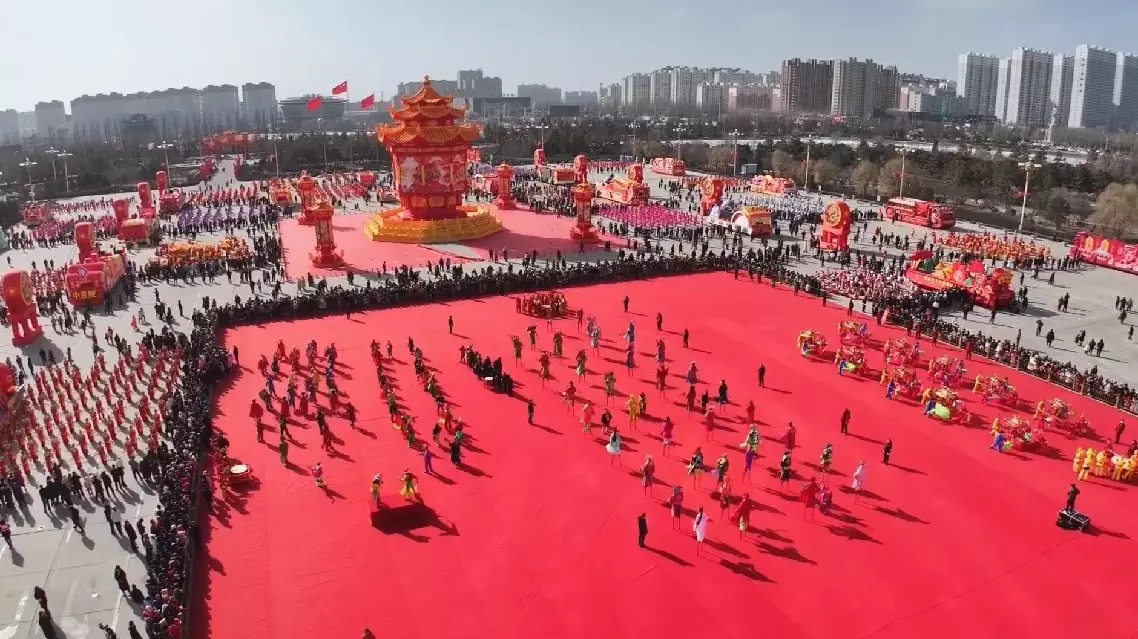
Carnival-like folklore activities unfolded across China to celebrate Lantern Festival