Chinese authorities issued a regulation on Monday that includes 14 measures outlining the allocation of government investment funds to support the country's major strategies, key areas, and weak links where the market is unable to effectively allocate resources.
This is the first state-level systematic regulation of its kind. It was jointly released by the National Development and Reform Commission, the Ministry of Finance, the Ministry of Science and Technology, and the Ministry of Industry and Information Technology.
Government funds designated under the regulation must not go to restricted, eliminated industries or those explicitly prohibited by policies. The measures say national-level funds should support breakthroughs in key core technologies, emphasizing the need to address industrial weaknesses and development bottlenecks.
Local funds are directed to select investment directions in line with local industrial foundations and development realities.
The measures aim at solving the problems of mismatching between local resource endowments and industrial foundations, unclear fund positioning, and homogenization of investment directions during their establishment and operation.
According to government experts, they represent a milestone in standardizing the flow of funding for the optimization of China's high-quality development.
"The regulation is the first policy document jointly issued by relevant departments of the State Council regarding the planning and layout of government investment funds. It is also the first to put forth clear requirements at the national level for the allocation of these funds. This marks an important shift in China's management of government investment funds from extensive management to refined management. Additionally, it promotes a transition in the development of government investment funds from focusing on the quantity and scale of investments to emphasizing quality and effectiveness," said Zhao Huaiyong, director of the Department of Finance, Banking and Credit Construction at the National Development and Reform Commission.

China issues landmark regulation on allocation of government investment funds
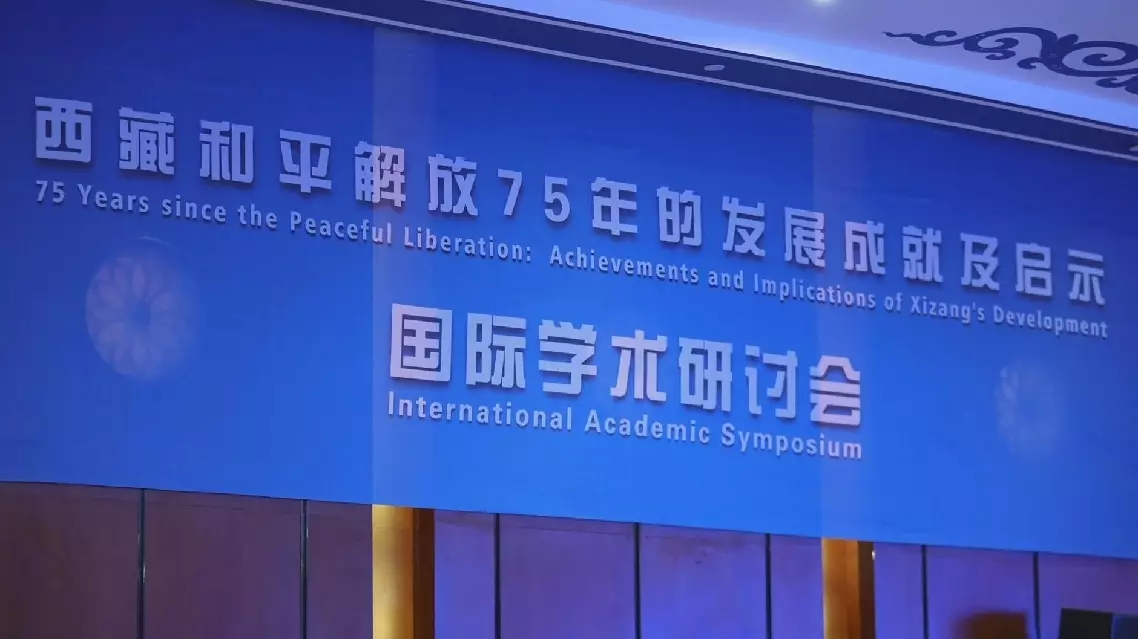
An international academic symposium was held on Saturday at the Xizang Museum in Lhasa, capital of southwest China's Xizang Autonomous Region, to mark the 75th anniversary of the peaceful liberation of the region.
Perched on the Roof of the World, the Xizang Museum is the first modern museum on the plateau.
On the 75th anniversary of Xizang's peaceful liberation, it welcomed a group of international scholars to reflect on the region's transformation and future.
Greening efforts on the highest region on Earth have seen major strides.
Forest coverage has risen from less than 1 percent in 1951 to 12.5 percent today.
"Even here you see around the mountains of Lhasa here, the massive large-scale plantation. There is a big lesson to learn now to other parts of the world and other countries also to come. This is the conservation. We should move this way," said Krishna Prasad Oli, former Nepali ambassador to China. Nestled in the Himalayas is not just Xizang's natural beauty, but its unique culture.
Over the past few decades, the central government has invested billions of yuan in the region's heritage protection.
"In general there are so many rumors that are just not true. For example, there are rumors in our media that China suppresses the Tibetan language. A very simple thing is on the street that you see signs and two languages everywhere (in Mandarin and in Tibetan). Even in Austria and the minority areas, there are big discussions if we should write something in minority languages. But in China it is not a problem. So China's handling this is far better than Austria," said Georg, Vavra, an Austrian historian.
The most ambitious and costly undertaking on the plateau since its liberation has been building modern infrastructure.
Today, Xizang boasts a network of roads and railways that continues to expand.
"It just so happens that yesterday I traveled by train from Nyingchi to Lhasa. The UK is a country of 60 million people and has been struggling and failing for 17 years to build 150 kilometers of high speed rail. Now if you consider Xizang with a population of 4 or 5 million, they could never undertake a project of that scale, and that is what China is trying to do. China is the only country in the world that has a genuine interest in the prosperity and the development of Xizang," said David Ferguson, a Scottish commentator.
Beyond traditional industries, emerging sectors are also taking root in China's western frontier.
"In the 75 years since its peaceful liberation, Xizang has built its scientific and technological capabilities from the ground up. It has become a driving force behind the region's economic and social progress," said Nyima Tashi, a professor with the School of Information Science and Technology under Xizang University.
Int'l scholars gather in Xizang to review regional development over past 75 years