China will make efforts to promote global standards for LED movie projection in a bid to further drive the development of the entire film industry chain based on its proposed project that has been approved by the International Organization for Standardization (ISO), said industry insiders.
The China-proposed project on "optical technical requirements and measurement methods for digital cinema LED auditoria" is planned to be released within three years, which will standardize and guide LED theaters to improve screening quality and promote the large-scale promotion and application of global LED digital film screenings, according to industry insiders.
"The entire preparation period took nearly two years, and the most difficult part of the preparation process was to obtain support from various countries. With our efforts, we have finally got the support of eight countries for our proposal, with five countries promising to send experts to participate in our project," said Liu Maoying, director of standards research division at China Research Institute of Film Science and Technology.
Liu said that of the 24 current digital film standards, except for one formulated by China, the remaining 23 were all rapidly transformed from the standards of the Society of Motion Picture and Television Engineers of the United States, and the successful establishment of this project demonstrates the increasing influence of Chinese film industry in the field of international standards.
Industry insiders believe that the successful establishment and subsequent development of the international standard project will vigorously promote China's digital film projection technology competitiveness in the new channel and is expected to further drive the development of the entire industry chain.
"Last year, the China Film Administration also organized the China Research Institute of Film Science and Technology, China Film Group Corporation., Huaxia Film Distribution Co., Ltd. to jointly conduct a nationwide survey on LED projection technology. Based on their survey, we are formulating relevant industry policies to ensure and promote the healthy development of LED theaters. Under the strong guidance of the China Film Administration and through our hard work and effective communication, we have successfully established this international standard project," said Gong Bo, director of China Research Institute of Film Science and Technology.
"China has considerable advantages in manufacturing LED projection equipment. It accounts for about 70 percent of the global market share. According to our statistics, among the 19 models certified by DCI (Digital Cinema Initiative), about 13 are Chinese brands," said Gong.
"The establishment of international standards for LED movie screen optics will make our Chinese film industry more influential in the international arena. It will enable us to move from following the original film industry technology to becoming a film leader, which will also contribute to our goal of becoming a powerful film country in the future," said Bian Wei, Executive Director of China Film Technology.
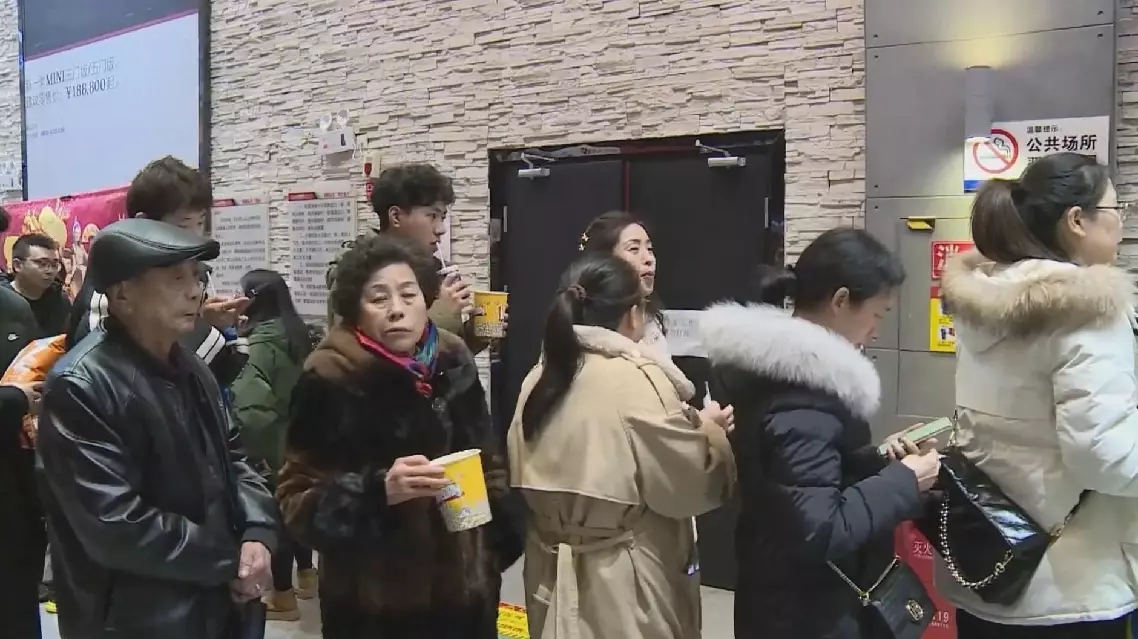
China to make efforts to promote int'l standards for LED film projection: industry insiders
As Chinese-made new energy vehicles continue to power ahead and take the world by storm, the answer to what makes the country's smart manufacturing power strong enough to lead global auto production can be found in the electric vehicle (EV) HyperFactory of Chinese electronics maker Xiaomi.
The tech giant, better known for its smartphones and home appliance products, marked its bold foray into the auto market in 2021, when it set up a state-of-the-art factory in the Being Economic-Technological Development Area, also known as Beiing E-Town -- a key innovation hub for China's autonomous driving industry.
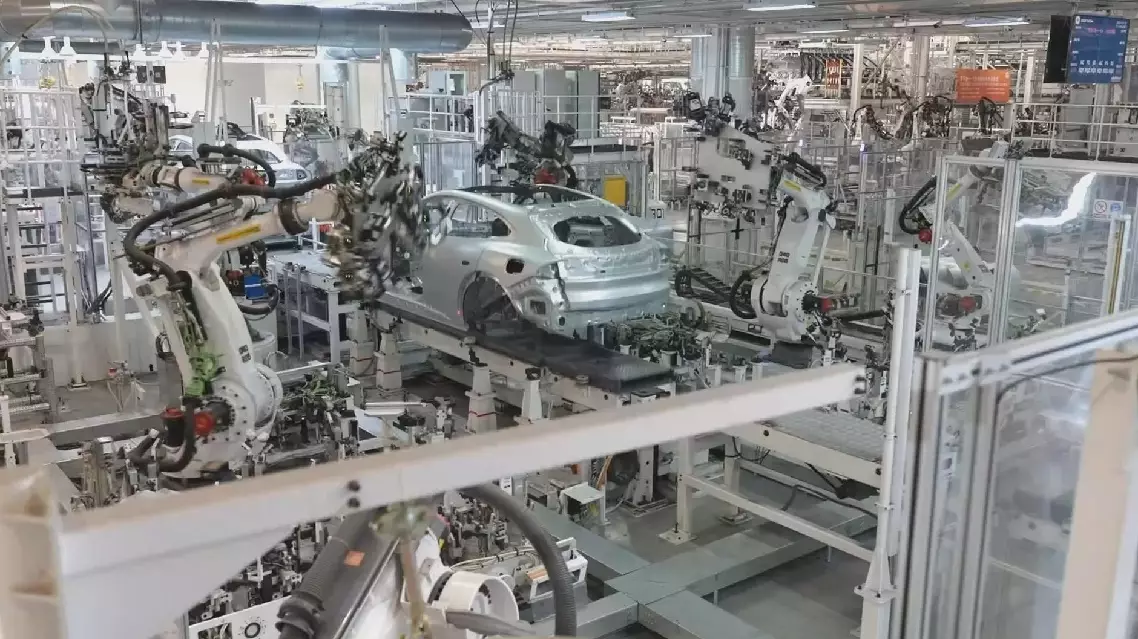
Despite the enormous scale of this facility, there are few workers in sight, with robotic arms instead moving with precision and speed, seamlessly assembling vehicle body components.
Every single Xiaomi SU7 electric car is born in this factory, where production lines run day and night, with a new car rolling off the line every 76 seconds. More than 700 robots work in sync across these highly automated production lines. Key processes are 100 percent automated -- making this facility a true example of next-generation manufacturing.
Song Jiaqiang, a production technology director at the Xiaomi EV HyperFactory, said the plant has set a benchmark in China's push for new quality productive forces -- an initiative aiming to promote high-tech development through innovation -- thanks to its exceptional application of artificial intelligence and automated processes.
"The first thing is the incredible level of automation and intelligence in this factory. Key processes are 100 percent automated. On top of that, we've introduced an industry-first AI (artificial intelligence) quality inspection system, which boasts an accuracy rate of 99.9 percent," he said.
Inside the factory, robots operate 24-hours a day, and they don't even need human staff to maintain their battery life -- when power runs low, they autonomously locate charging stations and recharge themselves.
Beyond core process automation, even material handling is finished by autonomous mobile robots, keeping the production lines running around the clock without interruption.
"The factory is packed with over 700 industrial robots. Right here in the body shop, we're looking at a 91 percent overall automation rate," said Song.
This advanced level of automation has been the key to Xiaomi's success, speeding up operational efficiency, ensuring greater build accuracy and ultimately delivering higher quality products, as Song explains.
"Take the rear door assembly, for example. Robots handle everything, from automatically picking up the part and inserting bolts, to placing it onto the body. They then inspect both the body and the component, while simultaneously tightening and adjusting the bolts to achieve a perfect fit with minimal gaps. It's a fully automated, intelligent process that drastically reduces, or even eliminates the need for human involvement," he said.
China's world-leading prowess in the smart manufacturing looks set to continue as the Xiaomi factory aims to further boost speed and AI capabilities, while helping upgrade the performance of domestically-made equipment.
Xiaomi's EV HyperFactory offers glimpse into future of smart manufacturing