The low-altitude economy, powered by cutting-edge digital technologies and diverse applications, is set to revolutionize a wide range of sectors, from logistics and urban governance to emergency response, industry insiders told the China Central Television (CCTV).
With its first inclusion in China's 2024 government work report, the sector has entered a critical phase of growth. Estimates suggest that by 2025, the market size will reach 1.5 trillion yuan (about 205 billion U.S. dollars), soaring to 3.5 trillion yuan (about 480 billion dollars) by 2035.
Based on the utilization of low-altitude airspace, the emerging sector incorporates general aviation and related industries, featuring advanced technological applications and high operational efficiency.
Industry leaders have categorized its applications into three major areas. Firstly, passenger drones. They are expected to offer new transport options and ease urban congestion. Secondly, aerial logistics. It makes delivery of goods more efficient. Thirdly, low-altitude digital economy. In this scenario, drones equipped with sensors and other payloads are employed to enhance emergency response, power grid inspections, mineral exploration, and environmental monitoring.
Ren Bin, chairman and general manager of JOUAV, a leading domestic UAV manufacturer, noted that the digital aspect is the foundation of the low-altitude economy.
"We believe that the low-altitude digital economy serves as the infrastructure and essential pathway for the broader low-altitude economy. We are now collecting a variety of data, which, once gathered, will be processed through artificial intelligence to create a commercial closed-loop system that empowers various industries," he said.
"One of the industry's focuses this year is aerial emergency response, which epitomize the essence of low-altitude digital economy. The previous emergency mapping, emergency communications, and emergency command have all been integrated into a unified solution," said Ren.
The application scenarios of low-altitude economy will continue to expand to cover agriculture, industry, healthcare, and transportation. Beyond commercial industry, it also holds significant potential for urban governance.
Suzhou Low-Altitude Technology Company is using drones to monitor the Taihu Lake-to-Huangpu River waterway, a crucial drinking water source for around seven million people in Jiangsu, Zhejiang and Shanghai.
"We now use drones for comprehensive water environment patrols, which allows us to monitor maritime law enforcement and waterborne transportation safety in a unified manner. The surveillance footage can be shared with public security, transportation, urban management, and water authorities, meaning a single drone flight significantly enhances overall governance efficiency and effectiveness," said Gu Jinfei, general manager of the company.
Experts believe the low-altitude economy will have far-reaching implications, triggering ripple effects and creating opportunities across industries. Some even suggest that many sectors will need to be "reinvented" to adapt.
"The low-altitude economy features a long industrial chain, a broad scope for innovation, extensive coverage, and high technological sophistication. It spans primary, secondary, and tertiary industries, characterized by its multi-sector, cross-industry, and full-chain integration. The development and manufacturing of low-altitude aircraft rely on chips, big data, AI, and support from emerging industries. This means that businesses across countless sectors have great opportunities to tap into the low-altitude economy," said Dong Zhiyi, chief expert on the low-altitude economy at Chinese Society of Aeronautics and Astronautics (CSAA).
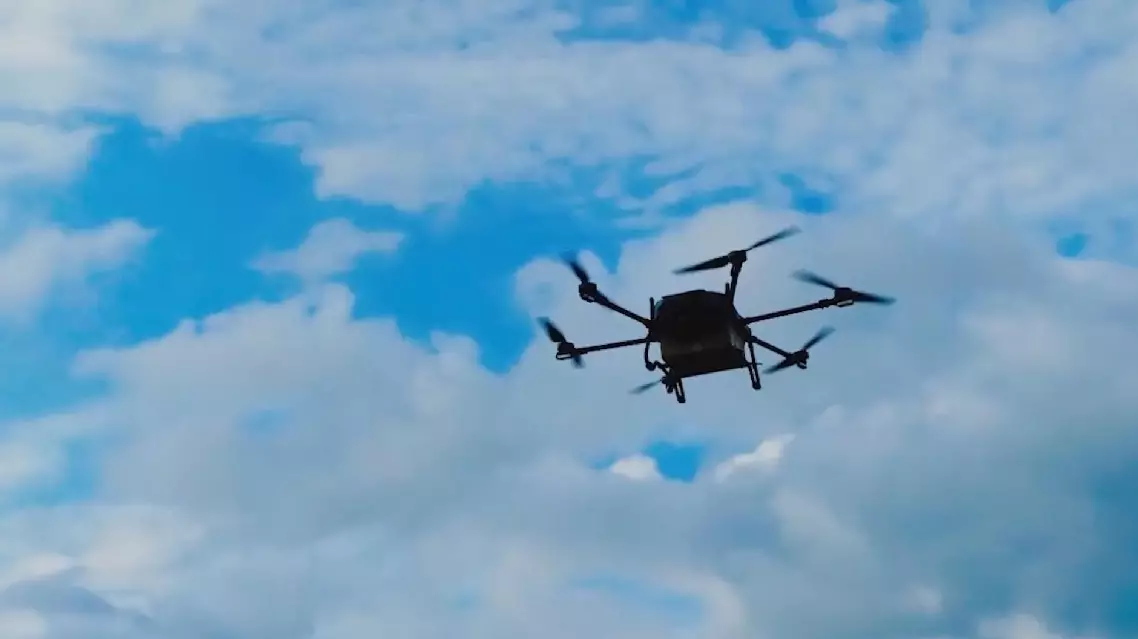
Low-altitude economy to reshape various industries: experts
Low-altitude economy to reshape various industries: experts