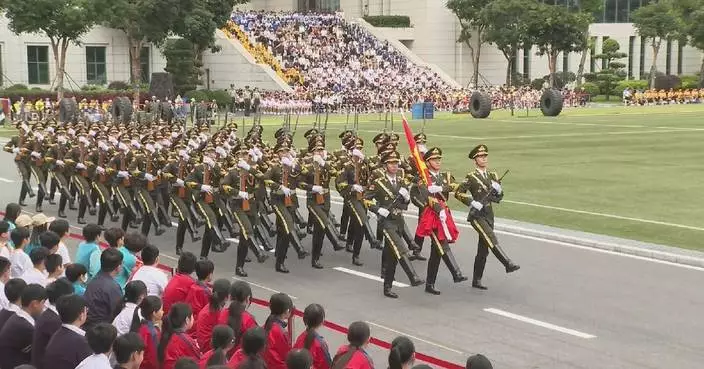
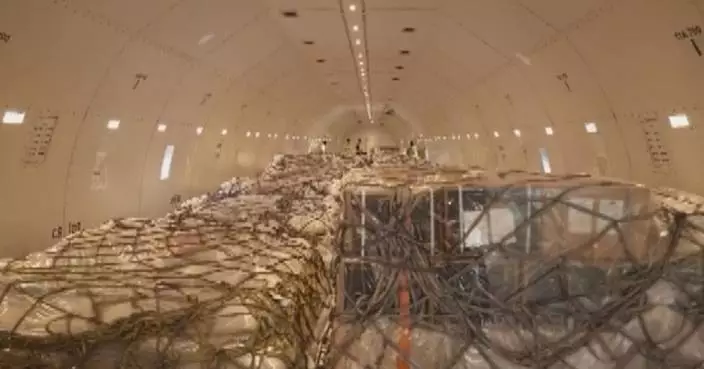
China's transportation networks were expected to handle over 7 billion cross-region passenger trips in the first 30 days of the ongoing Spring Festival travel rush.
The travel rush, known as 'chunyun', is considered the world's largest annual human migration and coincides with China's biggest traditional celebration, the Spring Festival, a time when hundreds of millions of people return home for family reunions to celebrate the Chinese New Year, which fell on Jan. 29 this year.
This year, the travel rush runs from Jan 14 to Feb 22, lasting for 40 days.
On Wednesday, the country's railway network was predicted to transport 10.3 million passengers, with 702 trains being added to accommodate the surging demand.
Starting Thursday, the flow of returning students and migrant workers will increase significantly, ushering in the second peak of passenger flow after the holiday.
In the road transport sector, about 170 million trips were recorded on Wednesday. Various regions have continued to provide ample charging support services for new energy vehicles to smooth travel of drivers returning to work, such as adding charging facilities, optimizing service processes, and strengthening technical support in places like Tangxian County in north China's Hebei Province.
In the civil aviation sector, 17,000 flights were in operation nationwide, handling 2 million passenger trips on Wednesday.
The waterways were estimated to handle 620,000 passenger trips on Wednesday.
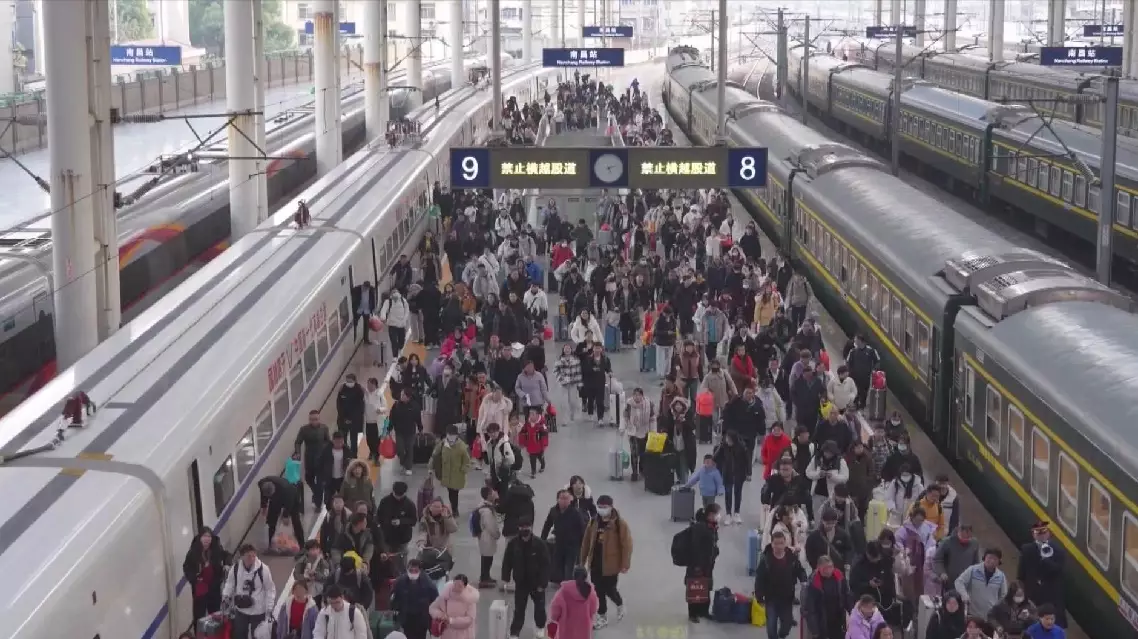
Over 7 bln trips expected on first 30 days of China's 2025 Spring Festival rush
People in Yemen are struggling for survival as the country continues to grapple with a deepening labor crisis after more than a decade of war, with many lamenting the lack of opportunities which are leaving the livelihoods of many hanging in the balance.
As the world marks International Workers' Day on Friday, the situation in Yemen seems all the more poignant as millions of people are finding it increasingly hard to find any work at all.
In the crowded streets of the capital Sana'a, workers gather on street corners, waiting for jobs that may never come. Ahmed Muawadah is one of the many who are sitting here, watching passing cars, desperately hoping that one will stop and offer work.
"Our suffering is that we sit here without work. Sometimes we spend a whole month without working, except for one day, or just one day every two weeks. Work is very limited, almost non-existent. I have nine children, and I only work one day a month. I cannot support them. Jobs have completely disappeared. If opportunities were opened for us, I and all the workers would work," said Muawadah.
This individual story reflects a broader reality affecting an estimated eight million workers across Yemen. Many of them are hoping to receive a daily wage, but the challenges are mounting in an increasingly strained labor market.
Activity in key sectors such as construction and services has dropped sharply, largely due to the suspension of several international initiatives, including those backed by the World Bank. As a result, income opportunities have narrowed for those who rely primarily on daily wages.
Meanwhile, the widening impact of the U.S.-Israeli war on Iran and the disruption caused along the key Strait of Hormuz -- a key shipping route for global trade -- has brought more misery in recent weeks.
"There has been a significant decline in business activity as a result of the war, the blockade, and the disruption of work. Foreign capital has also left the country, and large companies have moved out of Yemen and stopped their operations. This is one of the main reasons," said Abdul Karim Al, secretary general of the General Federation of Trade Unions in Sana'a.
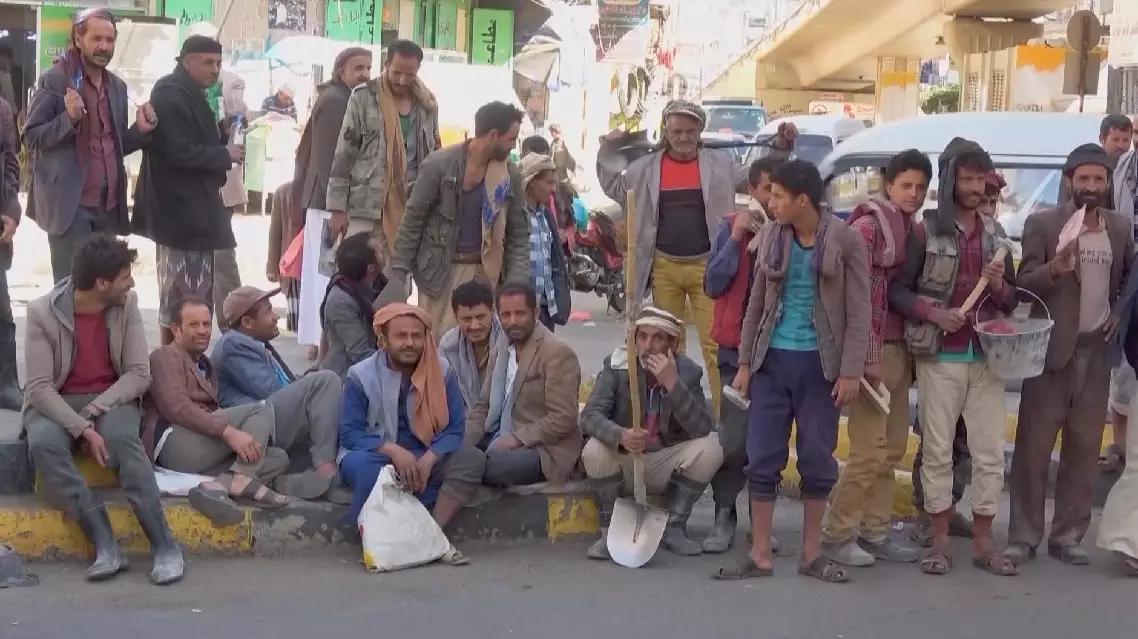
Yemen residents struggling to survive as work dries up amid deepening labor crisis