The 9th Asian Winter Games, which concluded on Friday in the renowned "ice city" of Harbin in northeast China's Heilongjiang Province, drew a record-breaking 1,222 athletes from 34 countries and regions, making it the largest edition of the event in history, according to a press conference on Friday.
Members of the Olympic Council of Asia (OCA) and Harbin Asian Winter Games Organizing Committee held the press conference to recap the overall success of the Games, highlighting key accomplishments and milestones.
With over 180 competitions in 64 ice and snow events, this edition of the Games was the most comprehensive to date. The addition of Saudi Arabia and Cambodia to the roster of participating countries marked a major breakthrough, broadening the Asian Winter Games' scope and reinforcing its position as a premier international sporting event, according to officials.
Meanwhile, a total of 110,000 spectators attended the events during the Games, immersing themselves in the excitement and energy of winter sports.
"We focused on creating a professional and fair competition environment. The venues were fully prepared, material and equipment support was sufficient, and the competition organization was orderly and efficient. This has been widely praised by athletes, technical officials, team officials, and media reporters from various countries and regions. During the Games, athletes from various countries and regions worked hard and aimed for excellence. They not only achieved excellent results, but also embodied the spirit of fair competition and aimed for new heights. They gained friendship and cultural resonance, demonstrating the Olympic motto of 'Faster, Higher, Stronger - Together,'" said Zhang Haihua, deputy secretary-general of the organizing committee and vice mayor of Harbin.
Officials from the OCA reiterated that the 2025 Harbin Asian Winter Games have set a high standard in terms of preparation, medical services, and volunteer engagement. "Everybody, not only Asia, everywhere, will see the athletes in participation, but also see a beautiful city of Harbin. I'm sure that Harbin has already set the standard, a template, what successful Games [are] about," said Timothy Tsun Ting Fok, first vice president of the OCA.

Harbin Asian Winter Games draw record-breaking 1,222 athletes: officials
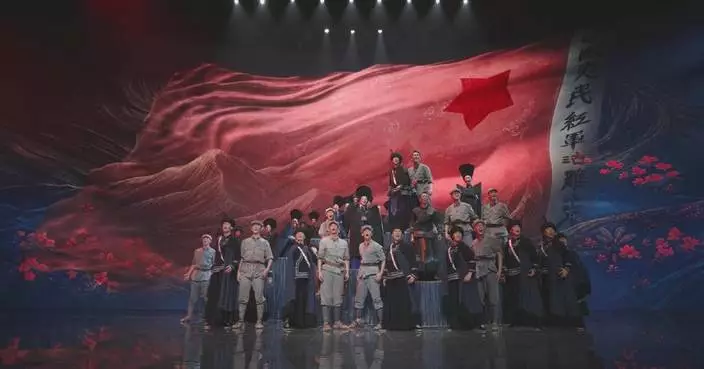
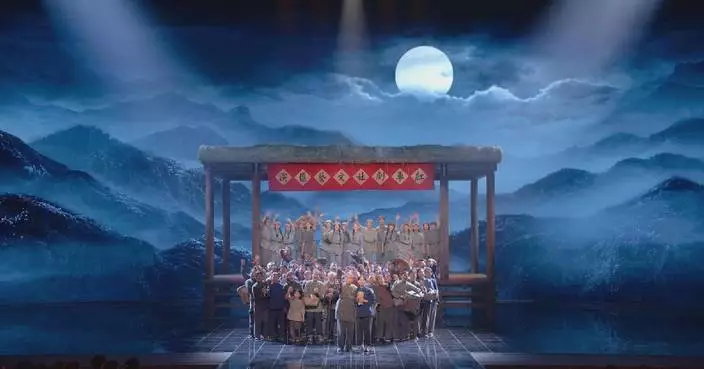
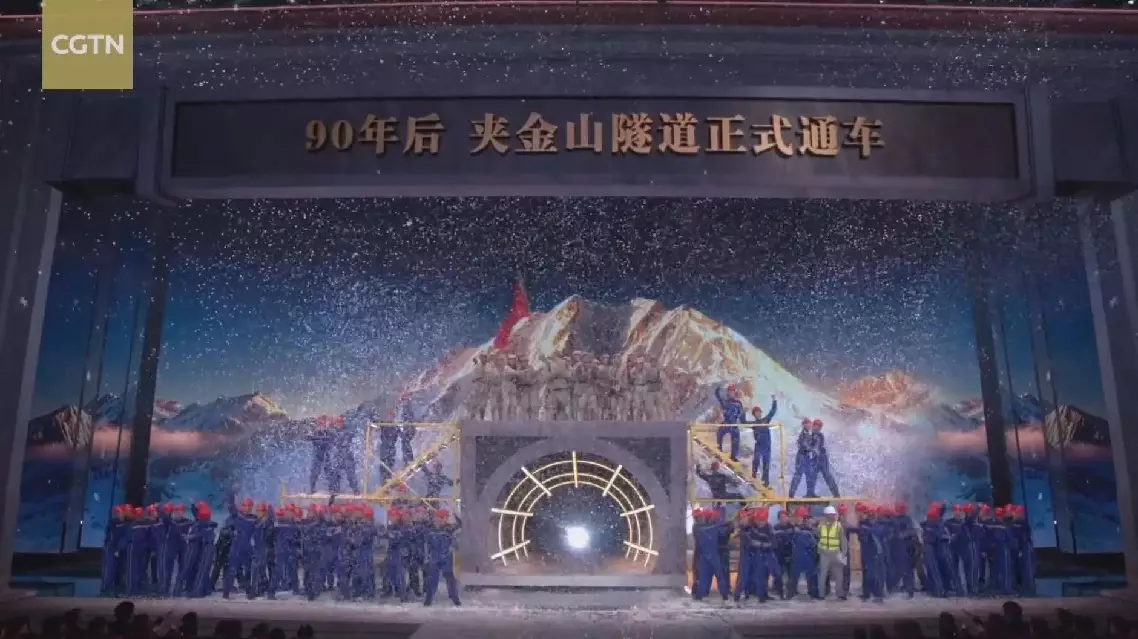
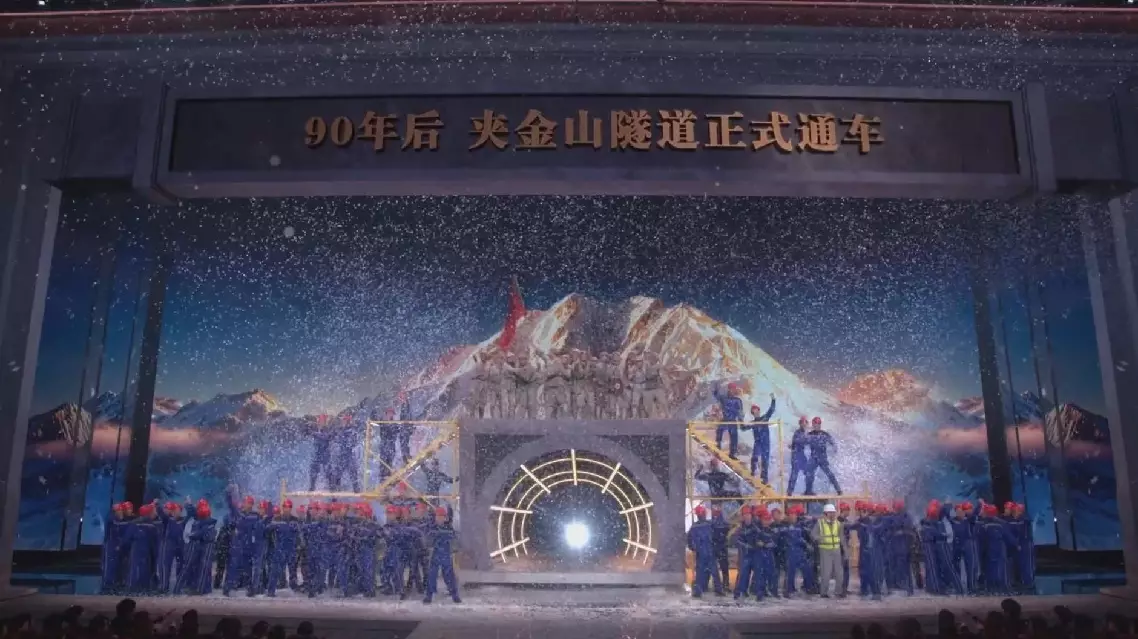
An evocative situational song and dance performance has vividly connected the Red Army's perilous crossing of a snow-capped mountain with a modern tunnel engineering marvel during a televised gala commemorating the 90th anniversary of the victory of the Red Army's Long March on Thursday.
The Long March (1934-1936) was a defining military maneuver undertaken by the Chinese Workers' and Peasants' Red Army, symbolizing endurance and perseverance which ultimately paved the way for the founding of the People's Republic of China in 1949.
Titled "Ode to the Long March," the five-part gala broadcast by the China Media Group (CMG) centers on key historical junctures of the arduous 12,500-kilometer journey.
One of these performance segments sought to bring to life the Red Army's strenuous crossing of a snow-topped peak during the epic military trek. It weaves together two eras -- the soldiers' desperate climb through the blizzards and the modern-day construction of a tunnel through the same mountain -- to show how the spirit of perseverance endures across generations.
Through poignant dialogue and an enchanting song, the piece shows soldiers supporting one another through a fierce snowstorm, culminating in a young soldier's dream of drilling a hole through the mountain once the revolution is won. This vision comes to life as the stage setting shifts to the present day, featuring a powerful exchange between a Red Army commander and a modern engineer, symbolizing their shared determination to conquer nature's barriers.
The segment depicts the Central Red Army's June 1935 crossing of the Jiajin Mountain in southwest China's Sichuan Province, the first major snow mountain they encountered on the Long March.
Decades later, over 600 workers labored for 45 months to build the Jiajin Mountain Tunnel of the G351 highway, an engineering marvel that has permanently ended the winter isolation of over 110,000 local residents.
Integrating music, dance, drama, and folk art, the performances at the Gala vividly recall the immense hardships the Red Army endured and showcase the firm beliefs held by the Communist Party of China (CPC), even in the face of sacrifice and suffering.
The broadcast followed a commemorative meeting held earlier on Thursday at the Great Hall of the People in Beijing, where Chinese President Xi Jinping delivered an important speech.
The Long March began in October 1934, when 86,000 poorly armed soldiers began a grueling 12,500-kilometer journey across some of the country's harshest terrain to establish a new revolutionary base. The march concluded in October 1936 when three main Red Army forces converged in northwestern China.
Gala performance bridges past, present with nod to Long March history, modern engineering
Gala performance bridges past, present with nod to Long March history, modern engineering
Gala performance bridges past, present with nod to Long March history, modern engineering