South Korean food and beverage companies are turning to innovative solutions to combat soaring coffee prices driven by a global shortage of beans.
The Korea Customs Service reports a nearly 70 percent increase in the price of imported coffee beans in January compared to the same period last year. This surge is attributed to reduced production in major coffee-growing regions, exacerbated by ongoing global supply chain disruptions.
In response, South Korean businesses are introducing "beanless coffee," a novel alternative beverage made from ingredients like chicory root, barley, and roasted nuts. These substitutes aim to replicate the taste and aroma of traditional coffee while offering a more affordable option for consumers and businesses alike.
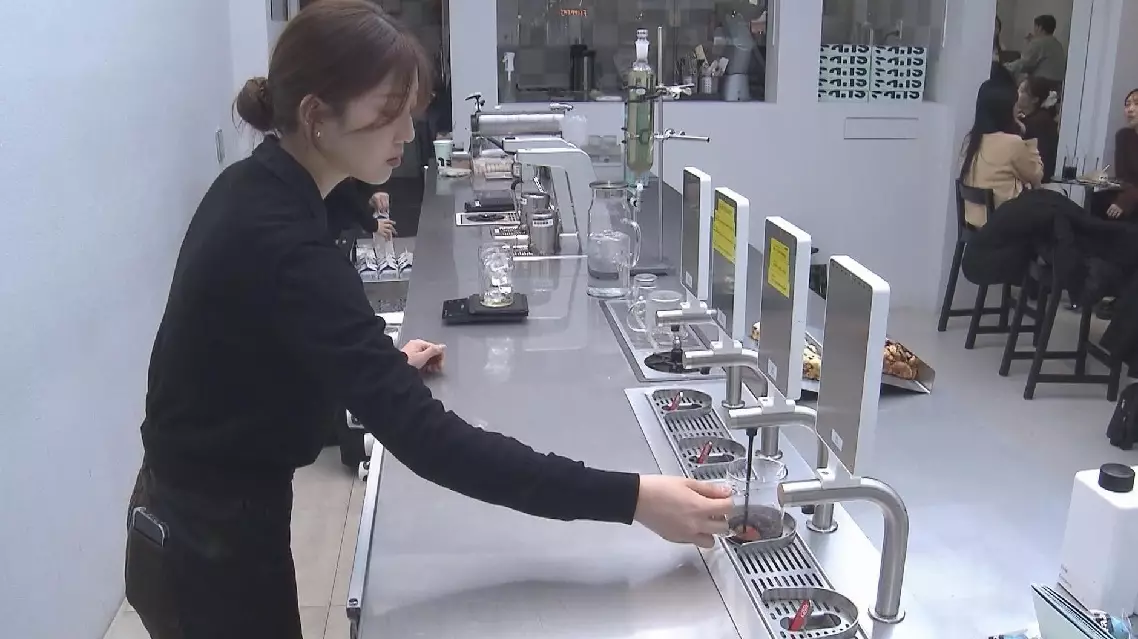
At a coffee shop in downtown Seoul, customers no longer hear the sound of coffee beans being ground. Instead, baristas place a cup under an extraction machine that automatically dispenses a liquid base. The barista then adds water or milk, according to the customer's preference, to create the final drink.
While the appearance and aroma of this drink resemble that of regular coffee, it is not made from coffee beans. This coffee shop specializes in making "beanless coffee," using 12 ingredients such as barley, hibiscus, and orange peel, which are fermented, dried, ground, and roasted. These ingredients are relatively stable in price, and supply remains plentiful.
As a result, the cost of producing these drinks is 20-25 percent lower than that of regular coffee. The coffee shop currently offers three caffeine-free drinks including Americano and Latte, which have quickly gained popularity.
"The taste is almost identical to regular coffee. It's very similar, and the flavor profile is quite rich. It's worth trying," said a consumer.
In recent years, extreme weather events worldwide have driven up the prices of various agricultural products. This has put significant pressure on South Korea's food and beverage industry, which relies heavily on imported raw materials and is sensitive to exchange rate fluctuations.
Recently, three major coffee chains in South Korea have raised the prices of some of their coffee products, and multiple snack and confectionery producers are also set to increase prices on items such as cookies, chocolate bars, and pastries by about 10 percent.
To minimize costs, affected companies are exploring alternative product combinations, substituting stable and affordable ingredients like meat patties, rice, and squid for more expensive ones like tomato slices and lettuce, and making rice burgers and deep fried pork chop burger. Some have even mixed sunflower oil with imported olive oil to cut costs.
"If there is a problem, you must make a plan in advance to quickly change import or procurement," said Eunhee Lee, professor of Inha University.
While the long-term impact of "beanless coffee" on the South Korean market remains to be seen, it represents a proactive approach to navigating the current coffee crisis. Industry experts predict that this trend could gain traction as consumers seek cost-effective alternatives in the face of rising price.
South Korean businesses embrace "beanless coffee" amid global coffee shortage