A community in east China’s Shanghai is helping elderly residents move from “getting by” to “living well” by providing better services for leisure activities, health and daily care, offering a model for the country’s aging population.
As a global metropolis and one of China’s core economic and cultural hubs, Shanghai has nearly six million elderly residents, accounting for more than 37 percent of its permanent resident population.
Shanggang Community, located in Shanghai’s Pudong New Area, has been making efforts to provide elderly residents with a dignified life.
Yin Yi, a 72-year-old resident of Shanggang Community, calls the community home.
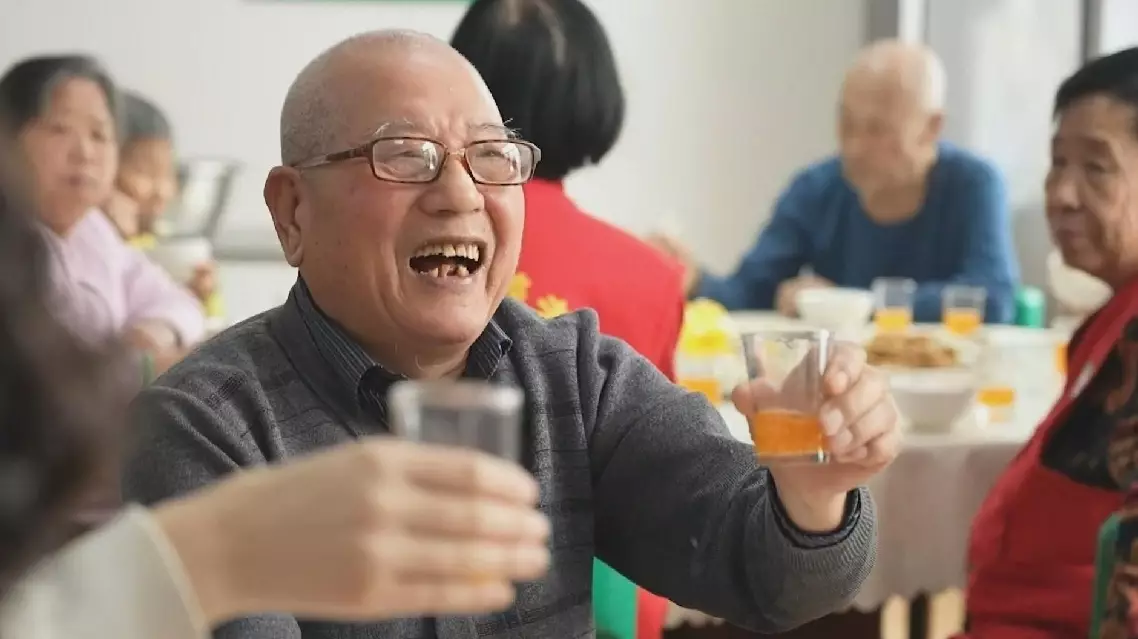
She said "life has been so lively" after a three-building complex was designed for elderly residents, adding that "The first building features a canteen that serves breakfast, lunch and dinner. The second is a gym and a library. I can spend all day there, chatting with friends. The third is a community hospital. Convenient. It’s a blessing. We’re not just ‘getting by,’ we’re living. Happy. Truly.”
Shanggang's transformation mirrors a broader story of economic development. Pudong's GDP has grown from six billion yuan (about 890 million U.S. dollars) in 1990 to 1.87 trillion yuan in 2025, providing a solid foundation for public services, including elderly care.
For residents like Gu Huijuan, 77, access to timely medical care has been life-changing.
"Once my blood pressure spiked to 190, [which] scared me half to death. However, the doctor here jumped into action, adjusted my medication, and checked in with me daily. Now it's steady at 120. I breathe easier. Truly at ease," said Gu.
For those living alone, a sudden health scare can feel overwhelming. Jiang Manying, 86, who lived alone for eight years, recalled a moment when she could no longer stand up.
"I lived alone for eight years, always unwell. Then one day, I couldn't stand up. My family checked this home -- and wow. There's a corridor on the 4th floor that connects us directly to the community hospital. It's like having a family, 24/7," said Jiang.
"Most services here are free, open to all local seniors. How? We receive our funds from government support, community fund-raisers, and district foundations. It takes a village, but seeing their smiles is worth every bit," said Xie Ni, deputy director of the Shanggang Neighborhood Office in Shanghai.
Shanggang's integrated elderly care model -- combining dining, fitness, social activities and medical services under one roof -- reflects a broader national effort.
By 2024, China had 310 million people aged 60 and above, including 37 million living alone, official data shows. As fewer young people are able to live with their elderly parents, quality care has become not just a social nicety but a necessity.
China’s elderly care policy is based on the principles of foundational security, inclusive accessibility, shared responsibility and systemic integration, according to the Ministry of Civil Affairs.
By 2024, 367,000 community elderly care centers like Shanggang’s had been established nationwide, helping provide elderly people with a guarantee of a safe and happy life.
From "getting by" to "living well": Shanghai community offers model for China's aging population