Capitalizing on the shopping spree spurred by China's expanded trade-in programs, Chinese retailers and local governments have introduced additional subsidies to further stimulate consumer appetite for spending and bolster the recovery of consumption.
China launched an action plan to promote large-scale equipment renewal and trade-in of consumer goods in March 2024 as part of efforts to boost domestic demand and support economic growth.
The country also started to offer subsidies for electronic products trade-in from Jan 20 as the country expanded the scope of consumer goods trade-in programs to further boost consumption.
Under the plan, individual consumers purchasing smartphones, tablets, smartwatches or wristbands priced below 6,000 yuan (about 827 U.S. dollars) per item will receive a subsidy covering 15 percent of the product's sales price.
Starting from Jan. 20, each consumer can receive a maximum subsidy of 500 yuan (about 69 U.S. dollars) per item, with a limit of one subsidized item per category, per the plan.
Some 20.09 million consumers applied for the subsidies to buy 25.41 million units of electronic products such as mobile phones as of Feb 9, according to the Ministry of Commerce.
And to further boost sales, home appliance outlets in Shenzhen's Huaqiangbei, one of the world's largest electronics markets in China, are offering additional subsidies for models priced above and below 6,000 yuan (about 827 U.S. dollars), alongside the national subsidy and the promotion runs until March 16.
"Since we launched subsidies on Feb 14, in-store visits and phone inquiries have doubled. This is due to strong consumer demand for smartphones priced over 6,000 yuan (about 827 U.S. dollars)," said Li Shoubo, manager of a home appliance store.
In addition to home appliances and digital products, south China's Guangdong Province has introduced a one-time subsidy of 500 yuan for individual consumers who trade in their old and scrapped electric bicycles within the province and purchase new models worth over 1,500 yuan (around 207 U.S. dollars). Many merchants have also offered "one-stop" renewal services in their stores and adopted immediate payment deductions to deliver benefits directly to consumers.
Recently, east China's Zhejiang Province has also released detailed implementation rules for car replacement in 2025.
From Jan 1, 2025 to Dec 31, 2025, individuals who purchase new NEVs and transfer their old passenger cars registered can still receive a one-time subsidy of 15,000 yuan (about 2,068 U.S. dollars) for the first time, the same as last year. Similarly, the subsidy for those who buy new fuel-powered cars and transfer their old vehicles reaches 13,000 yuan (roughly 1,792 U.S. dollars).
Since the policy was implemented, the transaction volume of the car market in Ningbo, Zhejiang, has significantly increased.
"Last year, I planned to buy a car. But when this policy came out, I decided to speed up my plan and move the purchase forward," said a potential car buyer.
This year, east China's Jiangsu Province has extended its policies for the 12 categories of nationally subsidized products from last year and introduced an additional 32 categories of provincially subsidized products. Encouraged by those subsides, the province has seen a rapid resurgence of consumer spending and a growing consumer demand for green products, such as NEVs and high-efficiency energy-saving appliances.
"The car I would like to buy can get 9,000 yuan (about 1,241 U.S. dollars) from the provincial subsidy and 5,000 yuan (around 690 U.S. dollars) from the city subsidy, so that’s a total of 14,000 yuan (1,930 U.S. dollars). Plus, new energy vehicles don't have to pay the purchase tax, which makes them really cost-effective," said Zhang Yaru, a resident in Suqian City.
Meanwhile, major shopping malls in south China's Hainan Province have seen steady customer flow and increased sales of digital products since Jan 20, when subsidies for electronic products trade-ins started. Merchants there are also offering more promotions such as discounts to boost consumer spending.
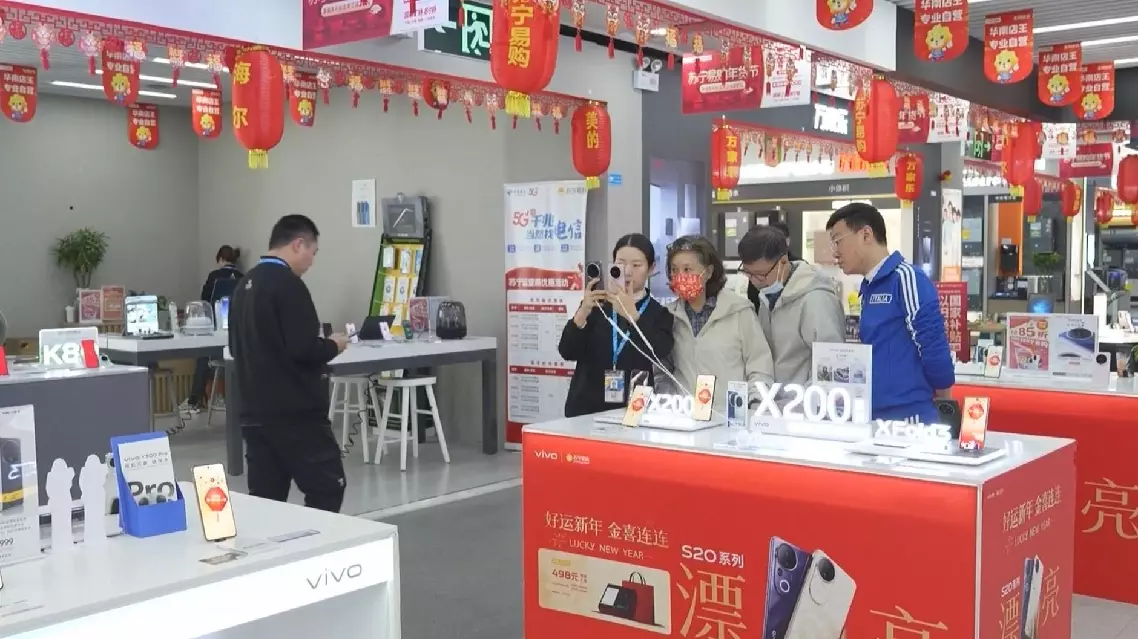
China's local governments, retailers raise subsidies in new round of trade-ins
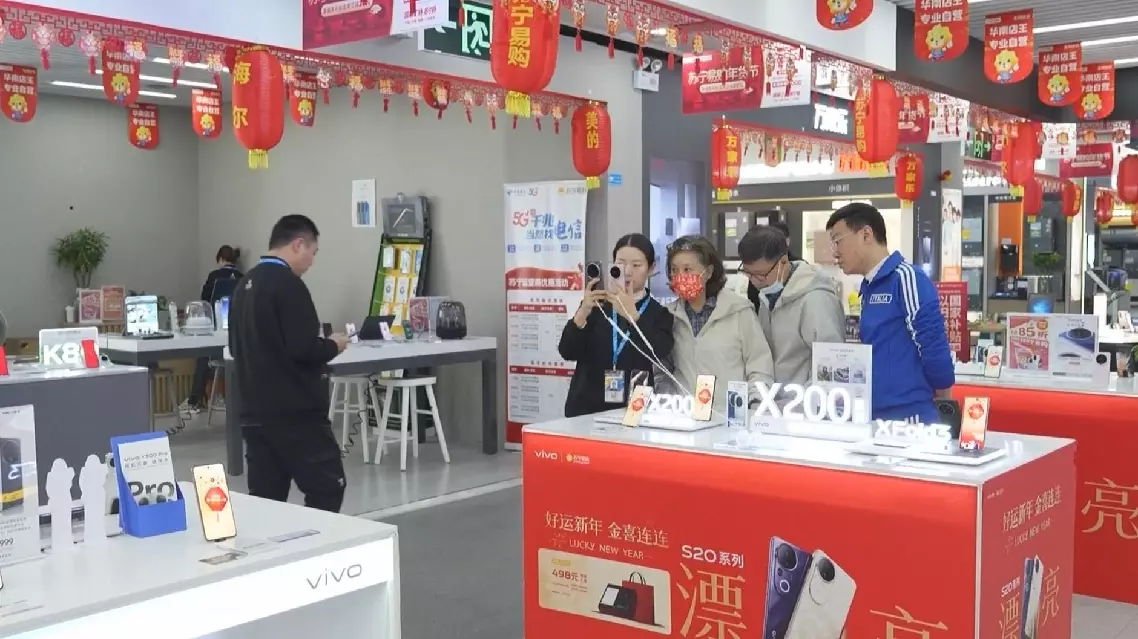
China's local govts, retailers raise subsidies in new round of trade-ins