Flocks of Western Pacific spotted seals have been recently spotted to haul out, lounging on sun-warmed rocks in Changdao Island of east China's Shandong Province and soaking in spring sunshine leisurely.
The seals have arrived earlier than usual, with 41 individuals monitored so far, marking a steady increase in the population, according to the Marine Ecological Civilization Comprehensive Experimental Zone in Changdao.
These adorable marine creatures lazily lay on the rocks basking in the sun, sometimes closing their eyes to rest, sometimes looking around curiously.
Known as the "pandas of the sea," these protected animals migrate every March-May to Changdao to relax and recharge from the Liaodong Bay.
Spotted seals are the only fin-footed marine mammals that breed in Chinese waters, and extremely picky about the environment. Changdao sits at the intersection of the Yellow Sea and Bohai Sea, offering rich fisheries, good water quality, and thriving seagrass species due to years of restoration efforts, making it a reliable marine stop for the species.
"The spotted seals here are quite plump thanks to abundant fishery resources. You can clearly see that when they first arrive, they're relatively lean, but within days, they get noticeably chubby," said Yan Yang, postdoctoral fellow of conservation biology at Shandong University's Marine College.
Spotted seals typically give birth to just one pup per litter, and their population remains small, making conservation extremely challenging. But in the last two years, researcher have spotted newborn pups in Changdao waters.
"Previously, we thought spotted seals only gave birth on ice. But if they can also pup on reefs, that's a very favorable development for population recovery," said Zhu Qian, a professor of conservation biology at Shandong University's Marine College.
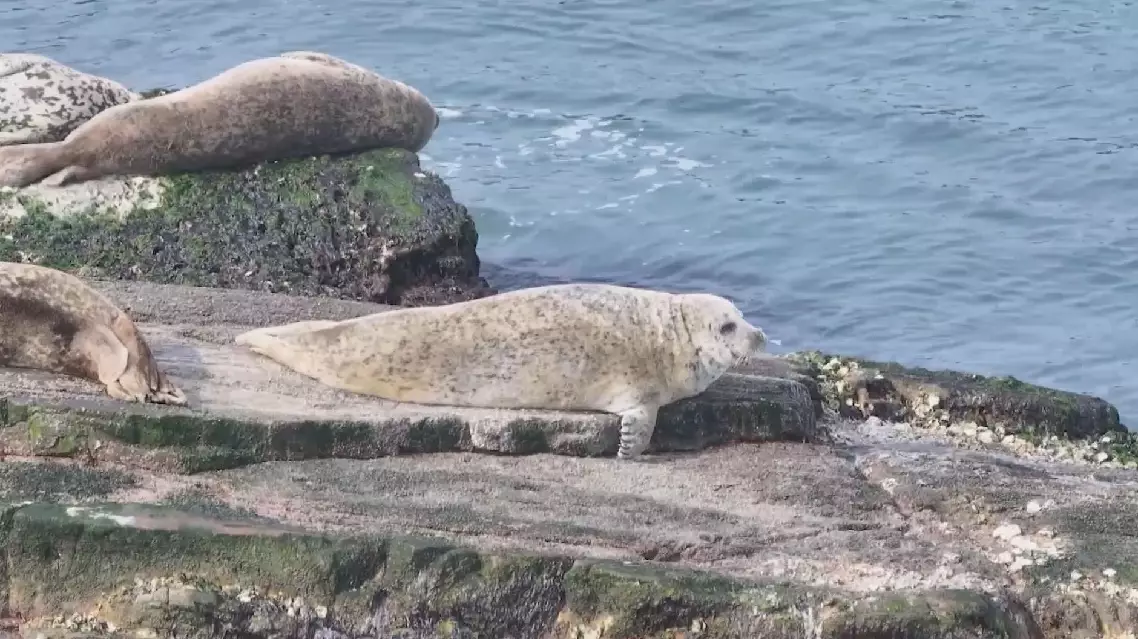
Spotted seals enjoy sunbath on Changdao Island in Shandong
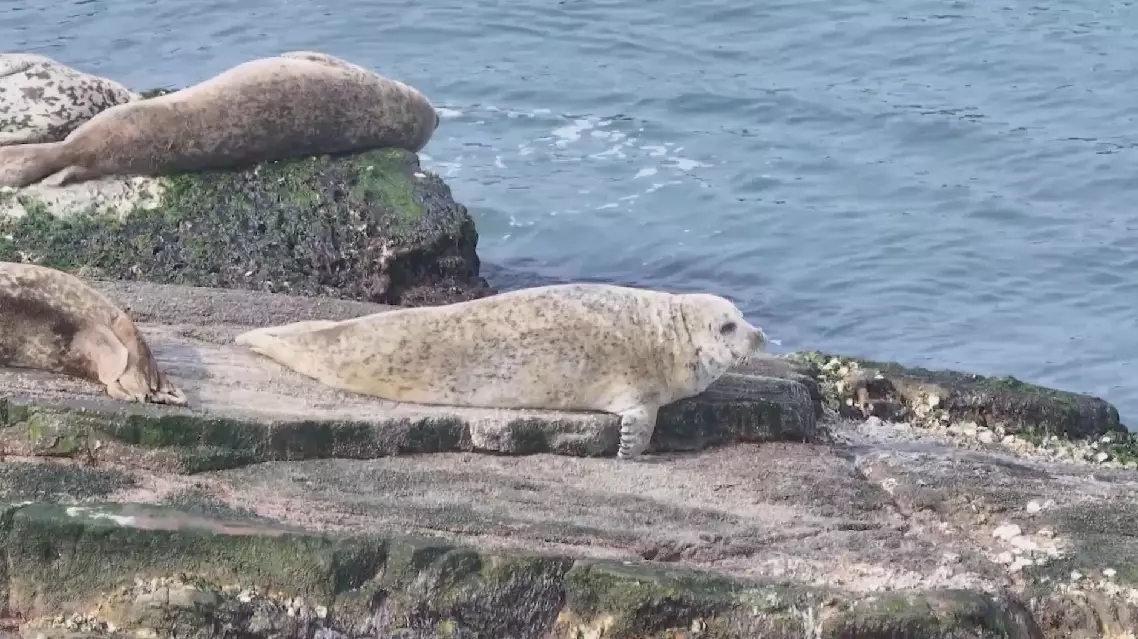
Spotted seals enjoy sunbath on Changdao Island in Shandong