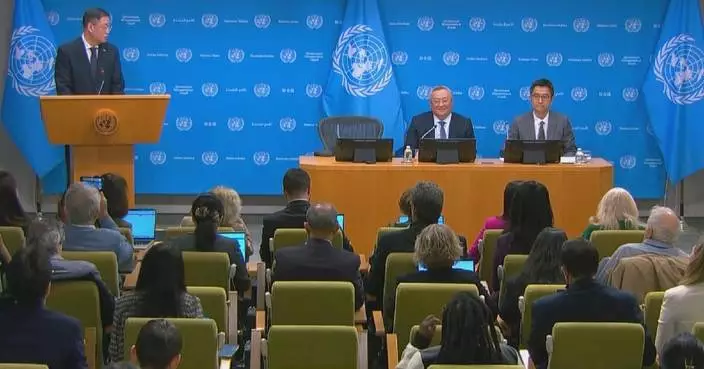
"Hotline Beijing", a documentary filmed by China Media Group (CMG) and co-produced with partners, saw its launch ceremony held in Beijing on Friday, drawing high comments from experts for its authentic portrayal of urban governance, emotional resonance and insightful implications.
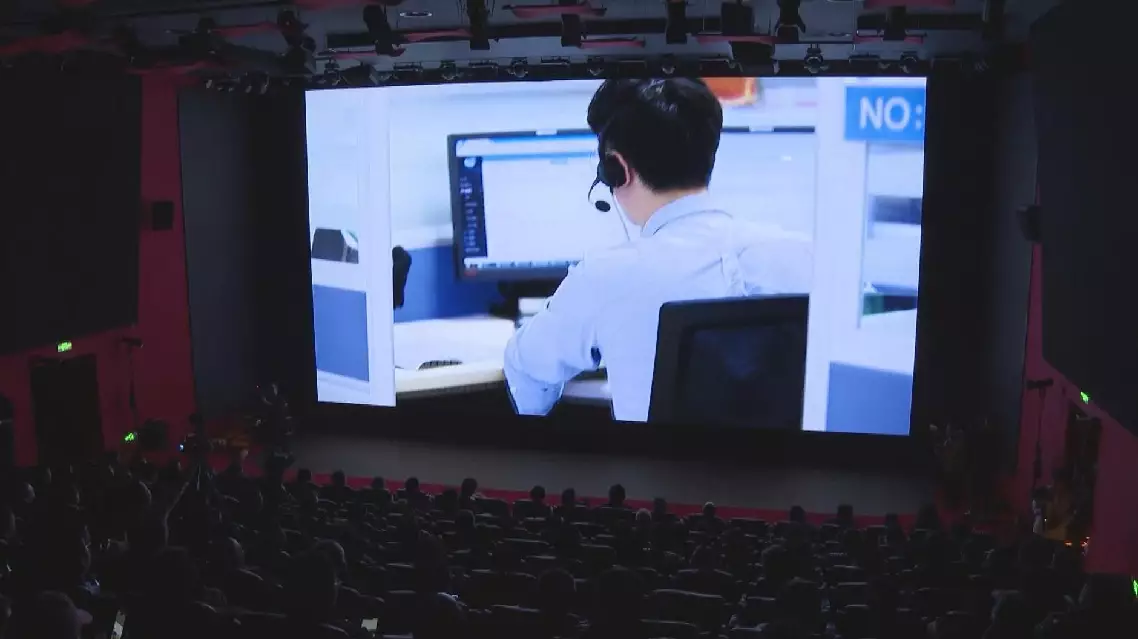
To be released for public screening nationwide next Tuesday, the film employs an innovative, immersive shooting technique to document the real-life efforts of grassroots-level call operators, community workers and government departments in addressing public requests voiced via the hotline 12345, which sounds like "Call the government whenever you have a complaint" in Chinese.
The hotline is part of a 2019 initiative in Beijing, home to over 20 million residents, to swiftly respond to public complaints.
The initiative has integrated more than 60 hotline services into a single unified hotline number -- 12345 -- which serves as the primary channel for residents to voice their concerns.
Operating 24/7, the hotline in Beijing is staffed by over 1,700 operators who work in shifts to address calls and handle requests covering nearly every aspect of urban life, including transportation, housing, education, healthcare, employment and business services.
Through the entire process of complaint receiving, processing and settlement via the hotline, the film connects various public life scenes, including the hotline service center, primary-level government offices, and old neighborhood renovation sites, showcasing how public concerns are quickly addressed.
"The film focuses on small yet significant details of everyday urban life, revealing the great in the small and also the extraordinary in the ordinary, and showcasing Beijing's solid steps towards the modernization of urban governance," said Wang Yichuan, vice-chairman of the China Literature and Art Critics Association.
"The documentary particularly highlights the voices of ordinary residents, reflecting their most genuine and heartfelt concerns. It handles them with great care, eulogizing empathy between residents, call operators, community workers, primary-level officials and community legal workers, which is a key factor in its appeal to the audience," said Zhao Weifang, director of the Institute of Film and Television under the Chinese National Academy of Arts.
Experts also lauded the film's exploration of Beijing's "swift response to public complaints" initiative, with implications for managing megacities.
"Every complaint picked up by the 12345 hotline first goes to primary agencies and community departments, which represent the grassroots-level cells of the entire system for social governance. When a large volume of complaints is collected, it contributes to urban governance. This film offers valuable insights into the governance of megacities, both domestically and internationally," said Gao Xiaoli, a researcher at the China Film Critics Association.
Documentary "Hotline Beijing" launched, wins high comments