The animated blockbuster "Ne Zha 2" has become a powerful driving force in cultural tourism across China.
The movie has generated 11.5 billion yuan (about 1.59 billion U.S. dollars) in box office revenue. The film's bold and defiant image has captivated audiences worldwide, and spurred a surge in tourism.
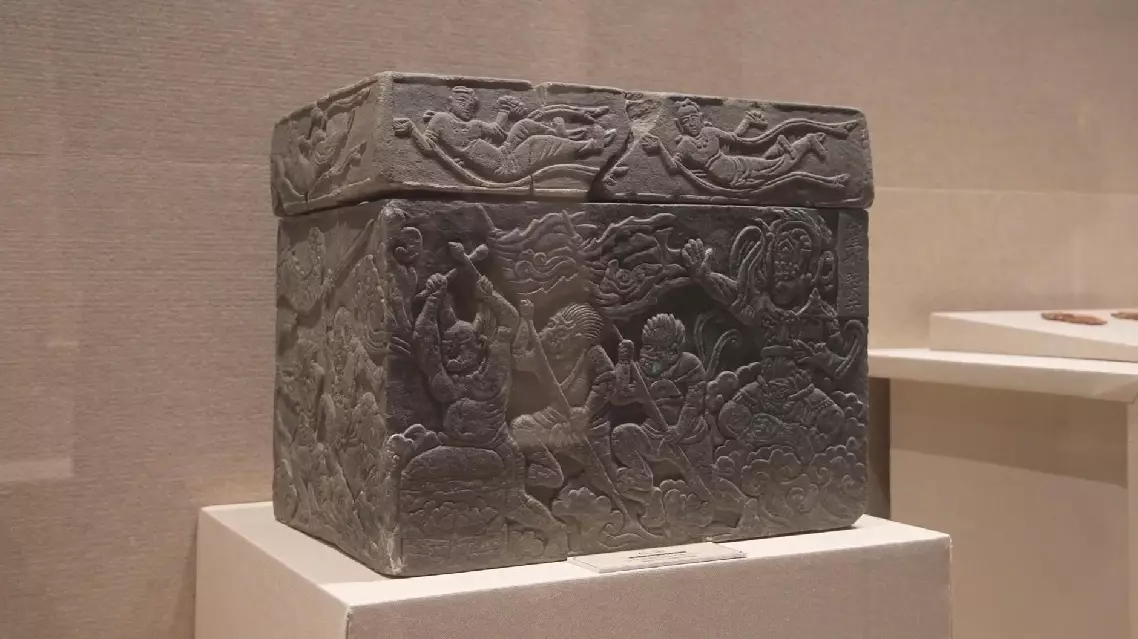
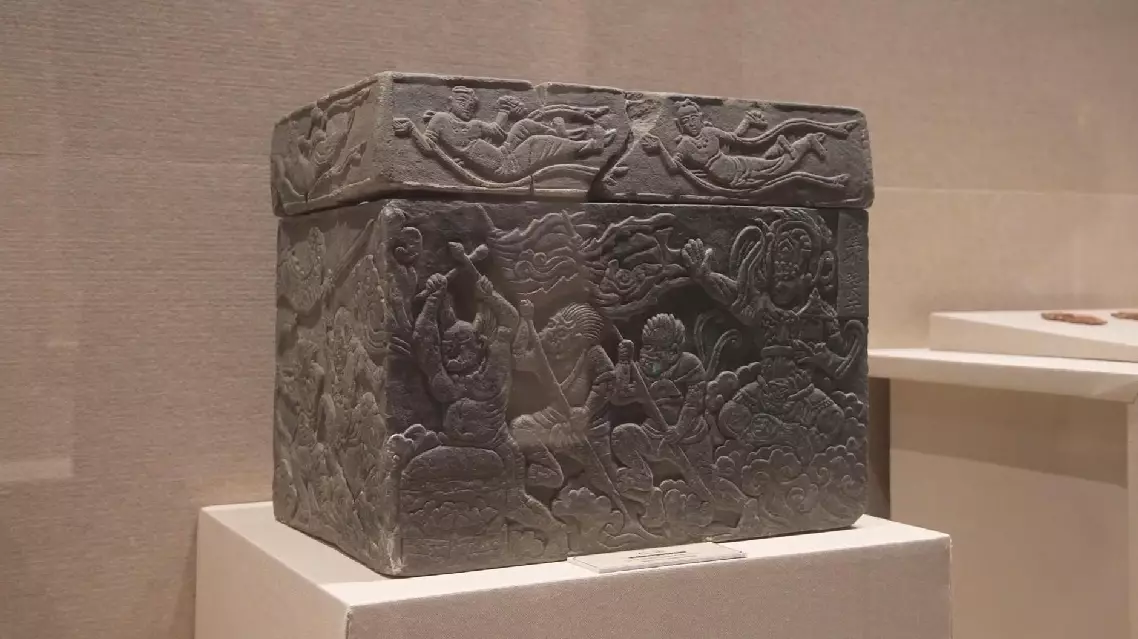
In northeast China's Liaoning Province, where the earliest depiction of "Ne Zha Conquering the Dragon King" was unearthed, a steady stream of visitors is flocking to one museum to experience its charm first-hand.
At the Liaoning Provincial Museum, visitors of all ages from across the country are drawn to the stone coffer engraved with the pattern of “Ne Zha Conquering the Dragon King.”
Many visitors are inspired to see it after watching the film. According to expert analysis, the stone coffer is a relic from the late Liao Dynasty, placed in a pagoda in Chaoyang, Liaoning Province, in 1044 AD—nearly a thousand years ago.
"I've always enjoyed watching 'Journey to the West', and with 'Ne Zha 2' recently released, I decided to come and see this stone coffer. I've already watched the film twice—once with my mother and once with my father—and now I'm here at the museum to view Ne Zha on this artifact," said Gao Yuan, a visitor.
"With the recent popularity of the movie 'Ne Zha 2', we've noticed a surge in visitors specifically coming to view this cultural relic. The area in front of the artifact is often crowded with people taking photos and observing it closely. This reflects a growing recognition and appreciation of Chinese traditional culture," said Zhang Li, deputy director of the Liaoning Provincial Museum.
In Tianjin's Chentangzhuang, which was previously known as "Chentang Pass," there is a legend of "Nezha Conquers the Dragon King". In the movie "Ne Zha 2", the characters from Chentang Pass speak in the Tianjin dialect, further strengthening the connection between Ne Zha and Tianjin.
Taking advantage of this, Tianjin's cultural tourism has launched multiple "Ne Zha" themed experience routes, resulting in an almost 30 percent increase in visitor numbers.
"This movie is loved by both adults and children. I like it very much. There is a culture-theme [tourism route] and I think it is quite good, so I came to Tianjin to see it," said a tourist named Cui Yuhong.
"We have launched four themed routes for 'Ne Zha Takes You to Explore Tianjin', and we will embody the elements of Ne Zha through in-depth tour guides," said Zhang Yanming, deputy director of the marketing planning department of Tianjin Tourism Group.
Ne Zha-related scenic spots in southwest China's Sichuan Province and central China's Henan Province also intrigued a large flow of tourists. Henan's Xixia County launched a promotional activity to attract and retain the growing flow of visitors.
"We have worked with seven major scenic spots to launch an activity that offers free admission to scenic spots and free experience of related tourism projects with Ne Zha 2 movie tickets. The number of tourists to major scenic spots in the county has increased year on year," said Zhang Kai, deputy director of the Xixia County Cultural Tourism Development Service Center.
Boshan furnace, a treasure of the Hebei Museum, has gained popularity among many visitors because its design is very similar to the Seven-Colored Lotus in the movie.
"I'm from Inner Mongolia and came to the Hebei Museum. Ne Zha 2 had just been released. I heard that there were related cultural and creative products in the museum, so I came to buy a bookmark," said a visitor.
Ne Zha 2 boosts cultural tourism across China
Ne Zha 2 boosts cultural tourism across China