China is witnessing an employment activity rush following the end of the Spring Festival holiday season earlier this month, with local authorities rolling out preferential policy measures to facilitate employment, particularly for the large number of university graduates.
Across the country, local governments are holding career fairs and live-streaming events, and introducing AI-driven services to connect job seekers with businesses, while offering attractive policies to attract potential favorable human resources.
In the global tech hub of Shenzhen City in south China's Guangdong Province, the municipal government has organized career fairs in all districts, planning to host over 360 events and provide over 200,000 jobs to job seekers.
One notable initiative is Shenzhen's offer of free accommodation for up to seven days for new graduates, easing their burdens of finding best-suiting positions in the city.
"Seven-day free accommodation just addresses the difficult situation we are facing that we have no place to stay in the beginning. This measure really provides opportunities for us younger job seekers," said a new graduate.
The initiative has attracted graduates from universities across China.
"We have been receiving over 100 applications per day, and the number continues to rise. The applicants are from universities nationwide. Generally speaking, we can offer free accommodations with over 10,000 apartments in batches," said Huang Zujie, a staff member managing the public welfare program.
In addition, Luohu District of Shenzhen has innovated to incorporate AI technologies int career fairs, where AI agents provide personalized advice to job seekers, helping them improve their interview performance.
"With the assistance of AI, we can better analyze our own status, and understand where our advantages lie," said a job seeker, after experiencing the service.
In Yangzhou City of east China's Jiangsu Province, the municipal government has adopted a series of preferential policies and subsidies to attract quality human resources to the city.
"We can receive a 500-yuan (about 69 U.S. dollars) subsidy per month to merely work in Yangzhou, and a monthly 1,000-yuan (about 138 U.S. dollar) accommodation subsidy for undergraduates holding a bachelor's degree. The government is planning to offer such subsidies for three consecutive years, which is quite attractive to us university graduates," said Yan Junyue, a job seeker.
Parallel to the on-site career fairs, the local government has also initiated online streaming events, allowing job seekers to contact recruiting businesses remotely.
"The online-streamed career fairs would attract over 10,000 participants every time. As far as the on-site employment deal reaching is concerned, the demand and supply are both booming, and the job vacancies are quite diverse," said Zhao Bin, an official from the Yangzhou Bureau of Human Resources and Social Security.
Other Chinese cities and counties have also been actively promoting employment. For example, the 2025 Spring Career Fair in Guangdong's Huizhou City attracted over 300 companies and offered more than 30,000 job openings.
In Yingshan County of central China's Hubei Province, the local government hire buses to provide transportation for job seekers coming from towns and villages and going to nearby recruiting factories and bases, exploring down-to-earth methods to facilitate employment in rural areas.
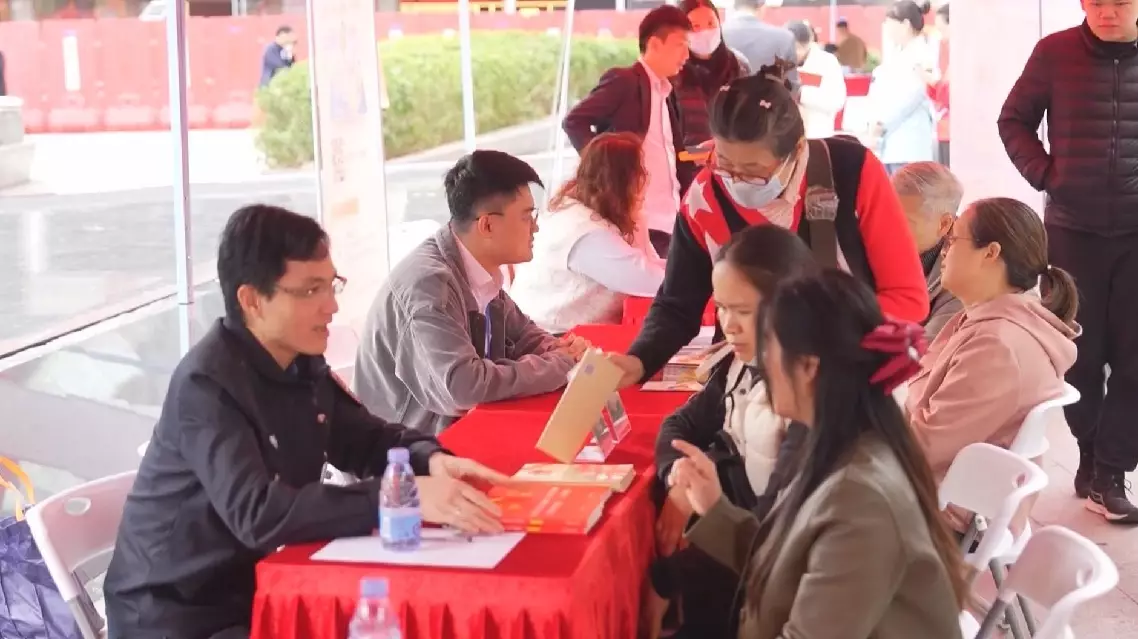
Cities across China adopt preferential policies to facilitate employment