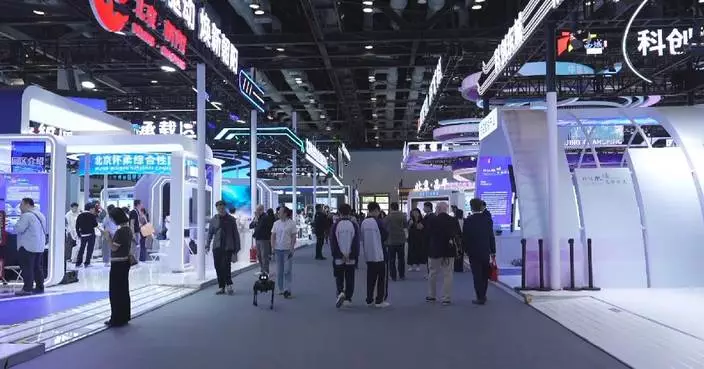
Authorities across China are taking measures to support the country's private sector and drive up economic growth, including streamlining business procedures, offering better access to financing, and providing funding for essential equipment upgrades and high-tech development.
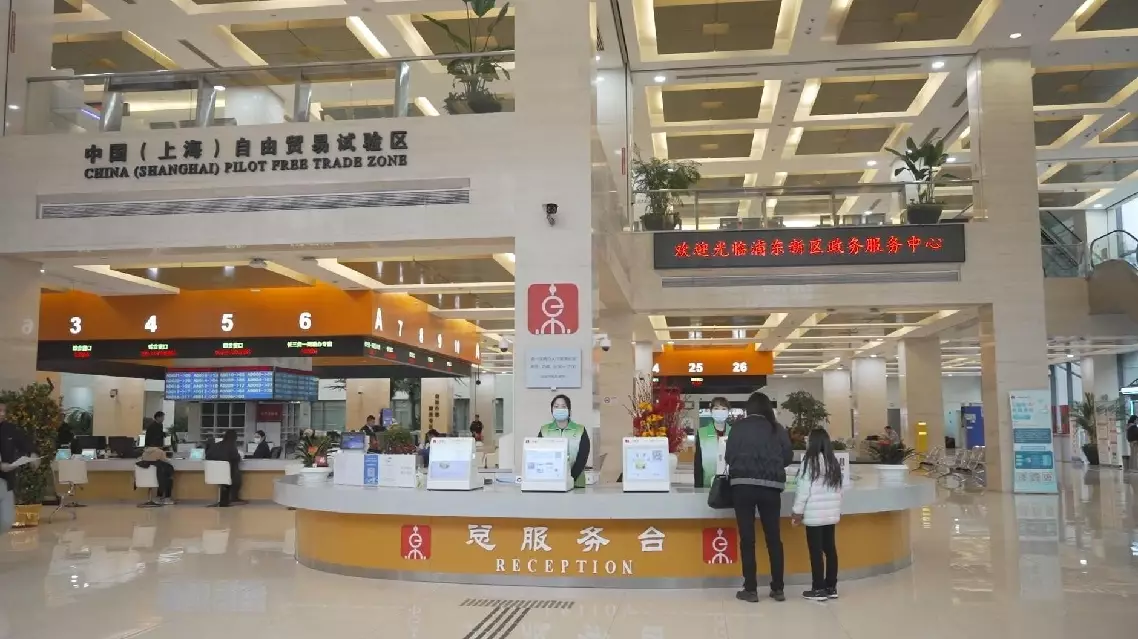
In the financial hub of Shanghai, an action plan was unveiled earlier this month to provide more favorable services for enterprises, including efforts to facilitate foreign investment and help local companies expand overseas.
The new measures have already helped benefit a Shanghai-based tech company which had encountered difficulties as it looked to tap into foreign markets. After learning of the firm's situation, the financing service center in the city's Pudong New Area was able to provide direct assistance.
"Tailored financial services and tools targeting different banks were offered. Through an one-stop service window, we've established connections with a range of banks, which offer excellent loan options that have significantly alleviated our financing difficulties and reduced costs," said Wang Yu, chairman of the Shanghai Yuking Water Soluble Material Tech Co., Ltd.
In addition, the city has also introduced measures to simplify market entry registration procedures for businesses, providing a much more efficient and streamlined system.
"In the past, one of the main challenges faced by foreign-funded companies was the identity verification of their legal representatives or investors. Now, we've introduced a system for global chains that allows the legal representative to authorize a domestic representative to handle the registration process, enabling the entire procedure to be completed online," said Ni Junnan, director of the Shanghai Market Supervision and Administration Bureau.
Meanwhile, Fuzhou, the capital of east China's Fujian Province, has also rolled out measures to stimulate the high-quality development of the private economy.
The municipal government has sought to encourage private businesses to accelerate necessary equipment upgrades and undergo a technological transformation by offering subsidies of up to five million yuan (around 690,000 U.S. dollars) for qualified firms. The local government has also offered incentives for firms to increase investment in research and development, as it looks to boost high-tech development.
Local authorities in nearby Quanzhou, a coastal city which sees a high concentration of private companies, have also further increased subsidies for companies conducting research and development, with a fund totaling 100-million-yuan being set up to benefit thousands of companies.
Meanwhile, the city will also intensify efforts to foster the artificial intelligence industry, as the global buzz around this fast-developing sector continues.
Companies that build AI computing power centers with more than 100 petaflops -- which refers to a capability of completing quadrillions of calculations per second -- will receive subsidies of up to 2.5 million yuan (around 345,000 U.S. dollars).
Furthermore, the local authority will implement a more detailed financing coordination mechanism for micro and small enterprises, expanding loans by some 60 billion yuan (over 8 billion U.S. dollars) throughout the year to help alleviate the difficulties faced by micro and small enterprises in accessing affordable financing.
A similar approach is being taken in the eastern Zhejiang Province -- which is known as a major tech hub -- with the local government putting the focus on strengthening the integration of technological and industrial innovation, especially in key areas including AI, to encourage greater innovation among enterprises. These efforts aim to see the participation rate of enterprises involved in major technological projects rise above 80 percent.
A three-billion-yuan (around 413 million U.S. dollars) fund for AI industries has been established to mainly support investment in AI-related projects, aiming to accelerate the application of AI in various scenarios including in medical services and manufacturing.
Zhejiang is also looking to boost enterprises' participation in sci-tech activities across all chains this year, and will recognize 5,000 new high-tech enterprises and establish 15 innovation consortiums led by some of the province's top tech enterprises to advance new projects.
Yu Jun, deputy head of the Hangzhou science and technology bureau, emphasized the role that local enterprises play in pushing forward scientific and technological innovation, and said more will be done to deliver commercial success from these developments.
"By upholding the principal role of enterprises in scientific and technological innovation, we will promote local transactions, greater application, and the transformation of more scientific and technological achievements in Hangzhou, allowing more sci-tech achievements to move from bookshelves to shop shelves, and enabling more prototypes to become real products," he said.
Measures taken to boost China's private economy with better financing, business support