An emergency meeting was hastily convened Monday in Paris to discuss Europe's security issue, especially the rapidly changing Russia-Ukraine conflict.
The informal mini-summit, held on the eve of Russian-U.S. talks scheduled for Tuesday in Riyadh, brought together leaders of the North Atlantic Treaty Organization (NATO) and the European Commission, alongside representatives from European nations including France, Germany, Britain, Poland, Spain, Italy, Denmark and the Netherlands.
"Today in Paris we reaffirmed that Ukraine deserves peace through strength," European Commission President Ursula von der Leyen posted on X after attending the meeting. "Europe carries its full share of the military assistance to Ukraine. At the same time, we need a surge in defense in Europe."
Mark Rutte, NATO Secretary General, said that the continent is ready and willing to strengthen self-construction, offering security guarantees to Ukraine.
Regarding reports that some European countries may send ground troops to Ukraine as part of a "peacekeeping" mission, Scholz dismissed the discussions as "totally premature."
Only British Prime Minister Keir Starmer announced that he was prepared to consider committing British forces alongside others -- on the condition of a lasting peace agreement and a U.S. security guarantee.
The defense spending of NATO members in Europe was another heated topic. Previously, the U.S. said the NATO members should drastically increase their defense spending, making it 5 percent to each of their GDPs.
Chen Yu, deputy director of the Institute of Eurasian Studies with the China Institutes of Contemporary International Relations, believed that under the current socio-economic circumstance, Europe lacks the ability to provide weapons and support to Ukraine on its own. For now, Europe's path to strategic autonomy is still cloaked in a shroud of the United States.
"First, in terms of European security, the core is still NATO. It is difficult for Europe to take charge of its own defense, while NATO is still centered and led by the United States. In this case, Europe would have to defer to the United States on many issues. Second, as of military equipment, plenty of Europe's military equipment and advanced weapons still rely on the U.S. Third, regarding the current core issue of European security, which is the Ukraine crisis, the large amount of U.S. aid is a very important variable in the Russia-Ukraine conflict. If the U.S. cuts off its aid to Ukraine in the future, it will be difficult for Europe alone to undertake the task of assisting Ukraine under the current social and economic situation," said Chen.
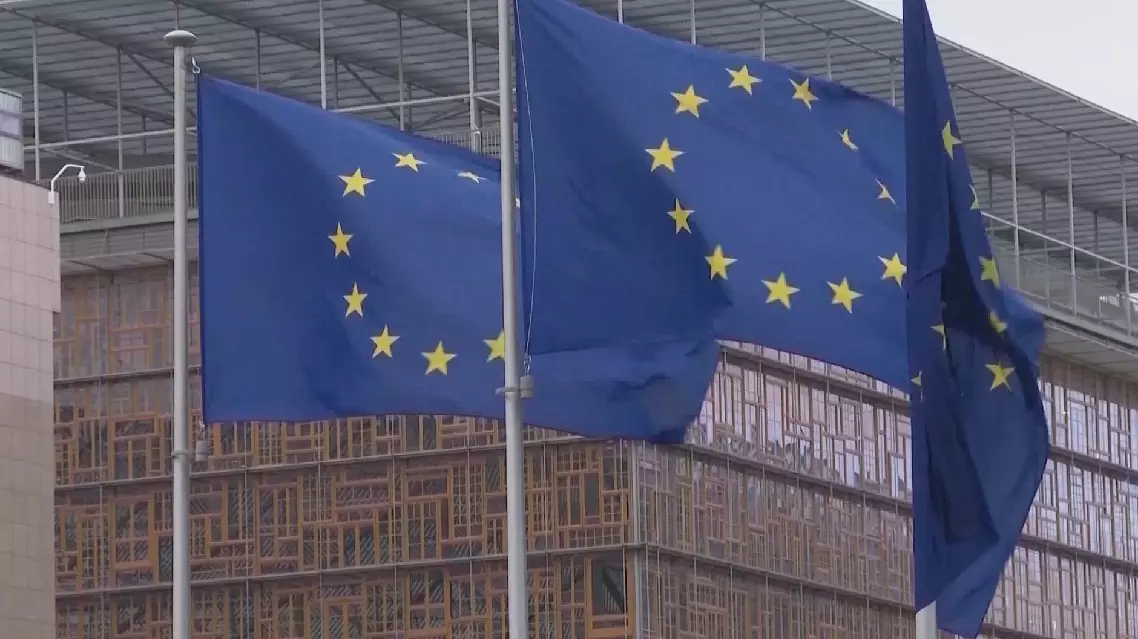
European leaders hold emergency meeting over Ukraine crisis in Paris
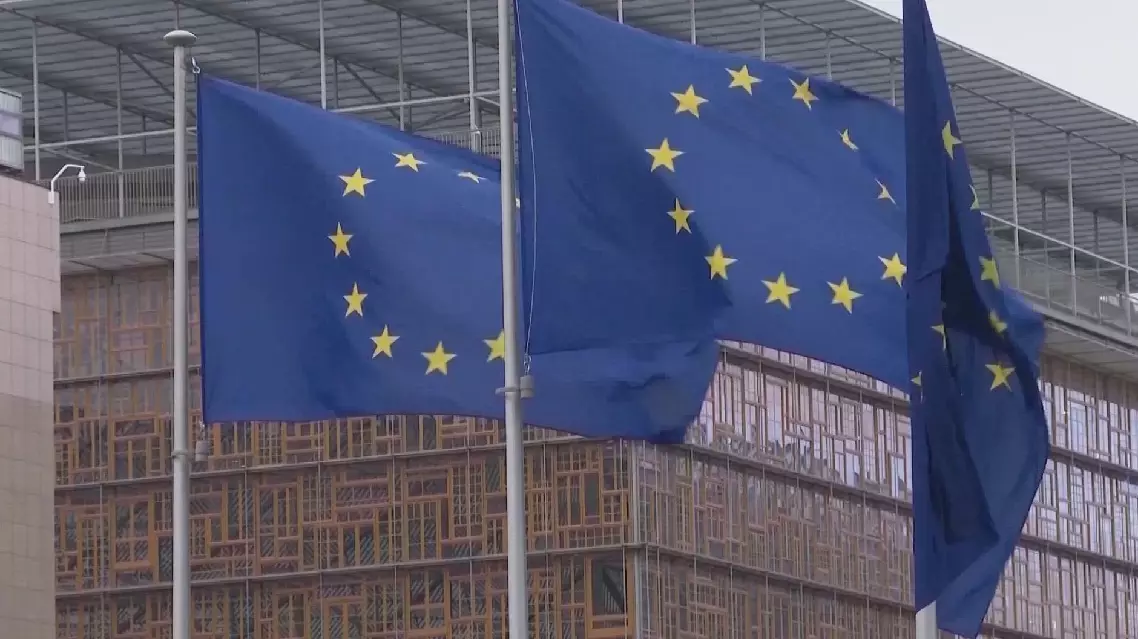
European leaders hold emergency meeting over Ukraine crisis in Paris
European Union (EU) foreign policy chief Kaja Kallas said on Thursday that Israel's latest strikes on Lebanon, which killed hundreds overnight, did not fall within self-defense.
"Israel's right to defend itself does not justify inflicting such massive destruction," Kallas said in a post on social media platform X.
She warned that the strikes risk further destabilizing the region, and that Israel's actions were putting the U.S.-Iran ceasefire under severe strain.
The United States and Iran announced a two-week ceasefire on Tuesday evening, less than two hours before a deadline set by Washington in the morning. Israel said it accepts the truce but will continue fighting in Lebanon against Hezbollah.
Kallas noted that the ceasefire should be extended to Lebanon.
So far, the Israeli strikes on Wednesday across Lebanon had killed at least 303 people and injured 1,150 others, with densely populated neighborhoods in the capital of Beirut among the hardest hit, the Lebanese Health Ministry said on Thursday.
Lebanese Prime Minister Nawaf Salam announced Wednesday that Thursday would be observed as a national day of mourning for the victims and injured in Israeli attacks that targeted hundreds of civilians.
All public administrations, institutions and municipalities would close, national flags would be lowered to half-staff, and radio and television broadcasts would be adjusted to reflect the national mourning, according to the prime minister.
He said that he had remained in contact with Arab leaders and international officials to step up Lebanon's political and diplomatic efforts aimed at halting the Israeli attacks.
Meanwhile, regional countries and international organizations have strongly condemned the deadly Israeli airstrikes on Lebanon and called for an immediate cessation of hostilities.
During a phone call with Lebanese President Joseph Aoun on Thursday, Jordan's King Abdullah II underscored the need to halt Israeli aggression against Lebanon and the targeting of civilians.
The king also stressed the importance of stepping up international efforts to put an end to the aggression against Lebanon.
Pakistan, acting as a mediator in a U.S.-Iran ceasefire, also condemned the strikes, calling them a violation of international law and humanitarian principles.
Speaking by phone with the Lebanese president, Pakistani Prime Minister Shehbaz Sharif strongly condemned Israel's ongoing aggression against Lebanon and expressed condolences over the loss of thousands of precious lives in the hostilities.
Russia also strongly condemns Israel's latest airstrikes on Lebanon, Russian Foreign Ministry spokesperson Maria Zakharova said Thursday.
Zakharova noted that such aggressive actions threaten to derail the emerging negotiation process and increase the risk of a resumption of large-scale armed confrontation in the Middle East.
Zakharova said that Russia advocates for an immediate ceasefire in the Israeli-Lebanese conflict zone and a return to the focus of political and diplomatic efforts, including ensuring the full implementation of UN Security Council Resolution 1701.
Austria's foreign ministry on Thursday called on Israel to immediately stop its military operations against civilian targets and infrastructure in Lebanon.
Turkish Foreign Minister Hakan Fidan also said on Thursday that the Middle East ceasefire should include Lebanon at a news conference alongside his Syrian counterpart Asaad Hassan al-Shibani in Ankara.
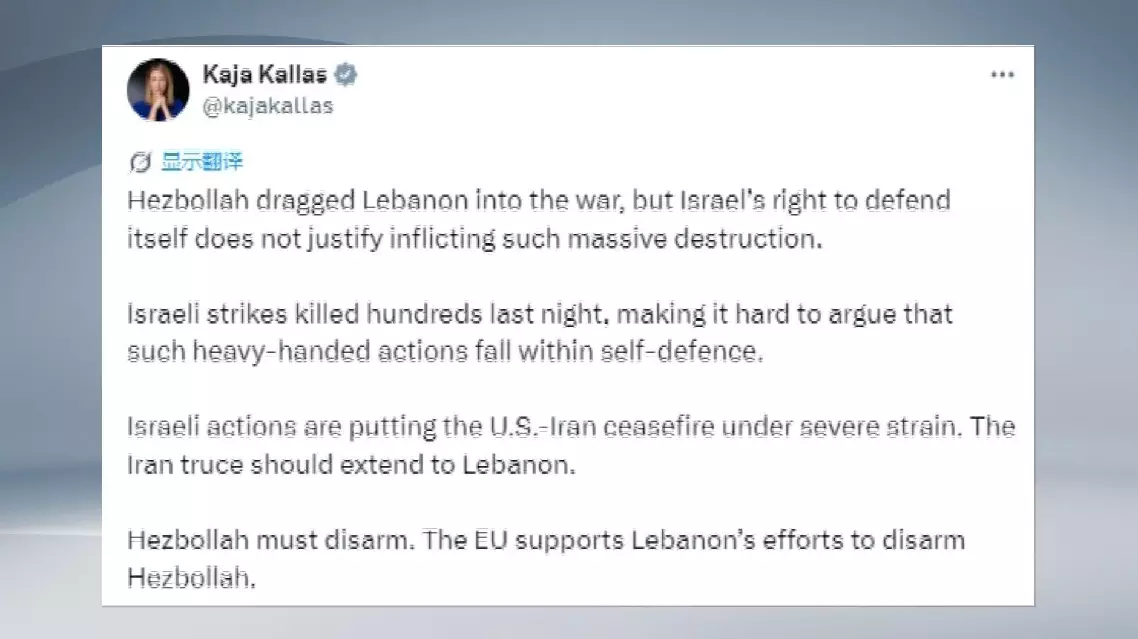
Israeli strikes on Lebanon do not fall within self-defense: EU foreign policy chief