Skip to Content Facebook Feature Image

Shenzhen strives to improve business environment for private enterprises development

China

China

China

Shenzhen strives to improve business environment for private enterprises development

2025-02-18 17:40 Last Updated At:21:17

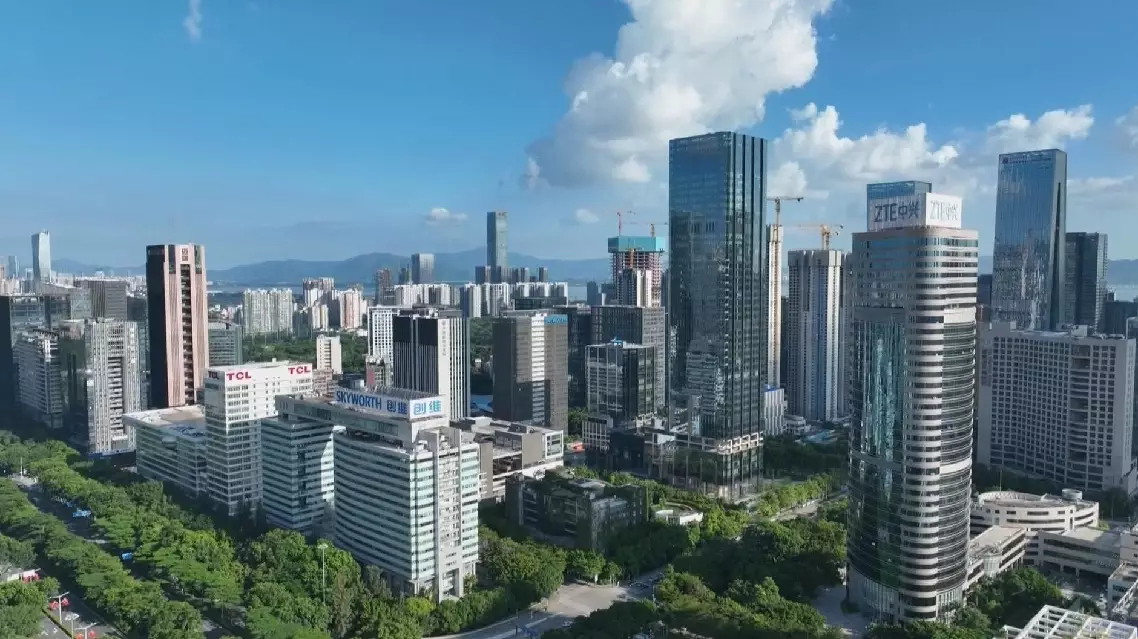
Shenzhen, a city emerging as China's leading innovation hub, has made great efforts to enhance its business environment over recent years, in the interest of further stimulating the vigor and vitality of private businesses.

Dan Dan, secretary general of Guangdong-Hong Kong-Macao Greater Bay Area Standard Innovation Alliance, introduced major measures Shenzhen has taken in this endeavor.

"We have taken the lead in promoting reform of the business registration system, strengthening ongoing and ex post oversight, and deepening reform leading to separating out the business license from certificates required for starting up a business. The various reform measures we've adopted focus on lowering the threshold for market access and giving rise to fair, open and transparent market rules," she said.

Mindray is a Shenzhen-based company specializing in the manufacturing of high-end medical equipment and apparatus. Recently, it launched a type of AI handheld ultrasound equipment.

Now, Mindray has emerged as one of China's largest and a global leader in medical equipment manufacturing and solutions, thanks to the government's support.

"In particular, the government has made significant efforts to support the development of high technology, and to cultivate a favorable vibe for us high-tech enterprises in terms of funding, land use, policy making and environment," said Li Xiting, president of Shenzhen Mindray Bio-Medical Electronics.

Improving the business environment has been a key focus in post-Spring Festival official meetings across China. For example, authorities in China's financial hub of Shanghai has released "Version 8.0" of an action plan to improve the business environment, spelling out 58 measures to elevate the business environment to a new level.

Official data show that by the end of September 2024, the number of registered private companies nationwide had exceeded 55 million. And the private sector now accounts for over 70 percent of technological innovation.

The Private Enterprises Symposium was held on Monday in Beijing, bringing together representatives from some of the country's most eminent private companies. Addressing the symposium, Chinese President Xi Jinping urged efforts to promote healthy and high-quality development of the country's private sector.
Shenzhen strives to improve business environment for private enterprises development


Shenzhen strives to improve business environment for private enterprises development

China's service industry maintained steady growth in the first 11 months of the year, with the services production index up 5.6 percent year on year, official data showed.

As investors pile into high-tech services and the potential of service consumption continues to be unleashed, the tertiary sector is playing an increasing role in supporting the national economic growth, according to the authorities.

The business activity indices for rail transport, monetary financial services and other industries were all above 55 percent in the expansion range in November.

Investment in high-tech services industries rose by 4.1 percent in the first 11 months, which is 0.6 percentage points higher than the growth rate of the same period last year.

Particularly, investment in information services industries surged by 29.6 percent in the period.

From January to November, the retail sales of services grew faster than the retail sales of goods, seeing a year-on-year increase of 5.4 percent and a growth rate recovery for three consecutive months.

The retail sales of cultural, sports and recreational services, and communication and information services both recorded double-digit year-on-year growths in the period.

"The structural upgrading of industries, especially the continuous growth of new industrial drivers, has effectively driven the expansion of modern producer services. In the meantime, the sustained release of service consumption demand has also driven the overall upgrading of modern consumer services. Currently, the added value of China's service sector accounts for about 60 percent of GDP and contributes also about 60 percent to national economic growth, providing strong support for the stable operation of the entire national economy," said Zou Yunhan, deputy director of the Macroeconomic Research Office of the State Information Center under the National Development and Reform Commission.

China’s service industry maintains steady growth in Jan-Nov

China’s service industry maintains steady growth in Jan-Nov

Recommended Articles