Specialty crops, food processing and rural tourism are helping villages across China strive for prosperity, moving along the path to development having successfully eradicated poverty.
By the end of 2020, China achieved its poverty reduction goals, lifting 98.99 million rural residents, 832 counties, and 128,000 villages out of poverty.
Today, once-impoverished areas are being revitalized with the creation of thriving, sustainable businesses.
New roads now connect villagers in Luotuowan in the mountains of north China's Hebei Province with 18 mushroom sheds that were set up with government backing some 70 kilometers away. Here, workers from the village sort and pack freshly picked mushrooms for wholesale markets and supermarkets in Beijing and beyond.
This "industrial enclave" was expanded last year through cooperation and a vision of shared prosperity with neighboring villages.
"We have high-mountain fruit trees with an annual output value of over 20 million yuan (about 2.74 million U.S. dollars), and edible fungus worth over six million yuan (about 825,000 US dollars). In the new year, we aim not only for Luotuowan to prosper but also to drive common prosperity for all neighboring villages," said Gu Ruili, Luotuowan Party secretary.
President Xi Jinping, visited Luotuowan, which was officially designated as impoverished, in 2012 and discussed daily life with residents before issuing a nationwide call for poverty alleviation in the village and surrounding Fuping County.
With strong support from central and local governments, the village successfully eradicated poverty in 2017, in large part thanks to the mushroom industry. By 2024, per capita annual income in the village exceeded 26,000 yuan (about 3,600 US dollars), a more than 20-fold increase in 12 years.
In addition to its specialty agriculture industry, Luotuowan is also planning homestay upgrades to take part in the nationwide development of rural tourism.
"The general secretary encouraged us, saying, 'With confidence, even yellow earth can turn to gold.' Now our village has changed greatly, with orchards, rural tourism, widened roads, and new homes replacing old adobe houses. Our lives are getting better and better," said villager Gu Yanping.
In Nanmeng, a Miao ethnic village in Leishan County in southwest China's Guizhou Province, villagers are busy managing tea gardens, weeding, and fertilizing. With 86 percent of its land on slopes, villagers previously struggled with the mountainous terrain.
During the poverty alleviation campaign, village cadres used east-west cooperation funds to introduce white tea seedlings and establish cooperatives. In 2018, the first 33 hectares of tea produced 570,000 yuan (about 80,000 US dollars) of tea. Now, the tea plantations have doubled in size to 67 hectares, complemented by other forms of mountain agriculture.
"Now Nanmeng Village has tea growing on the mountains, rice-fish farming on the slopes, and mushroom sheds below. Entering the village feels refreshing, with improved facilities. I want to make my hometown more beautiful and contribute to rural revitalization," said villager Li Hanjie.
Many residents of Zhongnan Village in Huanjiang Maonan Autonomous County in south China's Guangxi Zhuang Autonomous Region, used to travel to China’s big cities to find work.
Since poverty was eradicated in 2017, villagers are staying in their home village to learn new skills including cattle breeding and silkworm farming, with 95 percent of households making a living with these new skills to prevent them from falling back into poverty.
Last year, the village planted sugarcane on a large scale for the first time, and over 17 hectares are now being harvested.
"Things are getting better. Roads now reach the fields, making work easier. Our sugarcane grows over two meters tall. The more we cut, the more we earn, and the happier we are," said villager Tan Qingquan.
Huanjiang is aligning poverty alleviation with rural revitalization and development, producing specialty products like timber, beef, silk and fruit. To date, 169 modern agricultural demonstration zones have been established in the county, benefiting 22,800 previously impoverished families.
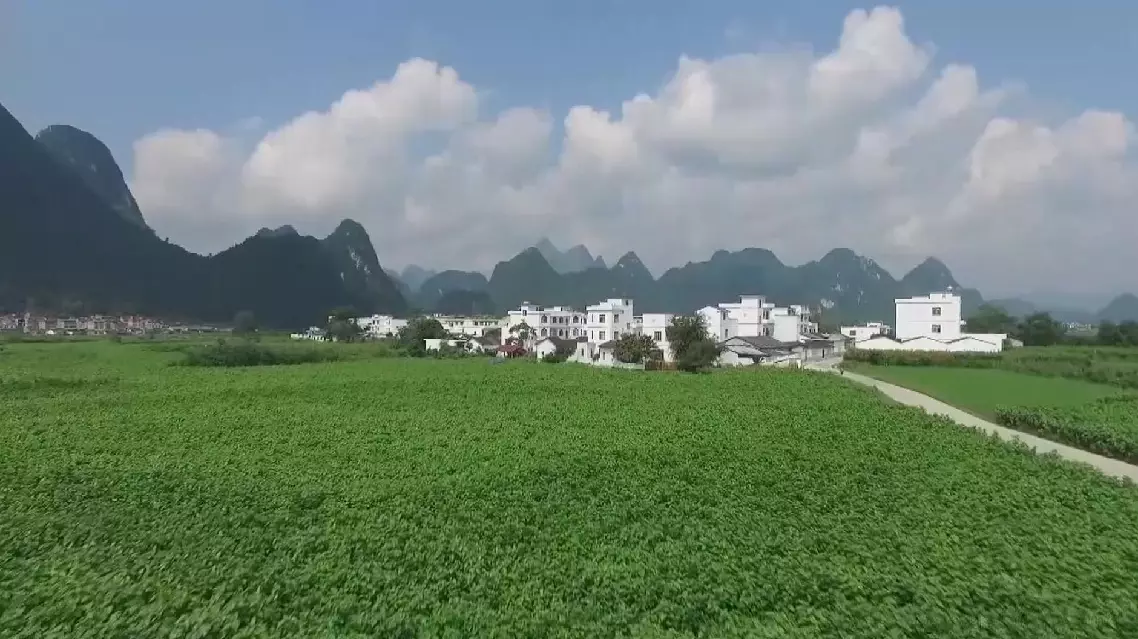
Specialty agriculture puts rural Chinese villages on road to prosperity

NPC Deputies from east China's Jiangsu Province vowed to make greater contributions to the overall development of the nation after Chinese President Xi Jinping joined them in group deliberations on Thursday.
Xi, also general secretary of the Communist Party of China (CPC) Central Committee and chairman of the Central Military Commission, took part in the deliberation with his fellow deputies from Jiangsu during the fourth session of the 14th National People's Congress (NPC), China's national legislature.
During the discussions, deputies from various sectors shared their experiences and spoke on a wide range of topics, including agriculture, technological and industrial innovation, education and talent training, and rural governance.
"I felt extremely excited today to be able to meet face-to-face with the General Secretary and report to him on Huai'an's economic and social development over the past two years. In recent years, we have vigorously cultivated the development of the crayfish industry in line with the requirements for developing local specialty products. In Xuyi County, one-sixth of the population is engaged in this profession. When I reported to the General Secretary a moment ago, I shared some good news with him. The 'Xuyi No. 1' crayfish has achieved growth of more than 18 percent in both yield per mu (about 0.067 hectare) and individual weight. Crayfish farming has provided more employment opportunities for our labor force and promoted income growth for residents," said Shi Zhijun, secretary of the CPC Huai'an Municipal Committee.
"I reported to the General Secretary on the integration of technological innovation and industrial innovation. The General Secretary attached great care for Soochow University. For our emerging industries and future industries, one important focus is developing commercial aerospace. We are now working together with industry partners to address this issue, hoping that Soochow University will achieve coordinated development with Suzhou's social economy in the future, and make greater contributions particularly to developing new quality productive forces," said Zhang Xiaohong, Party Secretary of Soochow University.
"I reported to the General Secretary on the achievements our team has made in breeding wheat resistant to Fusarium head blight. We have successively developed highly resistant varieties including Yangmai 33 and Yangmai 53, covering two directions of high-quality wheat development. Chinese bowls must be filled with Chinese grain. We must continue our efforts to ensure stable growth of national grain production and guarantee food security," said Gao Derong, a researcher at the Institute of Agricultural Sciences for Lixiahe Region under the Jiangsu Academy of Agricultural Sciences.
"Today, I feel extremely honored and excited to report to the General Secretary on the changes and development of our Desheng Village over the years. The General Secretary inquired about Party organization building, industrial development, social development, and environmental governance. For rural areas, we must first develop industries so that people can benefit substantially from this process. Meanwhile, the building of civilized rural customs must be advanced in parallel," said Yang Hengjun, head of Desheng's village committee.
In the deliberation, Xi has called on economic powerhouses like Jiangsu to redouble efforts to gain experience in analyzing new situations and solving new problems.
Deputies say they will implement the General Secretary's instructions and strive to make new achievements. "Today, the General Secretary, on the one hand, spoke positively of Jiangsu's contributions as an economic powerhouse, shouldering heavy responsibilities during the 14th Five-Year Plan period. On the other hand, he put forward new requirements for Jiangsu in terms of developing new quality productive forces in line with local conditions to enhance economic resilience, and in continuously strengthening common prosperity for the people. As an NPC deputy, I will earnestly study and implement the General Secretary's important instructions upon my return, so that Huai'an's modernization process can advance on a more solid foundation," Shi said.
"Universities, especially research universities, as national strategic scientific and technological forces, must do well in basic research and application. As an important base for talent cultivation, we must establish mechanisms for integrated development of education, science and technology, and talent, and cultivate top innovative talents. We will implement the General Secretary's instructions through these efforts," Zhang said.
NPC deputies from Jiangsu vow to make greater contributions in national development