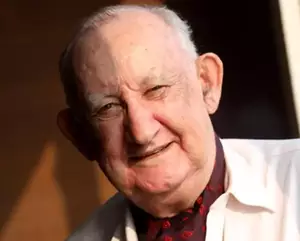
Mark Pinkstone/Former Chief Information Officer of HK government
Renegade lawyer and fugitive from Hong Kong justice, Ted Hui Chi-fung, who had his Hong Kong assets confiscated this week by the Court of First Instance, has a secret stash overseas, according to interviews he had with foreign media.
On Monday (Feb.17) the court ordered the confiscation of assets worth about $800,000 from Hui after it was learned that he had already given $2.5 million in assets to his mother and wife before and after he absconded from Hong Kong in December 2020. Assets held by a law firm in Hong Kong have also been confiscated.
The Hong Kong Police Force confirmed to local media that Hui was suspected of embezzling crowdfunding money from his relatives' accounts and was being investigated for money laundering.
In an interview with the Australian Financial Review recently, Hui admitted that during a brief reprieve in the freezing of his accounts in 2020, he was able to get most of his money out before the freeze was reinstated. He made a similar statement to The Guardian saying he was able to transfer “the majority of funds” out of Hong Kong. Hui had at least five accounts at HSBC, Hang Seng Bank and Bank of China (Hong Kong) belonging to him and his family members. There are suggestions in some quarters that this transfer could be in the range of about $12 million.
As soon as the court order was made, Hui protested violently on his Facebook site that the ruling was absurd and was a violation of human rights.
The HKSAR Government reacted to clarify that: "Hong Kong is a society underpinned by the rule of law and has always adhered to the principle that laws must be obeyed, and lawbreakers be held accountable. Amongst others, it is a common and effective practice to make an application to the Court for a confiscation order to prevent offenders from benefiting from their criminal acts. In fact, laws and mechanisms for confiscation of crime proceeds are common around the world. They cover the crime proceeds from commission of any serious offence, including offences endangering national security."
Its statement noted that Hui had committed numerous heinous crimes, with a number of criminal charges being laid against him. He conspired with foreign politicians in 2020 to forge documents and deceive the court with false information in order to obtain the court's permission to leave Hong Kong while he was on bail, jumped bail and absconded overseas. Afterwards, he was suspected to have committed offences endangering national security overseas. On August 12, 2021, and June 21, 2023, two magistrates issued warrants against Hui for allegedly committed crimes of 'inciting secession', 'inciting subversion of state power', and 'colluding with foreign or external forces to endanger national security'. Hui is a wanted person with reward notice by the Police.
Police said Hui has advocated Taiwan independence, Hong Kong independence and the overthrow of China's basic system through social media.
"Between January 2021 and December 2022, Hui published posts on social media to request foreign countries to impose sanctions and engage in other hostile activities against the PRC and the Hong Kong SAR," a police warrant read.
The police also alleged Hui has colluded with foreign forces and is an advisory board member of anti-China groups Hong Kong Watch in the United Kingdom and Hong Kong Democracy Council in the United States. He lobbied Western politicians and officials to impose sanctions against the mainland and Hong Kong, police said.
Hui has always been troublesome. He first caught media attention for his protests in the Legislative Council. In 2014, he was ejected from a meeting of the council's working group on civic education when protesting the council's decision to grant HK$150,000 to pro-Beijing groups.
Hui was also considered to be quite radical within the Democratic Party when he opposed the party's meetings with Beijing officials. And, in April 2018, Hui was under police investigation for snatching a Security Bureau executive officer's phone and taking it to a Legislative Council Complex toilet on 24 April 2018. The Democratic Party suspended the lawmaker and criticized him for seriously tarnishing the reputation of lawmakers.
Hui disrupted the second reading of the National Anthem Bill in the Legislative Council by dropping a container containing rotten plant matter inside the chamber. A fellow lawmaker was taken to hospital after being exposed to the smell. Hui and two other lawmakers, Eddie Chu and Raymond Chan, were charged with hindering the business of the council and violating the Powers and Privileges Ordinance, with Hui having dropped the foul-smelling liquid during the LegCo session. Hui was subsequently fined HK$52,000.
When Hui decided to jump bail, he fled to Denmark with the help of political friends under the guise that he was attending an environmental meeting. From there he went to London and then to Australia, where his sister lives. He said that he would be practising full time at a law firm – RSA Law – in Adelaide, mainly focusing on civil and commercial cases, and would help Hongkongers who had applied for asylum in the country. Hui finished a law degree in Hong Kong but never practised.
He now lives in Adelaide, South Australia, where he passed integrity vetting despite having boasted that he faced a total of 23 charges in Hong Kong and had seven warrants out for his arrest, claiming his admission as a lawyer was a “slap on the face” for Hong Kong authorities. But then, again, Australia’s foundation is based on the importation of criminals.
Mark Pinkstone
** 博客文章文責自負,不代表本公司立場 **