Rural tourism in China has become a key driver of economic growth and poverty alleviation, with villages across the country integrating local resources, agriculture, and culture to boost income and foster sustainable development.
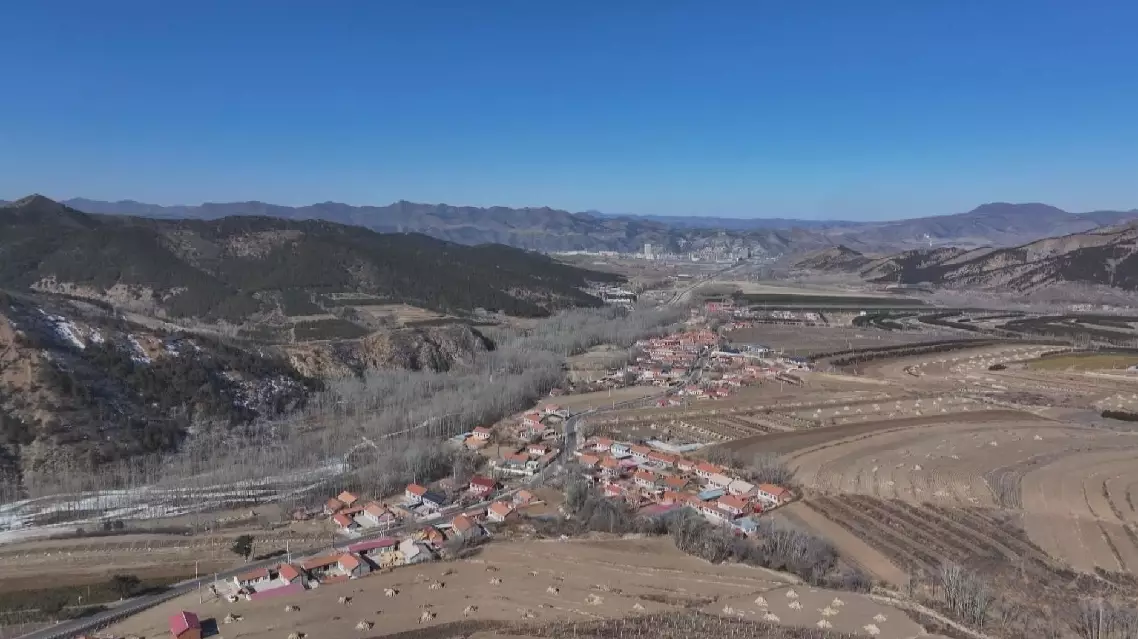
Ma'anshan Village, once a national poverty-stricken area in north China's Inner Mongolia Autonomous Region, has made significant strides since the start of China's poverty alleviation campaign in 2015. By focusing on ecological sustainability and developing unique agricultural products and rural tourism, the village achieved full poverty alleviation by the end of 2017.
In 2019, President Xi Jinping visited the village to learn about local development and encouraged villagers to tailor their strategies to their environment, emphasizing the development of industries to increase villagers' income.
"Only with prosperous industry can the income of the villagers grow steadily. Over the years, we've combined the good ecological environment with our unique ethnic customs to promote the integrated development of agricultural industry, culture and tourism," said Zhang Jinyang, Party branch secretary of Ma'anshan Village.
With support from local government, the village has improved infrastructure, including transportation and public services, facilitating the formation of a four-season tourism model featuring local natural resources endowment supported by the development of homestays.
These efforts have not only boosted tourism but also increased the sales of local agricultural products, including mountain grapes and Tricholoma matsutake (pine mushrooms). In 2024, the villagers' per capita income reached 18,300 yuan (around 2,522 U.S. dollars), more than five times the amount it was a decade ago.
"Now the village has changed a lot. There is a sea of flowers and many homestays here. In the peak tourist season, tourists from across the country will visit here. Everyone in the village has a chance to make a living from tourism. Life is turning better. We've got to work harder in the future," said Zheng Jie, a local villager.
Located in an old revolutionary base area of Jinzhai County in east China's Anhui Province, the Dawan Village also witnessed great changes over the years.
Once among the first group of key poverty-stricken counties at the national level, the village saw the arrival of President Xi in 2016.
Xi emphasized the importance of targeted poverty alleviation, urging local leaders to beef up the efforts to implement related projects and measures.
Since then, Dawan Village has focused on the tea and tourism industries, and by combining agriculture and local culture, achieved poverty alleviation by 2018.
Last year, Dawan Village received over 700,000 visitor trips, generating more than 90 million yuan (around 12.4 million U.S. dollars) in tourism revenue.
"In the past, I didn't want to stay in the village at all, but I'm very, very satisfied now. We can make so much money in the mountainous area, which is something I never dare to expect before," said Min Ling, a Dawan villager.
"We'll continue to consolidate and expand the results of poverty alleviation. Next, we will further upgrade Dawan Village's homestay sector. We hope to increase farmers' income through multiple channels, and push Dawan Village's agriculture- and culture-based tourism industry forward to a new level," said Song Gan, deputy head of Huashi Township, under which the village is administered.
Tucked away in the Wuling Mountains in central China's Hubei Province, Yingshang Village is another example of rural transformation.
Once difficult to access, the area's pristine natural resources are now a key attraction for tourists.
Leveraging the development of the Enshi Grand Canyon scenic area, local six villages, with Yingshang Village included, have developed 28 entities featuring modern sightseeing agriculture such as tea, grapes, and golden pears plantations.
During the recent Spring Festival holiday, Enshi Grand Canyon received nearly 35,000 visitor trips, generating almost eight million yuan (around 1.1 million U.S. dollars) in tourism revenue.
"In the future, we will continue to protect the beautiful natural landscape, focus on industrial development, further promote rural revitalization and boost our own development capacity, so as to increase people's income and make them live a happier life," said Tan Kui, deputy director of the management center of Enshi Grand Canyon scenic area.
Rural tourism boosts economic growth, poverty alleviation in China’s villages