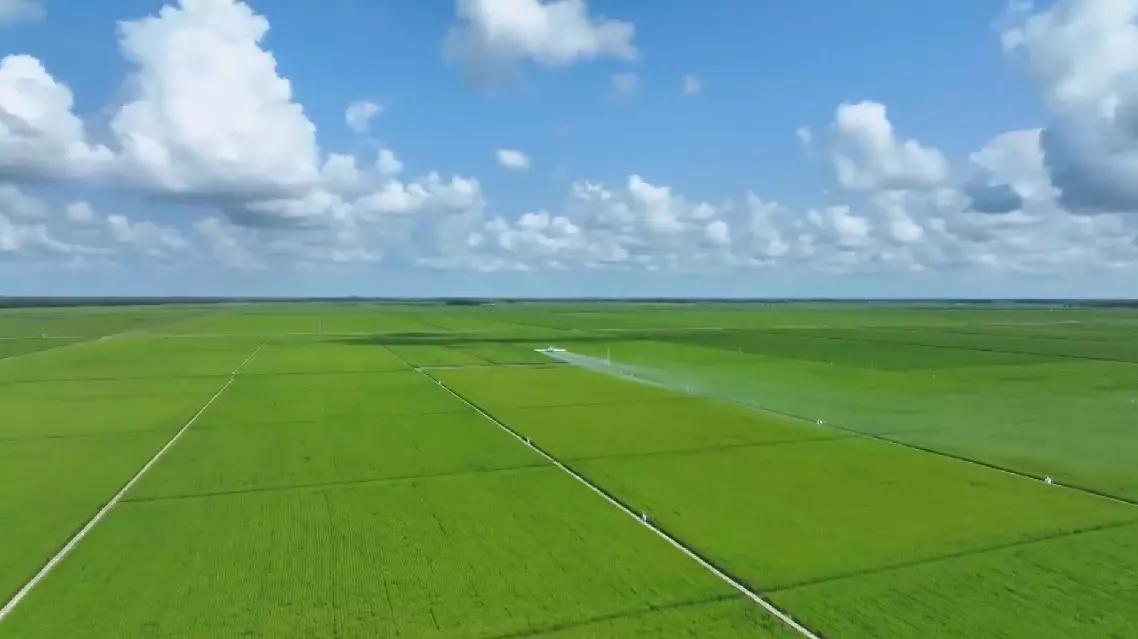
China is aiming to empower modern agriculture by fostering an ecosystem of technological innovation in the sector, a policy priority that has been underscored in this year's "No. 1 central document," which was released on Sunday.
The blueprint document is the first policy statement released by China's central authorities each year. This year, the document has set a clear agenda of leveraging scientific innovation in the modernization of agriculture, building on the country's rapid advancements in biotech and smart farming equipment.
It also outlines its priorities in deepening rural reforms and takes solid steps to advance all-around rural revitalization.
The document emphasizes the importance of developing new quality productive forces in agriculture according to local conditions and calls for the cultivation of leading high-tech agricultural enterprises and the acceleration of breakthroughs in seed varieties.
Experts highlighted the imperative of leveraging cutting-edge technologies such as artificial intelligence, digital solutions, and modern biotechnology to boost agricultural productivity comprehensively.
"As a country with a large population and limited resources, we need to significantly improve our agricultural productivity in order to ensure food security and the supply of important agricultural products. This is crucial for achieving modernization with such a vast population. The application of advanced technologies is vital in this regard," said Lin Wanlong, vice president of China Agricultural University.
Another key area of interest is the strategic nurturing of scientists and young talents, with some experts advocating a holistic approach to drive significant advancements in agricultural productivity nationwide.
Furthermore, the central document deems the establishment of an agricultural technology innovation system and the creation of independent innovation platforms as essential to driving the development of new-quality productivity and empowering comprehensive rural revitalization efforts.
"This year's No. 1 central document specifically calls for promoting collaborative research and development. This is a crucial policy response to the current challenges facing technological innovation. We need to establish a system and mechanism for collaborative research, coordinating various resources within the national agricultural science and technology innovation system, and building platforms for collaborative innovation," said Jin Wencheng, director of the Research Center for the Rural Economy, which is affiliated with the Ministry of Agriculture and Rural Affairs.
No. 1 central document to guide China's path to food security through technology: experts