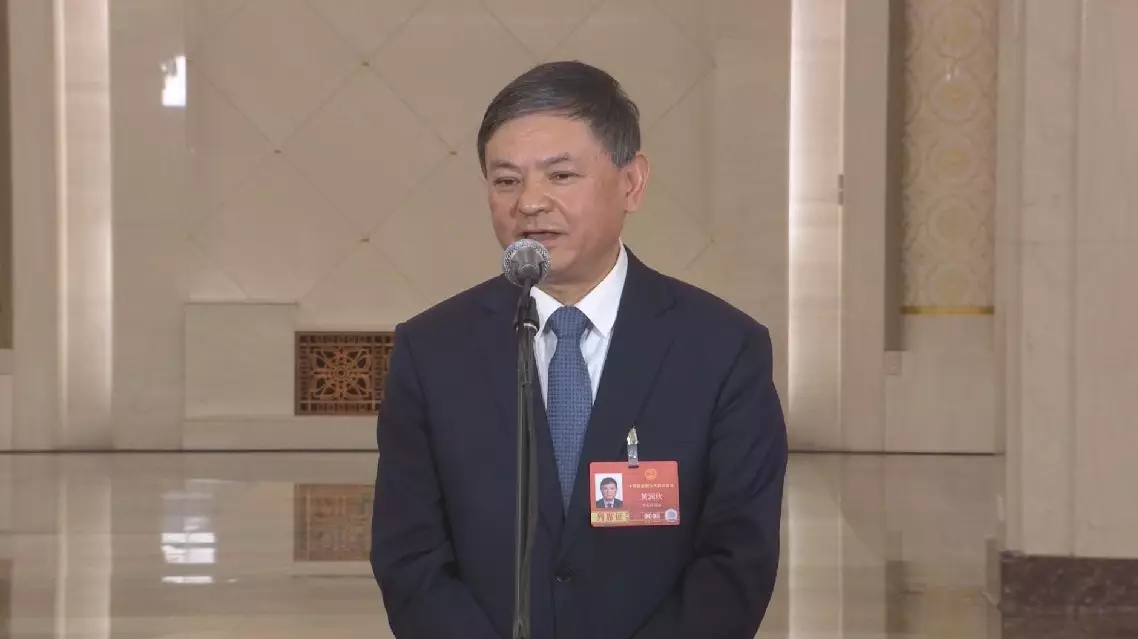
Artificial Intelligence (AI) technologies are being widely used in China's environmental law enforcement, Minister of Ecology and Environment Huang Runqiu said on Thursday in Beijing on the sidelines of the annual sessions of the National People's Congress.
"The key to environmental law enforcement is how to accurately identify problems. In recent years, we have integrated big data from routine supervision, mobile monitoring, and corporate electricity consumption, among other sources. By combining this with artificial intelligence technology, we can quickly screen and precisely locate potential issues. Providing these clues to law enforcement officers allows them to conduct targeted inspections, significantly reducing interference with normal business operations for enterprises and enhancing the efficiency of law enforcement," Huang said during a meeting with journalists.
Huang said AI-powered off-site inspections had improved the efficiency of environmental law enforcement in the country.
"Last year alone, we conducted 204,000 off-site inspections. Compared to the previous year, on-site inspections decreased by 40 percent, while the accuracy rate of identifying problems increased by 10 to 25 percentage points. We strive to ensure that law-abiding enterprises are not unduly disturbed while hanging the sword of justice over those that violate the law," Huang told reporters.
Huang said China had also developed many AI application scenarios for ecological and environmental supervision in recent years.
"For example, AI technology has been fully utilized for the screening of illegal hazardous waste dumping and for the supervision of vehicle emissions, particularly from heavy-duty diesel trucks, achieving excellent results," Huang said.
The 14th National People's Congress, China's national legislature, concluded its fourth session on Thursday.
AI technologies widely applied in China's environmental law enforcement: minister