TAIPEI, Feb. 26, 2025 /PRNewswire/ -- According to the news report from the technology-focused media DIGITIMES Asia, Huawei's Ascend 910C AI chip has reportedly reached a 40% manufacturing yield, marking the first time the Ascend production line has turned profitable. The company aims to improve the yield to 60%, bringing it closer to industry standards.
Yield improvement and profitability milestone
The Financial Times, citing industry sources, reports that Huawei's Ascend 910C, manufactured using the SMIC 7nm (N+2) process, has improved its yield rate to nearly 40%, making the Ascend production line profitable for the first time.
Production targets for 2025
Huawei plans to produce 100,000 Ascend 910C chips and 300,000 Ascend 910B chips in 2025—up from zero and 200,000 units in 2024, respectively. The company now accounts for over 75% of China's total AI chip production, highlighting its growing presence in the domestic semiconductor market.
Yield gains and sector benchmark
In September 2024, reports from Reuters, Yahoo Finance, and TrendForce revealed that Ascend 910C's yield was only 20%, while the older Ascend 910B reached 50%. Since then, Huawei has doubled the 910C's yield, aiming for 60% to match industry norms.
Performance comparison with Nvidia
According to ICSmart and Tom's Hardware, Huawei's Ascend 910C delivers 60% of the inference performance of Nvidia's H100 GPU. While it still trails Nvidia's next-generation Blackwell AI chips, its advancement signals China's push to reduce reliance on Nvidia's hardware.
Shift to domestic foundry amid US sanctions
Due to US trade restrictions, TSMC halted production of Huawei's AI chips in 2020. Huawei has since shifted manufacturing to SMIC, ensuring continued chip production despite sanctions.
Analysts view Huawei's progress with the Ascend 910C as a key milestone in China's push for semiconductor self-sufficiency, reducing its dependence on Western chipmakers.
** The press release content is from PR Newswire. Bastille Post is not involved in its creation. **
DIGITIMES Asia: Huawei Ascend 910C reportedly hits 40% yield, turns profitable; aims for 60% industry standard
GUANGZHOU, China, Jan. 15, 2026 /PRNewswire/ -- On January 14, 2026, Guangzhou Zhongshan Whampoa School for Hong Kong and Macao Students (ZWIS) and Foshan Zhongshan Whampoa Star-raise School for Hong Kong and Macao Students (ZWSS)—both established by ZWIE—formally signed a Memorandum of Cooperation with The Education University of Hong Kong (EdUHK), marking the launch of several substantive collaborative initiatives. The two ZWIE schools will introduce EdUHK's "Mainland Secondary School Principals' Recommendation Scheme" and provide outstanding EdUHK students with opportunities for school visits, immersive on-campus experiences, and internships. The partners will also jointly organize admission seminars and parent engagement activities to offer families cutting-edge educational guidance.
Professor May Cheng May-hung, Vice President (Academic) of EdUHK, said that the signing of the memorandum marks a significant and solid step forward in promoting educational innovation and deepening exchanges between both parties. This collaboration covers multiple areas, which will enhance students' practical abilities, foster professional exchanges among teachers, and further strengthen the cooperation between the educational sectors of the two regions.
Dr. Peggy Zhai, Principal of Zhongshan Whampoa School for Hong Kong and Macao Students, said that this collaboration represents a profound integration of academia and practice. It not only creates a fast track to quality education for students and injects new vitality into teacher development and teaching research advancement, but also provides a high-end, quality career platform for outstanding students of EdUHK, further promoting the integration of education in the Greater Bay Area.
The partnership is founded on the alignment of educational philosophies and mutual high regard for each other's strengths. EdUHK is a government-funded higher education institution dedicated to advancing learning and teaching through the provision of teacher education programs, as well as diverse academic and research programs in social sciences and humanities. In the March-released "2025 QS World University Rankings by Subject" in education, EdUHK ranked 12th globally, fourth in Asia, and second in Hong Kong. Additionally, it was rated as a "5-Star Institution" in the "QS Stars University Ratings." The Zhongshan Whampoa Schools for Hong Kong and Macao Students, established in Guangzhou and Foshan by ZWIE based on over two decades of experience, have grown into leading force in educating Hong Kong and Macao students in the Greater Bay Area. The Guangzhou campus has obtained authorization for the IB MYP-DP continuum and Cognia accreditation, and was listed among the "Hurun Education•Top 100 International Schools in China 2025."
As a pioneer in the integration of Eastern and Western holistic education, ZWIE has been deeply rooted in the Greater Bay Area for over 23 years and has established and supported multiple IB World Schools. Grounded in local educational characteristics and integrated with the IB curriculum framework, ZWIE actively promotes the fusion and innovation of IB and Chinese education, constructing a coherent 15-year IB holistic education ecosystem from kindergarten through high school. It was elected as the founding chair unit of Chong Wa International Baccalaureate Schools Association (CISA), officially recognized by the IB in Greater China. This achievement is underpinned by an educational legacy spanning a century.
ZWIE's approach to integrated education traces back to the great-grandfather of Mr. James Wong, Chairman of ZWIE—Mr. Wu Shangshi, a pioneering figure in Chinese hydrogeography and a master of modern geography in Lingnan. Mr. Wu Shangshi graduated from the English Department of Sun Yat-sen University, pursued advanced studies in France under renowned French geographers, and upon returning to China, taught at Sun Yat-sen University where he later served as head of the Geography Department.
Mr. Wu Shangshi was proficient in English, French, and German. His translation of Hydrology of Rivers was the first French monograph translated in the Chinese geographical community. His published Research on the Topography of the Eastern Foothills of Baiyun Mountain was one of China's earliest true topographical papers. The "Pearl River Delta" geographical theory was finalized and matured under his research, and the "Seven Star Hill Ancient Marine Abrasion Relics" he discovered are now listed as a key Guangzhou cultural relics protection unit. During the War of Resistance Against Japanese Aggression, he led teachers and students on a walking survey of the mountains and rivers of northern Guangdong, holding steadfastly to his lectures amidst the fires of war, integrating a sense of national and familial commitment into the educational ethos.
Many of Mr. Wu Shangshi's descendants have dedicated themselves to education, and this educational ideal of "rooting in China, looking to the world" has been passed down through generations. In 2003, Mr. James Wong was entrusted by his family to return from Hong Kong to Guangzhou, the place where Mr. Wu Shangshi studied and taught, to explore integrated Chinese and Western education for the new era. The name "Zhonghuang" (中黃) is derived from "Zhonghua Yanhuang" (中華炎黃), and from its inception, its mission has been to inherit and promote Chinese culture.
For over two decades, ZWIE has driven curriculum innovation as its core, developing an integrated curriculum system with both local roots and international perspective. In recent years, ZWIE has continually advanced curriculum evolution, deeply integrating AI-enabled teaching while strengthening science and innovation education. It has explored joint programs with several century-old prestigious schools in the Greater Bay Area to cultivate top innovative talents among Hong Kong and Macao students. As a rising star among schools for Hong Kong and Macao students in the region, ZWIE achieved remarkable results in its inaugural 2025 DSE cohort: at the Guangzhou campus, 46.6% of graduates received offers from top three universities in Hong Kong, 73.3% from top five, including four admitted to the University of Hong Kong (covering flagship programs in Medicine and International Business and Global Management). At the Foshan campus, all inaugural DSE graduates received offers from top five Hong Kong universities or mainland 985/211 institutions, achieving outcomes comparable to Hong Kong Band 1 schools. All graduates from the ZWIE American Curriculum Department gained admission to top 100 world universities.
Mr. James Wong, Chairman of ZWIE, expressed that ZWIE originated in Hong Kong and has accumulated 23 years of practical experience in integrated education within the Greater Bay Area. This in-depth collaboration with EdUHK not only signifies high recognition of ZWIE's educational practices but also provides strong support for ZWIE's return to Hong Kong to extend its operations. Mr. Wong mentioned that ZWIE is actively promoting the launch of a new Hong Kong project, "Zhongshan Whampoa Academy," dedicated to exploring Sino-foreign integrated international curricula with Chinese characteristics, cultivating innovative talents with both noble character and global competence. He looks forward to this as a new starting point—based in the Greater Bay Area, facing the "Belt and Road"—to contribute the wisdom of Chinese education to the world.
** The press release content is from PR Newswire. Bastille Post is not involved in its creation. **

ZWIE and The Education University of Hong Kong Sign Memorandum of Cooperation to Promote Exchange and Deepen Collaboration
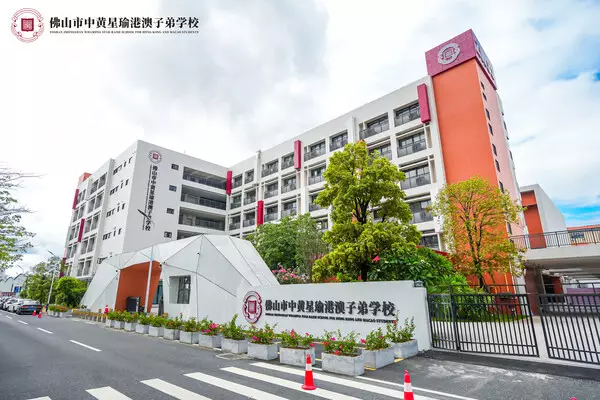
ZWIE and The Education University of Hong Kong Sign Memorandum of Cooperation to Promote Exchange and Deepen Collaboration
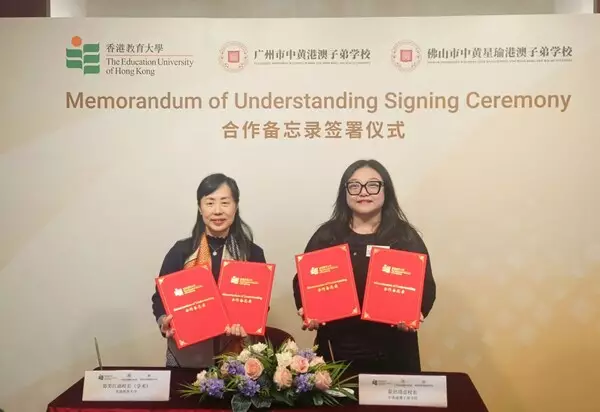
ZWIE and The Education University of Hong Kong Sign Memorandum of Cooperation to Promote Exchange and Deepen Collaboration