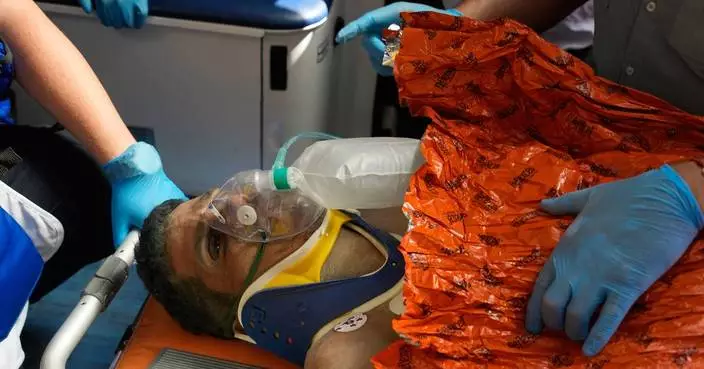
SAN FRANCISCO--(BUSINESS WIRE)--Feb 26, 2025--
Loyal, a clinical-stage animal health company developing longevity drugs for dogs, announced today that the FDA’s Center for Veterinary Medicine has accepted the Reasonable Expectation of Effectiveness (RXE) section of its conditional approval application for LOY-002. The drug aims to extend the lifespan of senior dogs and maintain their quality of life as they age, building on the company’s previous RXE acceptance for a longevity drug specifically targeting the short lifespan of large breed dogs.
This press release features multimedia. View the full release here: https://www.businesswire.com/news/home/20250226676005/en/
The company also announced it has raised a $22M million B-2 round from Valor Equity Partners and Collaborative Fund, among others, in addition to its $45M Series B in 2024. This brings total investment in Loyal’s to over $150M.
“Everything we do is in service of helping dogs live longer, healthier lives,” said Loyal Founder and CEO Celine Halioua. “These two milestones represent our ongoing commitment to that mission through years of diligence and hard work. Proving efficacy is one of the most challenging parts of developing a novel drug. While we still have significant work to do, RXE increases the probability that dogs will soon have access to our longevity drugs.”
A New Preventive Paradigm
The FDA's Center for Veterinary Medicine has determined that Loyal's data provides reasonable expectation of LOY-002's intended effect of extending canine lifespan, marking a significant milestone in the company's pursuit of conditional approval.
LOY-002, a daily flavored tablet developed for dogs aged 10 and older weighing at least 14 pounds, represents a groundbreaking approach to canine longevity by targeting metabolic dysfunction, one of the key underlying mechanisms of aging. This preventive therapy aims to reduce the incidence and severity of age-associated diseases that diminish senior dogs' quality of life, offering a practical alternative to established longevity interventions like caloric restriction.
The FDA's acceptance of RXE demonstrates confidence in Loyal's innovative approach, and the company anticipates completion of the manufacturing and safety requirements for Expanded Conditional Approval (XCA) from the FDA by the end of 2025.
“Loyal’s progress in bringing their products to market continues to impress, especially since they are breaking new regulatory ground,” said Dr. Linda Rhodes, VMD, PhD, a veterinarian and experienced animal health executive who serves on Loyal’s Board of Directors.
As the company pursues its XCA application, Loyal is simultaneously running its groundbreaking clinical trial, the STAY study. The STAY study is LOY-002’s pivotal efficacy study that dosed its first dog in December 2023 and will take place over approximately four years. It is the first and only FDA-concurred clinical trial for longevity and is the largest veterinary trial in history, recruiting over 1,000 dogs from 70 veterinary clinics across the country.
“Achieving RXE acceptance is a testament to the ongoing importance of the STAY study,” said Dr. Ellen Ratcliff, VP of Clinical and Veterinary Medicine at Loyal. “Completing enrollment and seeing what the data shows over the next several years is critical, but this is an important step in the process. We now have validation from one of the highest quality regulatory agencies in the world that the drug we’re testing has a reasonable expectation of extending a dog’s life.”
B-2 Fundraising Round
In addition to achieving RXE for its second drug program, Loyal successfully completed a $22M B-2 funding round, led by Valor Equity Partners and Collaborative Fund, among others. Along with his investment in Loyal, Jonathan Shulkin, Partner and Co-President at Valor Equity Partners, is joining the company’s Board of Directors.
This raise represents a significant premium on the Loyal’s Series B last year and will support the company’s execution of key go-to-market efforts to bring LOY-002 to veterinarians and dog owners soon, in addition to advancing the other drugs in development across its portfolio: LOY-001 and LOY-003, which are designed to extend the healthy lifespan of large-breed dogs.
About Loyal
Loyal is an animal health company developing the first drugs intended to help dogs live longer, healthier lives. By targeting the underlying mechanisms of aging, Loyal hopes to extend the lifespan of dogs and improve their quality of life as they age. Loyal’s work is based on decades of research, and their team of experts in dog health and longevity is dedicated to furthering this research and developing better ways to quantify and improve the aging process in dogs. It currently has three drugs in development and is making progress toward approval from the FDA’s Center for Veterinary Medicine.
For more information, please visit loyal.com.

An overview of Loyal's three drugs in development: LOY-001, LOY-002, and LOY-003 (Photo: Business Wire)
KYIV, Ukraine (AP) — Russia hammered Kyiv in an 11-hour drone and missile attack overnight into Thursday morning, killing at least 21 civilians in the city and injuring scores more in what Moscow said was retaliation for Ukrainian strikes on Russian oil facilities.
Loud explosions shook the Ukrainian capital, where more than 50,000 people sheltered in subway stations after authorities issued air raid warnings, the Kyiv Metro said. Emergency crews dug through the rubble of collapsed and charred apartment buildings all day in search of victims.
Russia’s Defense Ministry said in a statement that the bombardment was in response to Ukraine’s recent barrage of long-range strikes, which have caused severe fuel shortages and put pressure on President Vladimir Putin.
Ukraine's frequent attacks inside Russia — described by Zelenskyy as a 40-day blitz — have especially targeted oil refineries, causing a fuel crisis that has frustrated Russians already feeling the war’s economic toll.
More than four years after Moscow’s full-scale invasion of its neighbor, Ukraine’s technological advances in drone engineering have in recent months given it an edge, analysts and Western officials say. Its strikes on supply routes behind the front line have robbed the Russian army of momentum on the battlefield and made its progress slow and costly, they say.
Kyiv’s forces have especially targeted supplies to Crimea, triggering the worst fuel crisis on the Black Sea peninsula since it was illegally annexed by Russia in 2014 and delivering a blow to the Kremlin’s narrative that Moscow is winning the war.
Ukrainian officials say they are trying to force Putin to the negotiating table, but so far Moscow's response has been to hit back.
Diplomatic efforts to end the war, most recently by the Trump administration, haven’t produced results. President Donald Trump and Zelenskyy are expected to attend next week’s NATO summit in Turkey.
Putin thinks that time is on his side, that Western support will peter out and that Ukraine’s resistance will eventually collapse under pressure from strategic bombing, analysts say.
The attack killed 21 people in Kyiv, according to the country's Emergency Service. More than 90 others were injured, said Kyiv Mayor Vitali Klitschko.
Foreign Minister Andrii Sybiha said it was a “night of horror” in the capital. Kyiv had a pre-war population of roughly 3 million people, but the current number of residents is unknown.
Damage was recorded in 30 locations across the city, mainly residential buildings and civilian infrastructure, according to Tymur Tkachenko, head of the Kyiv City Military Administration. Some 20 residential buildings were damaged, Interior Minister Ihor Klymenko said.
Flashes from exploding drones and missiles lit up the night, and loud booms echoed through Kyiv. Tracers from air defense fire streaked through the air as a huge pall of black smoke rose into the sky.
Kyiv resident Serhii Budko said three or four ballistic missiles hit his district of the city. “We were inside the shelter and felt the shelter shaking — the ceiling and floor, everything,” the 24-year-old told The Associated Press.
In Kyiv's Desnianskyi district, people were trapped inside a damaged nine-story residential building, and in the Darnytskyi district six levels of a nine-story building collapsed.
In Ukraine’s central Dnipropetrovsk region, meanwhile, a Russian guided bomb strike killed a 7-year-old girl and wounded four other people, including an 11-year-old girl, all members of the same family, regional head Oleksandr Hanzha said.
Russia’s General Staff chief Gen. Valery Gerasimov reported the results of the “massive retaliatory strike” to Putin, Kremlin spokesperson Dmitry Peskov said. The bombardment was “exclusively against military or military-linked targets,” Peskov said.
Russia's aerial attacks on Ukraine have repeatedly hit civilian areas. More than 16,000 Ukrainian civilians have been killed in the war, according to the United Nations.
No reliable figures are available for battlefield casualties in the war. A report earlier this year by the Center for Strategic and International Studies, a think tank, estimated that up to 1.8 million soldiers have been killed, wounded or gone missing on both sides, with Russian troops accounting for most of that number.
The attack used “high-precision long-range weapons” and drones to strike weapons factories and energy facilities in and around Kyiv, and “military airfield infrastructure” in other parts of Ukraine, the Russian Defense Ministry’s statement said.
In all, Russia fired 74 missiles and 496 drones in the attack, Ukraine’s air force said.
Ukraine's air defenses have improved throughout the war, especially in countering Russian drones. But it is harder to stop ballistic missiles, which accounted for roughly a third of the missiles fired overnight.
Sybiha, the Ukrainian foreign minister, said in April that the country's weapons factories meet up to 75% of its military’s needs. But he and other Ukrainian officials have pleaded with partner countries to supply more Patriot systems that offer the best protection from Russian aerial attacks.
Ukrainian forces struck one of Russia’s largest oil refineries overnight in the Nizhny Novgorod region east of Moscow, starting a fire, Ukraine's General Staff said.
Also, Ukrainian forces struck a railway bridge over the Siverskyi Donets River in the Russian-occupied Luhansk region, it said. The bridge was used by Russian forces to transport personnel, weapons and military supplies, according to the General Staff.
Follow the AP’s coverage of the war in Ukraine at https://apnews.com/hub/russia-ukraine

A residential apartment building is seen damaged after a Russian strike on Kyiv, Ukraine, Thursday, July 2, 2026. (AP Photo/Efrem Lukatsky)

Elderly Liudmyla Tsapkova sits in her damaged apartment after the Russian missile attack in Kyiv, Ukraine, Thursday, July 2, 2026. (AP Photo/Danylo Antoniuk)
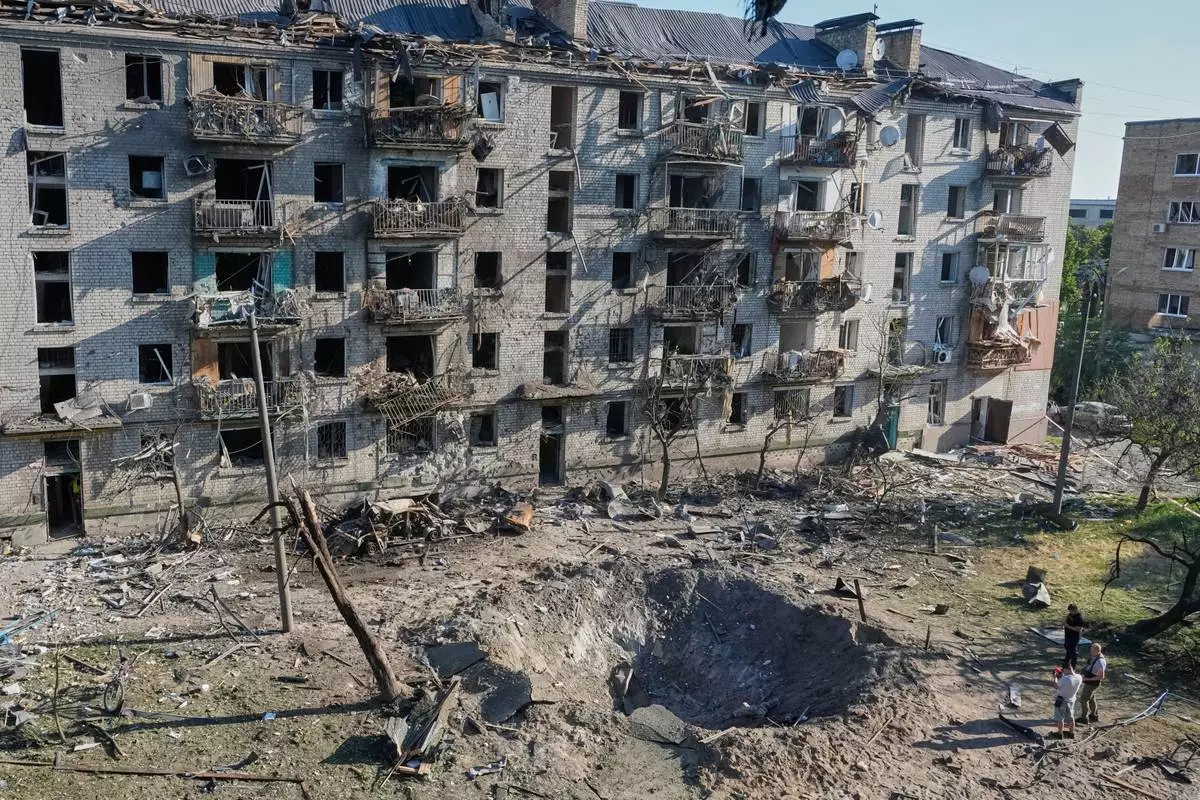
People look at the site of a Russian missile strike that hit a residential building in Kyiv, Ukraine, Thursday, July 2, 2026. (AP Photo/Efrem Lukatsky)
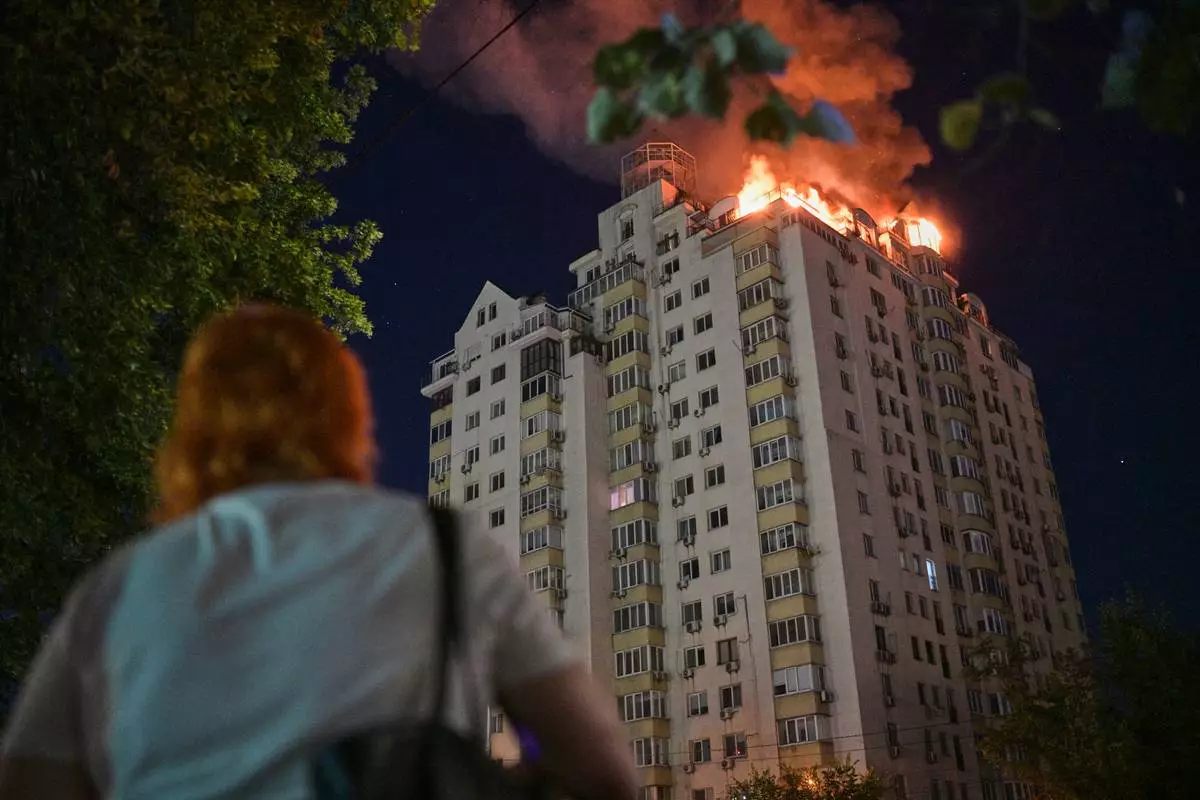
A woman looks at an apartment building burning after a Russian missile attack in Kyiv, Ukraine, Thursday, July 2, 2026. (AP Photo/Danylo Antoniuk)

People react at the site of a Russian missile strike that hit a residential building in Kyiv, Ukraine, Thursday, July 2, 2026. (AP Photo/Efrem Lukatsky)
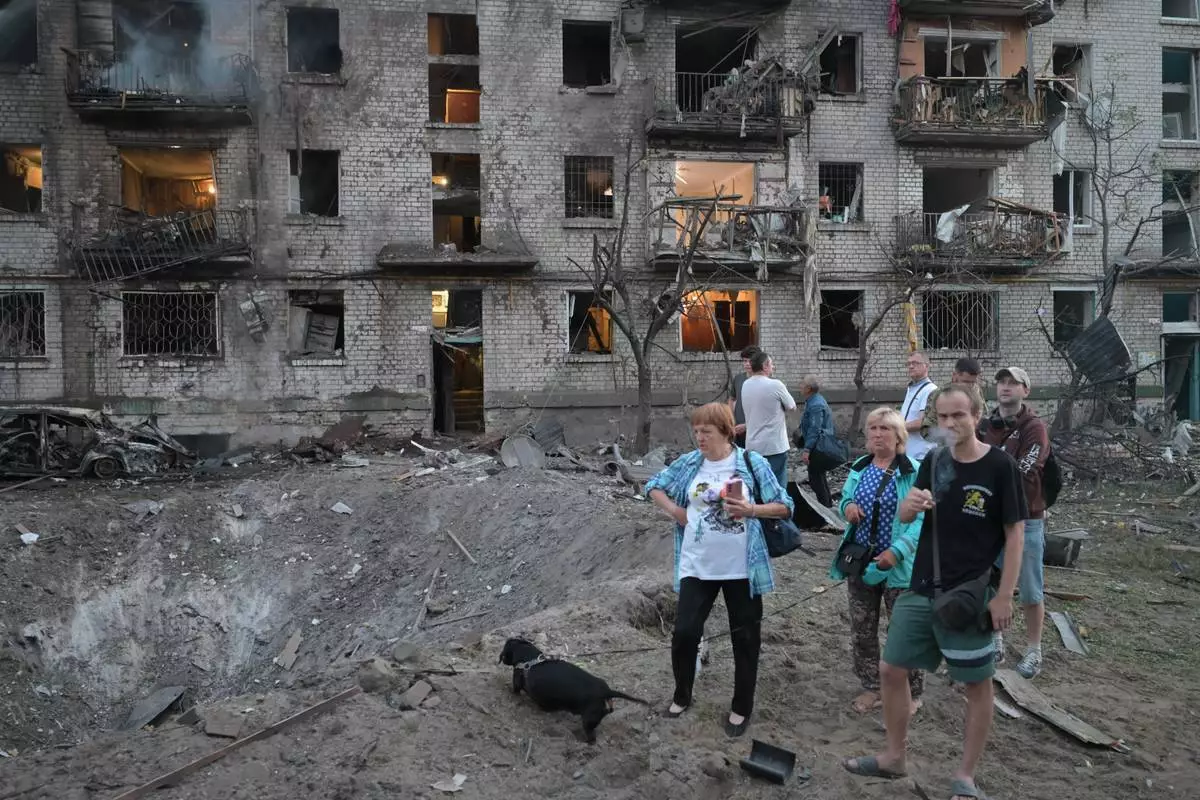
People look at the site of a Russian missile strike that hit a residential building in Kyiv, Ukraine, Thursday, July 2, 2026. (AP Photo/Danylo Antoniuk)
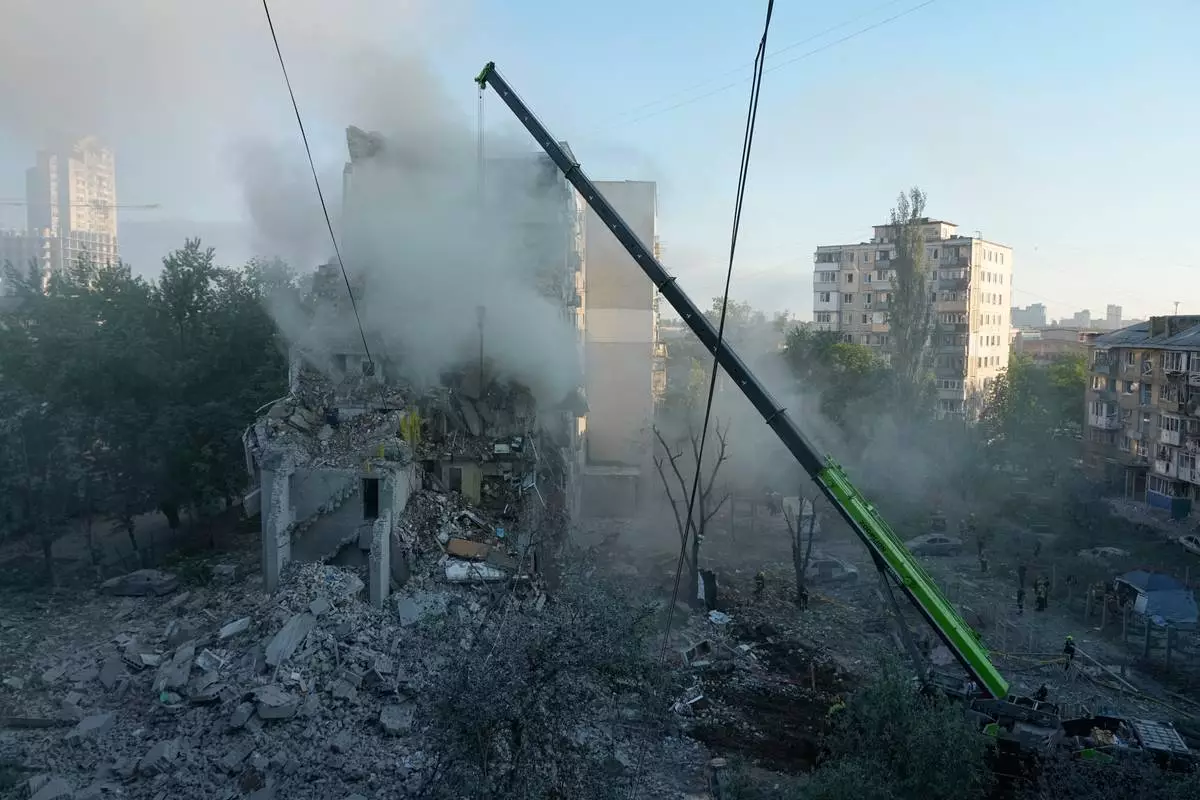
A residential apartment building is seen damaged after a Russian strike on Kyiv, Ukraine, Thursday, July 2, 2026. (AP Photo/Efrem Lukatsky)

Smoke rises over the city center after a Russian attack on Kyiv, Ukraine, Thursday, July 2, 2026. (AP Photo/Efrem Lukatsky)

A woman walks past a burning apartment building after a Russian missile attack in Kyiv, Ukraine, Thursday, July 2, 2026. (AP Photo/Danylo Antoniuk)
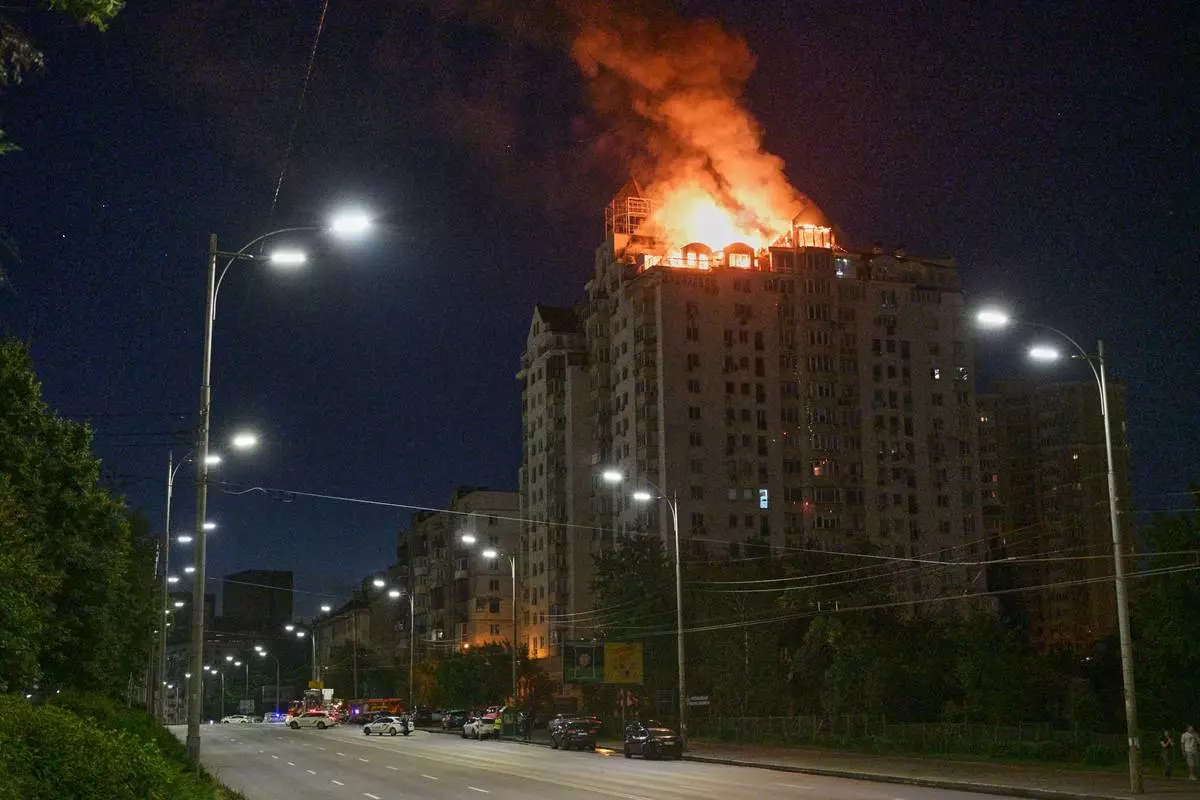
An apartment building burns after a Russian missile attack in Kyiv, Ukraine, Thursday, July 2, 2026. (AP Photo/Danylo Antoniuk)
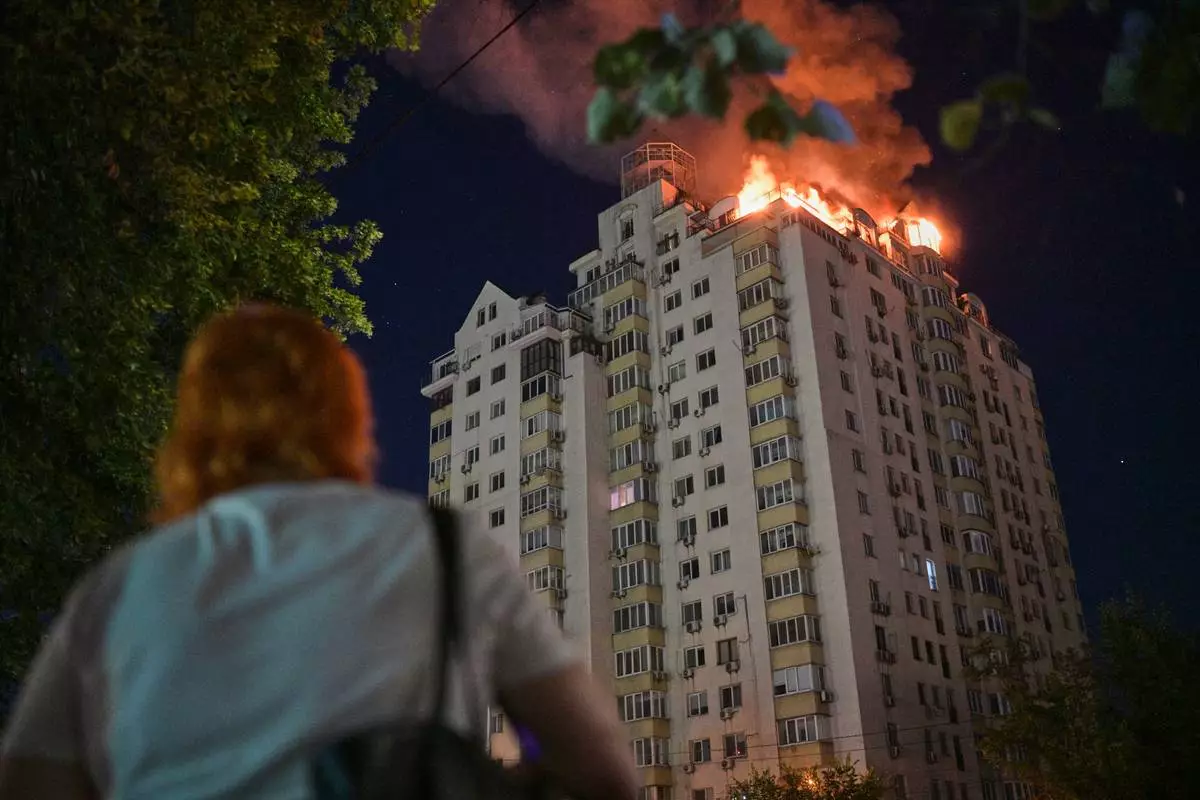
A woman looks at an apartment building burning after a Russian missile attack in Kyiv, Ukraine, Thursday, July 2, 2026. (AP Photo/Danylo Antoniuk)