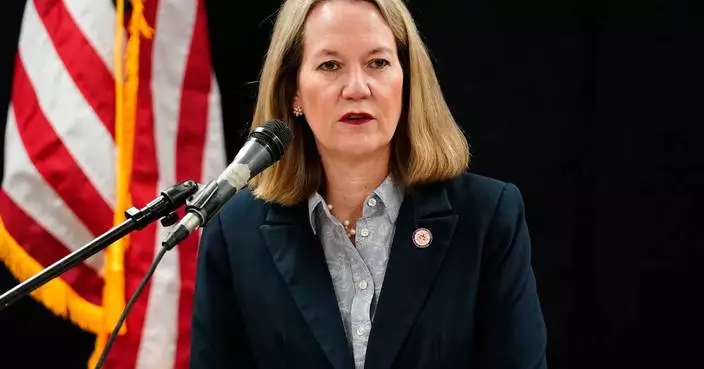
NEW YORK (AP) — The John D. and Catherine T. MacArthur Foundation will increase its giving over the next two years in response to what it calls a “crisis" prompted by the Trump administration's freeze on federal foreign aid and the now- suspended freeze on federal grants.
"This is a major crisis for our sector and it’s a time when those of us who can do more should do more," said John Palfrey, president of MacArthur Foundation, in an interview Wednesday with The Associated Press.
Palfrey announced the increase in a blog post on the foundation's website, saying, “The cliff of funding from federal programs has sent budgets underwater in field after field, and people and communities in the United States and abroad will suffer.”
Palfrey said the foundation would increase giving from 5% of its endowment, which is the minimum required by the Internal Revenue Service, to at least 6% for the next two years. The foundation reported it had $8.7 billion in assets in 2023 and it pays out around $400 million annually. Palfrey said he expected to grant out around $150 million more over the next two years.
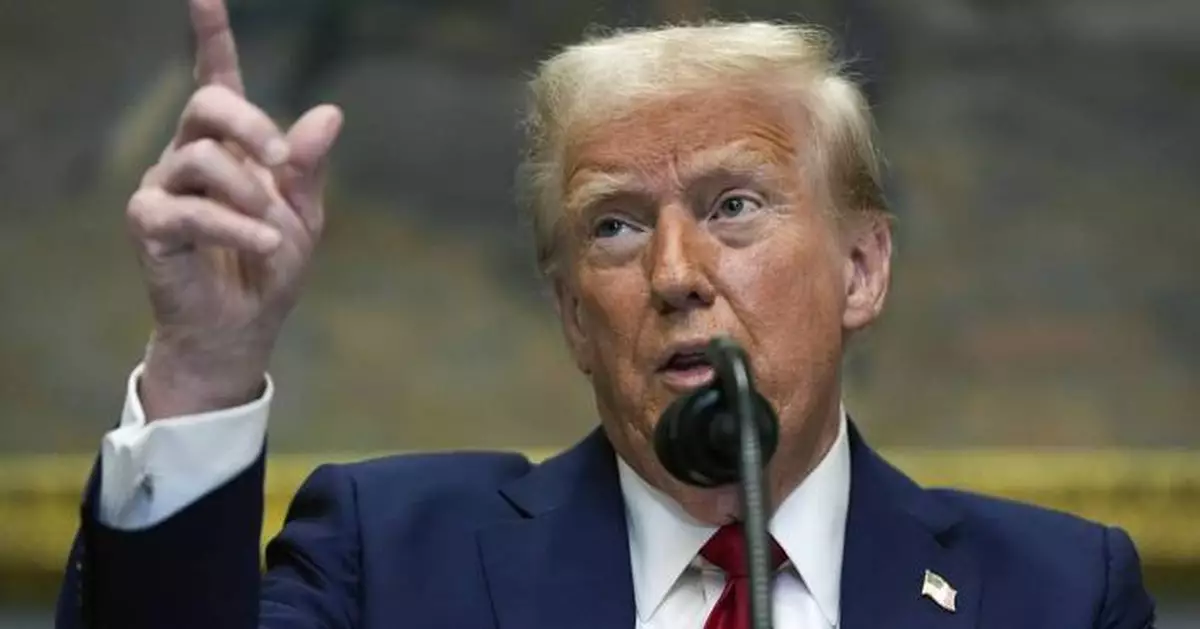
In his first days in office, President Donald Trump suspended foreign aid and directed the Office of Management and Budget to temporarily suspend all federal grants and contracts. Trump said he wanted to review whether all the grants aligned with his policies. The moves have had profound impacts across many sectors.
The U.S. is the largest funder of global humanitarian responses and spent $68 billion on foreign aid in 2023. In 2021, nonprofits reported receiving $267 billion in government grants, according to an analysis of the tax forms that nonprofits file by the Urban Institute.
In comparison, foundations granted out $103 billion in 2023, according to research from GivingUSA.
Palfrey called on other foundations to join them in the commitment to increase their giving.
“Philanthropy should act in a different way than we have in the past, which is historically, we’ve simply given out more money when the stock market has gone up and we’ve given out less money when the stock market has gone down,” he said.
Freedom Together Foundation, formerly called the JPB Foundation, also announced that it would double its grantmaking to 10% of its endowment in response to the Trump administration's policies.
Deepak Bhargava, the foundation's president, wrote in a letter that the current moment reminds him of the AIDS crisis, when activists pushed the government to find a cure and changed the place of LGBTQ+ people in society.
“The movement made a way out of no way. That can happen again, as it has so many times throughout American history,” Bhargava wrote. “There is a dispiriting tide of fear right now, and I’m disappointed by how few leaders and institutions are stepping up. But my own experience and our shared history teaches us a hopeful lesson: courage is contagious.”
The Chicago-based MacArthur Foundation is best known for its “genius” fellowship, which recognizes extraordinary people who work across disciplines and awards them a $800,000 grant. The foundation also focuses on climate, criminal justice and journalism initiatives and has ongoing commitments to Chicago and Nigeria.
Palfrey said foundations found ways to make more money available to their grantees during the COVID-19 pandemic and could do so again now. For example, the MacArthur Foundation was one of eight foundations that issued bonds, essentially borrowing against their endowments to be able to pay out more in the short term.
“I think we need to do something different in 2025,” Palfrey said. “But I think it’s the same rationale."
Elisha Smith Arrillaga, vice president of research at The Center for Effective Philanthropy, said nonprofits report feeling a great deal of uncertainty and anxiety because of the president's executive orders.
“Really what nonprofits do is that they stand in the gap for all Americans," she said. "So my hope is that organizations and individuals across this country doing this work in their communities will stand up for the nonprofits that they support, especially at a moment like this.”
Associated Press coverage of philanthropy and nonprofits receives support through the AP’s collaboration with The Conversation US, with funding from Lilly Endowment Inc. The AP is solely responsible for this content. For all of AP’s philanthropy coverage, visit https://apnews.com/hub/philanthropy.
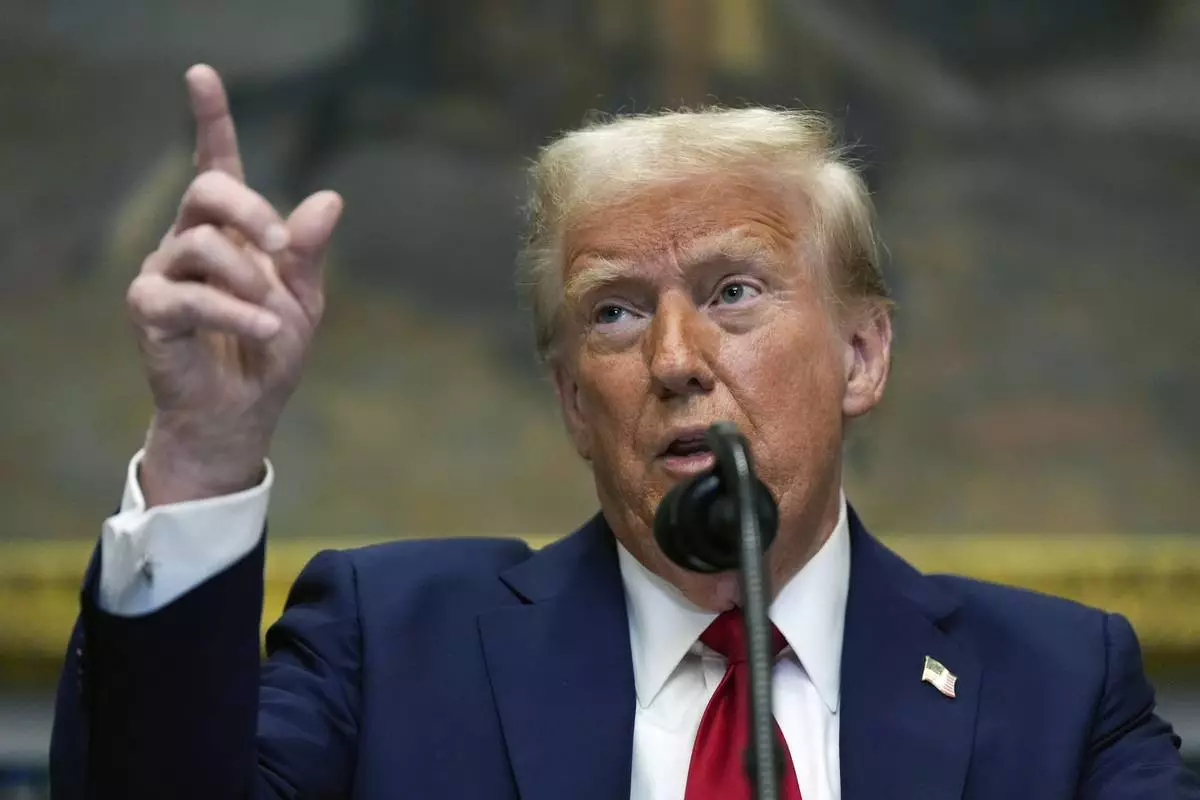
FILE - President Donald Trump speaks in the Roosevelt Room of the White House, Jan. 21, 2025, in Washington. (AP Photo/Julia Demaree Nikhinson, File)
BEIRUT (AP) — Hezbollah on Thursday rejected the latest ceasefire agreement between Israel and the Lebanese government, and the militant group demanded a complete Israeli withdrawal from Lebanon as more fighting there hampered efforts to end the Iran war.
The Hezbollah announcement came as Israeli strikes killed at least four people, according to local authorities, and a U.N. peacekeeper was killed in the crossfire.
Hezbollah leader Naim Kassem, in a written statement read on TV, called the negotiations “absurd, humiliating and insulting.” He said the agreement’s demand that Hezbollah fighters leave southern Lebanon under fire would mean “surrender, defeat and achieving the enemy’s goals.”
“What we are concerned about is an end to the aggression, ceasefire and Israel’s withdrawal,” he said, underscoring that Hezbollah has not made any commitment to stop fighting. “So long as our villages are not safe and are being bombed and destroyed and our people are killed," he said, northern Israel “will not be safe.”
Following Kassem’s statement, drone alert sirens sounded in several border communities in northern Israel, including Shlomi, a town where Prime Minister Benjamin Netanyahu and several ministers had been meeting with local officials, his office said. Israeli media reported that Netanyahu left a short time before the alerts sounded.
The Israeli military later said the sirens were triggered by attempts to intercept several drones that hit near soldiers in southern Lebanon. No injuries were reported.
Lt. Gen. Eyal Zamir, the Israeli military’s chief of staff, acknowledged Thursday that the ongoing war was straining northern Israeli towns living under the threat of Hezbollah fire. He said Israel’s operations in Iran and Lebanon had “created a new security reality,” by weakening Iran and Hezbollah “to an unprecedented degree.”
Lebanese troops began moving Thursday afternoon into the southern village of Dibbine, in coordination with U.N. peacekeepers, after Israeli forces left the area, which saw intense clashes in recent days, state-run media reported. It was the first time Israeli troops withdrew from an area in southern Lebanon since the latest Israel-Hezbollah war began about three months ago.
The fighting in Lebanon, where Israeli forces have seized large swaths of the south, threatens efforts to end the Iran war and reopen the Strait of Hormuz, a key transit point for oil and gas. Its closure has jolted the world economy.
Iran has demanded that any lasting truce extend to Lebanon. Israeli Prime Minister Benjamin Netanyahu, who faces elections later this year, wants to press ahead with Israel’s offensive until Hezbollah no longer poses a threat.
U.S. President Donald Trump, who faced a rare rebuke from Congress on Wednesday, has sought to downplay the diplomatic deadlock and the failure of declared ceasefires to end the fighting. He told reporters that in the Middle East, "a ceasefire is when you’re shooting in a more moderate manner.”
A Serbian peacekeeper was killed and two others were wounded when a mortar struck their location near Marjayoun, a Christian-majority town that has seen intense fighting, according to the U.N. mission in southern Lebanon, known as UNIFIL, and the Serbian Defense Ministry.
Israel later blamed Hezbollah for the firing that killed the U.N. peacekeeper, without offering evidence. Hezbollah and the U.N. did not immediately comment on who launched the shells.
Lebanon’s state-run National News Agency said a drone strike killed a motorcyclist and wounded four people in the village of Maaroub. It said airstrikes on the village of Sohmor in the Bekaa Valley, in eastern Lebanon, killed three people and wounded others. It also reported airstrikes elsewhere in the south.
There was no immediate comment from the Israeli military, which has warned people not to go into parts of southern Lebanon where it says it is striking Hezbollah facilities.
Hezbollah resumed rocket fire days after Israel and the United States launched their surprise Feb. 28 attack on Iran, which backs Hezbollah. Before then, Israel had regularly carried out strikes in Lebanon against what it said were militant targets, often killing civilians, despite an earlier truce reached in 2024.
After Hezbollah's rocket and drone attacks resumed, Israeli troops seized around a fifth of Lebanon, pushing further into the country's south than at any time since the end of Israel’s 1982-2000 occupation.
In the southern city of Sidon, residents reacted to Wednesday's ceasefire announcement with skepticism, saying previous agreements had failed to stop the violence.
“Every few days a ceasefire is announced, but people keep getting killed,” said Mayada Hijazi.
“It’s all talk and no action,” said Salah Nassab. “We keep going back to our homes, and then we get displaced again, back and forth. We’re very tired."
More than 3,500 people have been killed in Lebanon, and over 1.2 million have been displaced. The fighting has killed 27 Israeli soldiers and three civilians.
The latest declared ceasefire came about through U.S.-brokered talks between Israel and Lebanon's government, which accuses Hezbollah of dragging the country into war and had made efforts to disarm it before the latest hostilities.
The ceasefire agreement calls for Lebanon's armed forces to take control of security zones in Lebanon from which the militants would be banned.
Lebanese President Joseph Aoun on Thursday called the new agreement "the last chance to enter a final and comprehensive ceasefire.” He said Lebanon was ready to implement the deal once he receives responses from relevant factions in Lebanon, including Hezbollah. The United States — and Trump himself — would determine how and when the deal is implemented, Aoun told journalists.
The agreement terms Hezbollah “an enemy" of Israel, the U.S. and Lebanon and calls for dismantling it. The government has promised to do so in the past but does not have the capabilities to disarm Hezbollah by force.
The latest agreement did not say when Israel would withdraw from southern Lebanon but said the U.S. would support the Lebanese army as it works to assert control in areas where Hezbollah has long wielded power.
A top Iranian general on Thursday reiterated Tehran's demand for a full ceasefire in Lebanon and called for Israel to pull troops back to where they were when the wider war began. At that time, Israel held five strategic points along the border.
“Supporting the resistance in Lebanon is the duty of all of us, and eliminating Israel from the region is an achievable goal for Muslims,” Esmail Qaani, the head of the paramilitary Revolutionary Guard’s elite Quds Force, was quoted as saying by the semiofficial Fars and Tasnim news agencies.
As diplomatic efforts have repeatedly faltered, Iran and the U.S. have traded fire in and around the Strait of Hormuz, which remains effectively closed. Before the war, around a fifth of the world's oil and gas, as well as large shipments of fertilizer and other goods, passed through the narrow waterway.
The U.S. has targeted what it says are Iranian threats to commercial shipping and its own forces, while Iran has launched missile and drone attacks on Gulf states hosting U.S. troops.
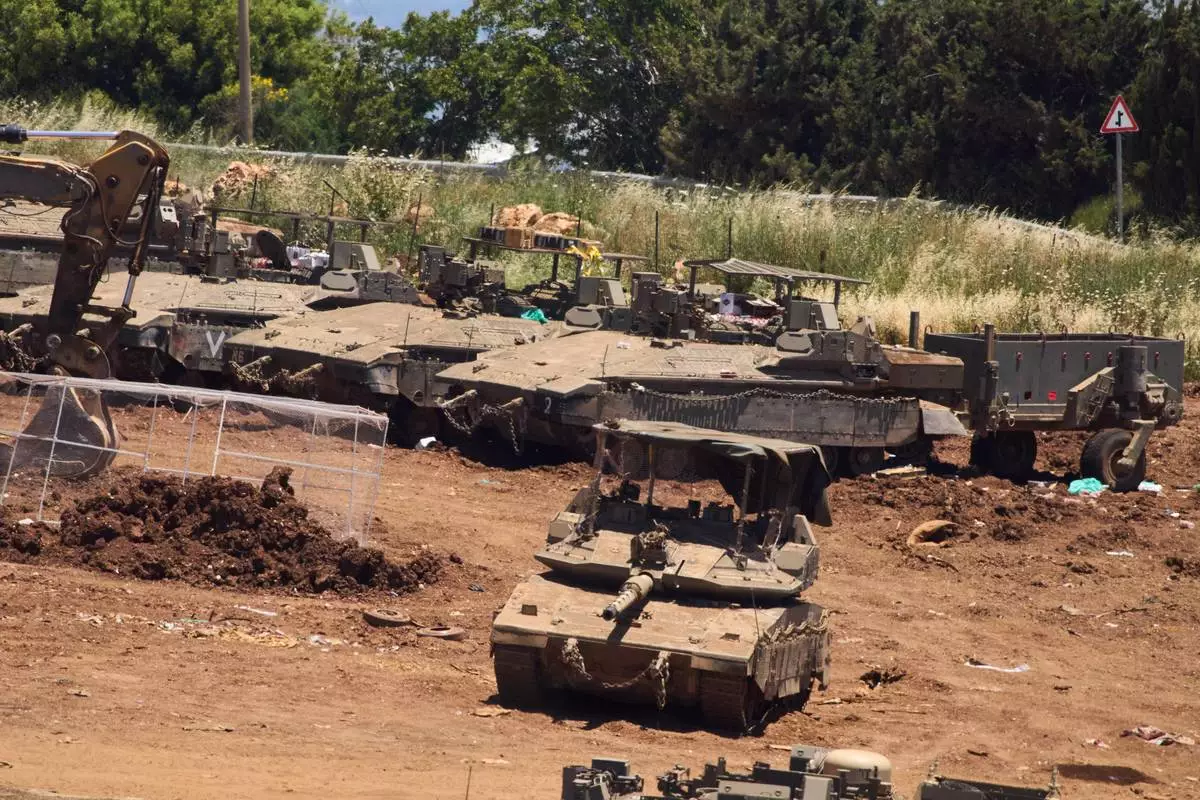
Israeli troops gather on the border with Lebanon in northern Israel, Thursday June 4, 2026. (AP Photo/Ariel Schalit)
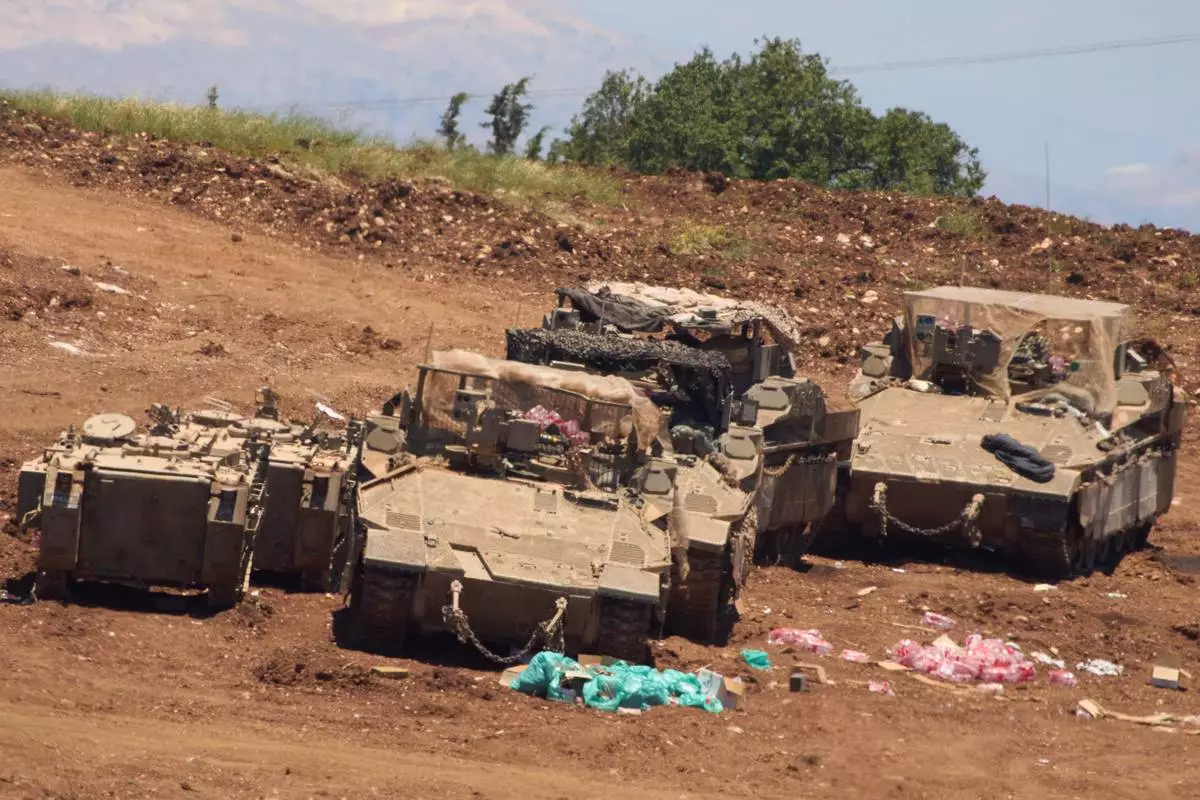
Israeli troops gather on the border with Lebanon in northern Israel, Thursday June 4, 2026. (AP Photo/Ariel Schalit)
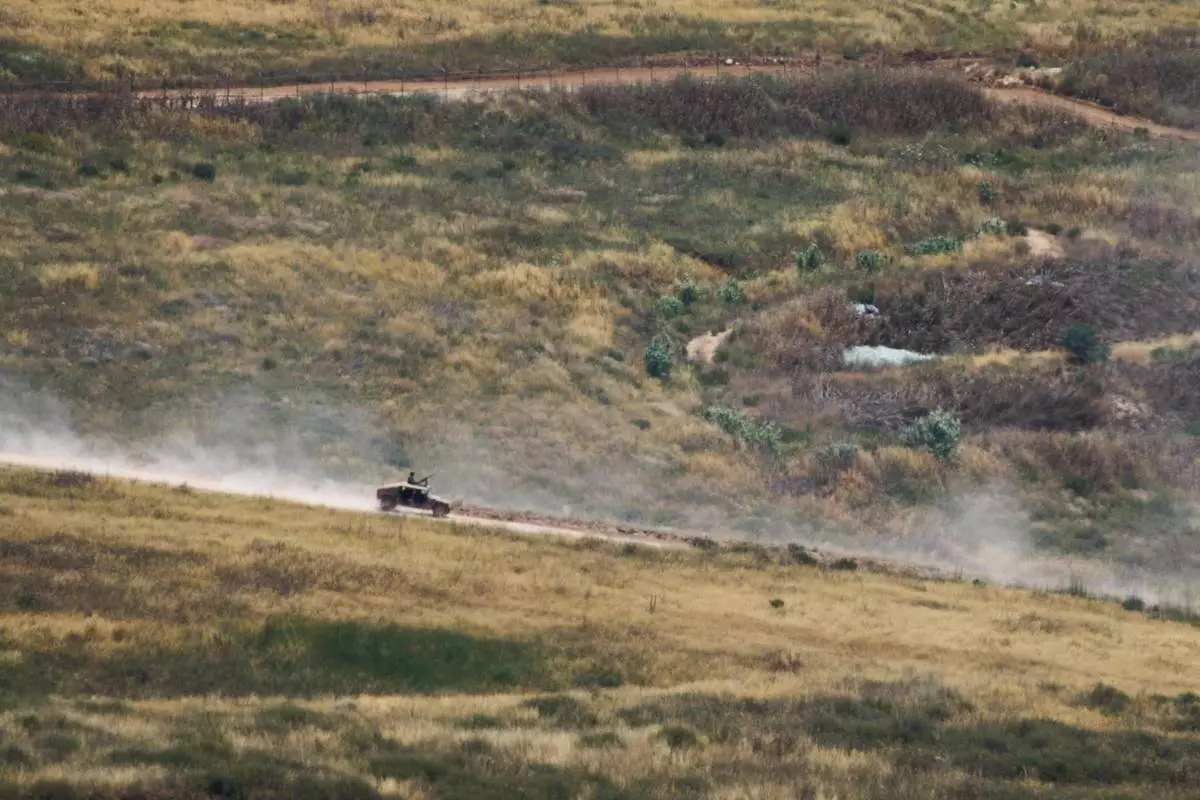
Israeli soldiers drive in southern Lebanon as seen from northern Israel, Thursday June 4, 2026. (AP Photo/Ariel Schalit)
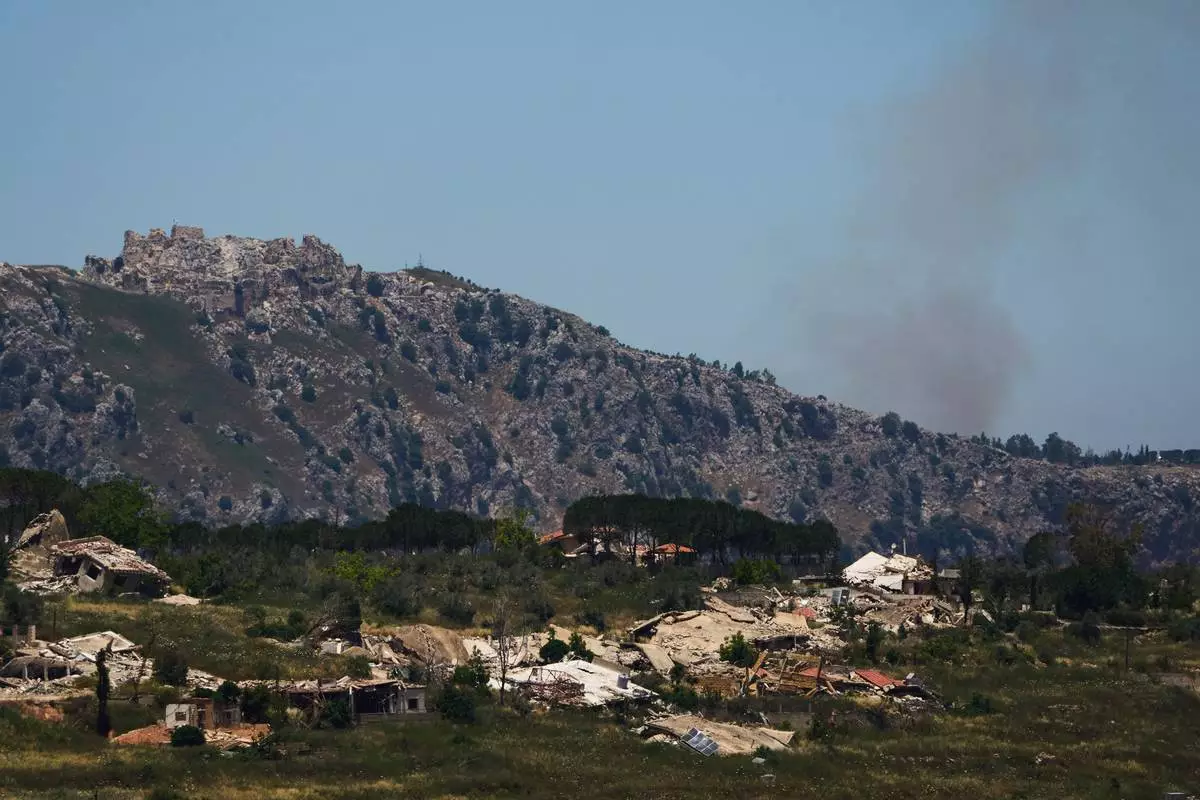
Smoke rises near the Beaufort Castle in southern Lebanon as seen from northern Israel, Thursday June 4, 2026. (AP Photo/Ariel Schalit)
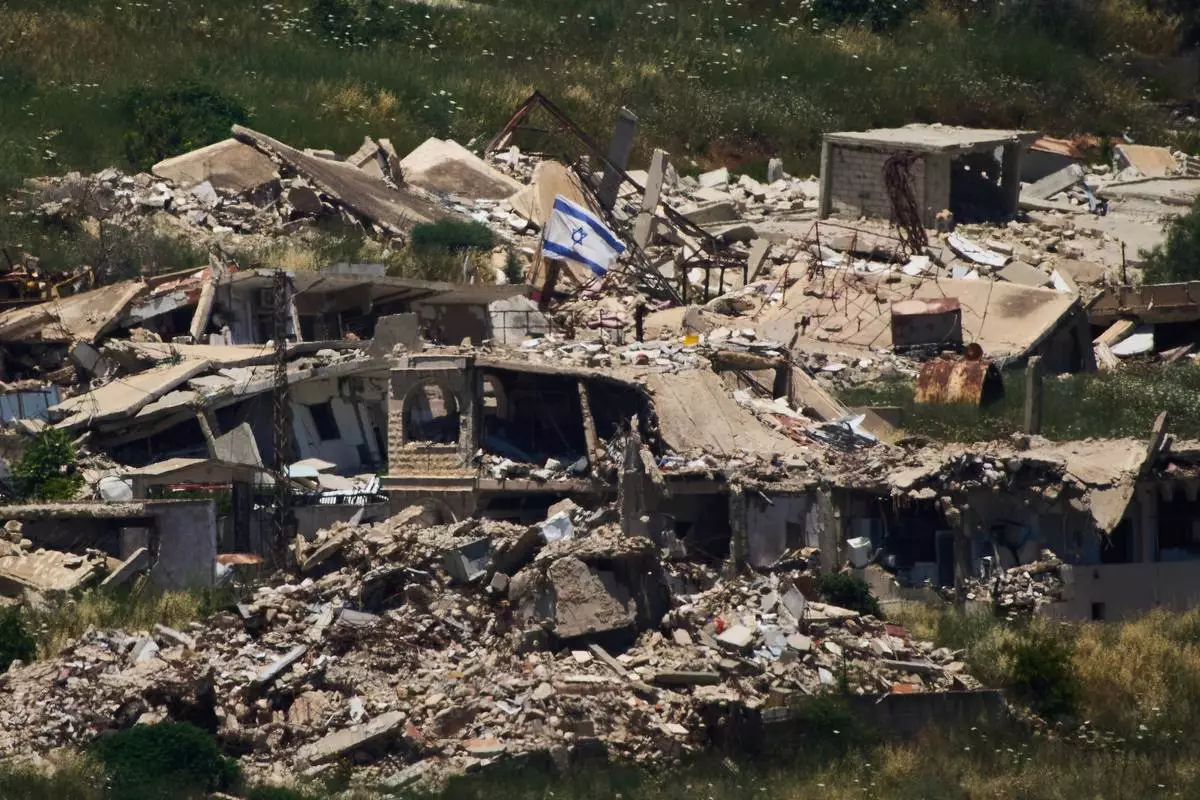
An Israeli flag hangs on a destroyed building in southern Lebanon as seen from northern Israel, Thursday June 4, 2026. (AP Photo/Ariel Schalit)