MANHASSET, N.Y.--(BUSINESS WIRE)--Jun 4, 2026--
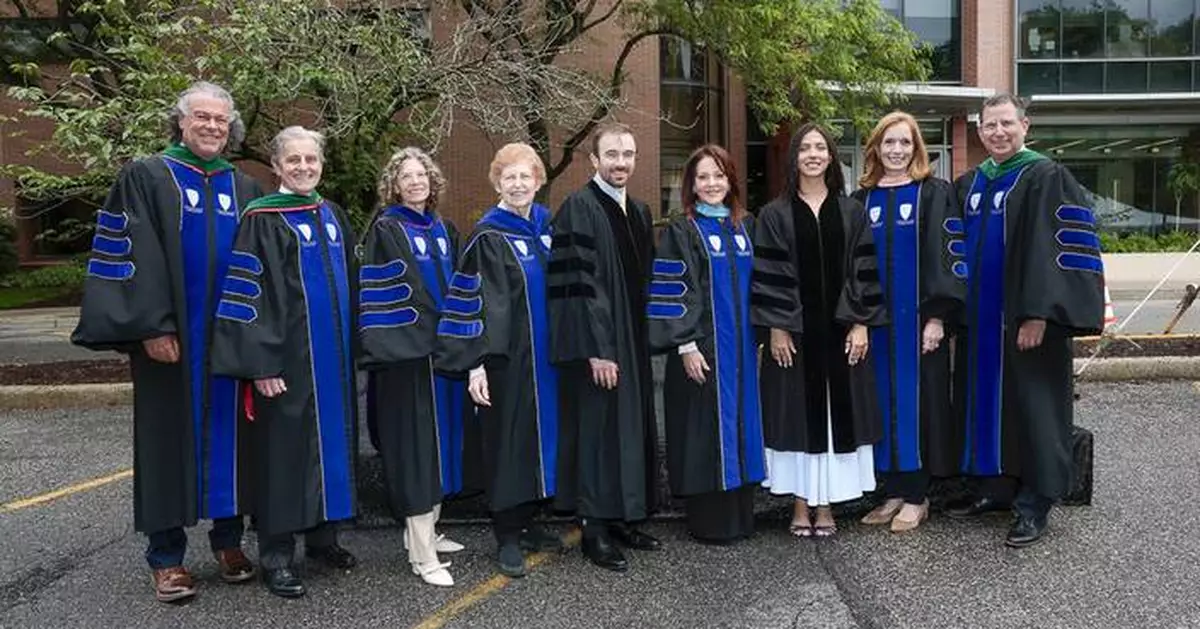
Bridging the critical gap from lab bench to patient bedside, the Elmezzi Graduate School of Molecular Medicine at Northwell Health’sFeinstein Institutes for Medical Research celebrated its newest physician-scientist graduates trained to bringing scientific discovery into life-changing therapies. A commencement ceremony was held on May 21 at the Feinstein Institutes where Alexandra Bekiaridou, MD, PhD, and Russell Hollis, MD, PhD, received their PhD degrees, and Cori Bargmann, PhD, and Tak W. Mak, PhD, received honorary degrees.
This press release features multimedia. View the full release here: https://www.businesswire.com/news/home/20260604919422/en/
The Elmezzi Graduate School is a PhD program for physicians seeking careers in biomedical research. Elmezzi students conduct research in Feinstein Institutes laboratories to develop new biomedical knowledge, therapeutic approaches and diagnostic tools. The Elmezzi Graduate School of Molecular Medicine is supported, in part, through a generous endowment from The Thomas and Jeanne Elmezzi Foundation.
“This year’s Elmezzi commencement is a testament to the Feinstein Institutes’ dedication to producing knowledge to cure disease,” said Bettie M. Steinberg, PhD, interim dean of the Elmezzi Graduate School of Molecular Medicine and professor in the Feinstein Institutes’ Institute of Molecular Medicine. “Our graduates represent the vital next generation of scientists, positioned to transform groundbreaking discoveries from the lab into tangible, life-changing therapies for patients.”
Dr. Bekiaridou’s research under Stavros Zanos, MD, PhD, associate professor in the Institute of Bioelectronic Medicine at the Feinstein Institutes, focused on the intricate relationship between the spleen and its innervation in regulating immune cell programming during Pulmonary Arterial Hypertension (PAH). Dr. Bekiaridou’s findings, which demonstrated how splenic norepinephrine can influence the migration of myeloid cells from the spleen to the lung in the diseases and offers insights that could support the development of novel treatments targeting inflammation in PAH.
Fellow graduate Dr. Hollis – whose research under Ping Wang, MD, chief scientific officer at the Feinstein Institutes, and Monowar Aziz, PhD, associate professor in the Institute of Molecular Medicine at the Feinstein Institutes – investigated new treatments for mesenteric ischemia, a deadly disease in which the small intestine’s blood supply is cut off. Dr. Hollis analyzed how the peptide MOP3, developed in Dr. Wang’s lab, prevents overactivation of the immune system when toxins from the injured intestine are released. MOP3 scavenges these toxins, namely eCIRP, and helps convert macrophages to anti-inflammatory immune cells. This process limits the damage to vital organs and promotes recovery.
“Throughout the history of medicine, physician-scientists have fueled new innovations and discoveries that are essential for a healthier world,” said Kevin J. Tracey, MD, president and CEO of Feinstein Institutes and Karches Family Distinguished Chair in Medical Research. “Our Elmezzi graduates are prepared to lead the development of breakthrough therapies and diagnostics.”
The two honorary degrees recipients were Dr. Bargmann, the Torsten N. Wiesel professor and head of the Lulu and Anthony Wang Laboratory of Neural Circuits and Behavior at The Rockefeller University, and Dr. Mak, the senior scientific staff at the Ontario Cancer Institute and professor in the Departments of Medical Biophysics & Immunology University of Toronto, Ontario. Dr. Bargmann was recognized for her groundbreaking work on the relationships between genes, neural circuits and behaviors, particularly her insights into sensory recognition and innate behaviors. Dr. Mak was recognized for his pioneering discoveries in the genetics and molecular biology of cancer and the immune system, including cloning the human TCRß chain (foundational for CAR-T therapy) and identifying CTLA4’s role in T cell regulation (paving the way for checkpoint inhibitor immunotherapies). Dr. Mak was also recognized for his entrepreneurial impact, including co-founding companies that have developed FDA-approved cancer treatments.
To find out more about the Elmezzi Graduate School of Molecular Medicine and its programs click here.
About The Elmezzi Graduate School of Molecular Medicine
The Elmezzi Graduate School of Molecular Medicine at Northwell Health offers MDs an accelerated PhD three-year program emphasizing translational research. Its mission is to provide academic training for physicians to discover and understand the causes of human diseases and to rapidly and effectively translate this information into diagnostic and therapeutic solutions. The program started in 1994 and is supported in part by a generous endowment from The Thomas and Jeanne Elmezzi Foundation. To date, more than 50 physician-scientists have graduated the prestigious program. The Elmezzi School of Molecular Medicine is accreditedby the WASC Senior College and University Commission (WSCUC). For more information,click here.
About the Feinstein Institutes
The Feinstein Institutes for Medical Researchis the home of the research institutes of Northwell Health, the largest health care provider and private employer in New York State. Encompassing 50+ research labs, 3,000 clinical research studies and 5,000 researchers and staff, the Feinstein Institutes raises the standard of medical innovation through its six institutes of behavioral science, bioelectronic medicine, cancer, health system science, molecular medicine, and translational research. We are the global scientific leader in bioelectronic medicine – an innovative field of science that has the potential to revolutionize medicine. The Feinstein Institutes publishes two open-access, international peer-reviewed journalsMolecular MedicineandBioelectronic Medicine. Through theElmezzi Graduate School of Molecular Medicine, we offer an accelerated PhD program. For more information about how we produce knowledge to cure disease, visithttp://feinstein.northwell.eduand follow us onLinkedIn.
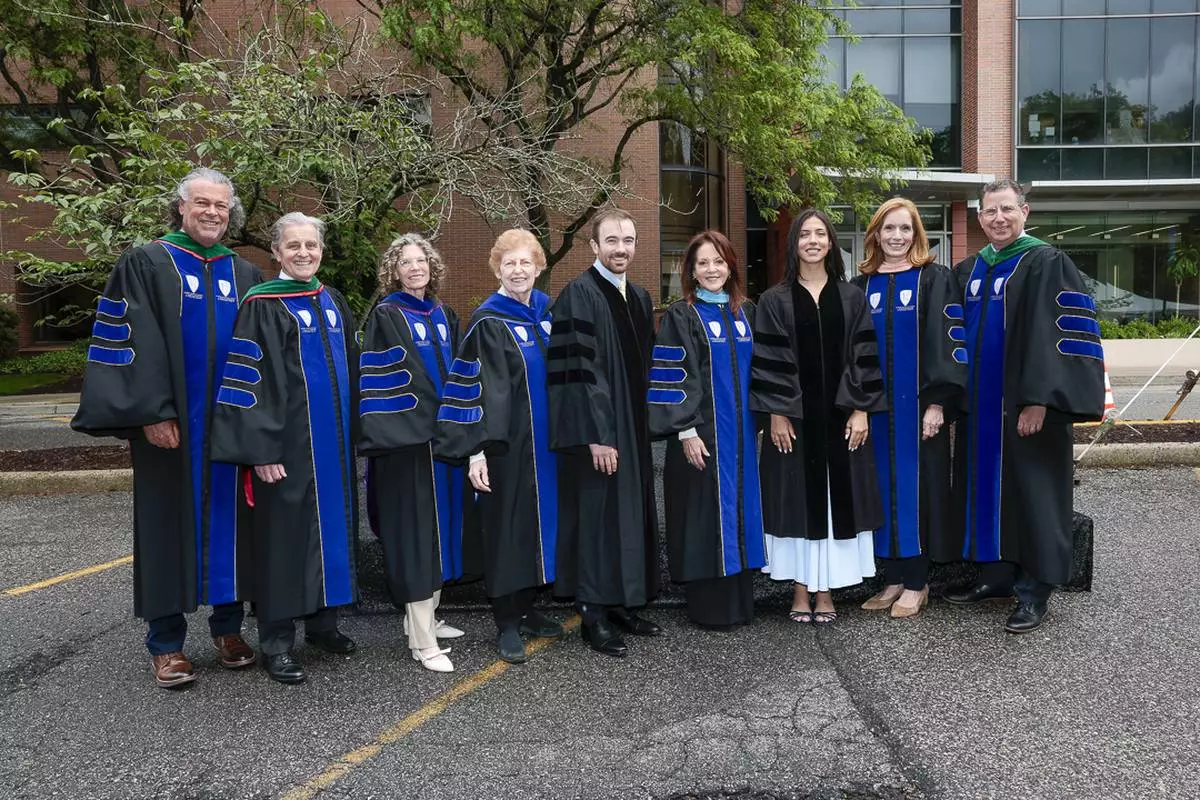
A commencement ceremony was held on May 21 at the Feinstein Institutes where Alexandra Bekiaridou, MD, PhD, and Russell Hollis, MD, PhD, (center) received their PhD degrees. (Credit: Feinstein Institutes)
BEIRUT (AP) — Hezbollah on Thursday rejected the latest ceasefire agreement between Israel and the Lebanese government, and the militant group demanded a complete Israeli withdrawal from Lebanon as more fighting there hampered efforts to end the Iran war.
The Hezbollah announcement came as Israeli strikes killed at least four people, according to local authorities, and a U.N. peacekeeper was killed in the crossfire.
Hezbollah leader Naim Kassem, in a written statement read on TV, called the negotiations “absurd, humiliating and insulting.” He said the agreement’s demand that Hezbollah fighters leave southern Lebanon under fire would mean “surrender, defeat and achieving the enemy’s goals.”
“What we are concerned about is an end to the aggression, ceasefire and Israel’s withdrawal,” he said, underscoring that Hezbollah has not made any commitment to stop fighting. “So long as our villages are not safe and are being bombed and destroyed and our people are killed," he said, northern Israel “will not be safe.”
Following Kassem’s statement, drone alert sirens sounded in several border communities in northern Israel, including Shlomi, a town where Prime Minister Benjamin Netanyahu and several ministers had been meeting with local officials, his office said. Israeli media reported that Netanyahu left a short time before the alerts sounded.
The Israeli military later said the sirens were triggered by attempts to intercept several drones that hit near soldiers in southern Lebanon. No injuries were reported.
Lt. Gen. Eyal Zamir, the Israeli military’s chief of staff, acknowledged Thursday that the ongoing war was straining northern Israeli towns living under the threat of Hezbollah fire. He said Israel’s operations in Iran and Lebanon had “created a new security reality,” by weakening Iran and Hezbollah “to an unprecedented degree.”
Lebanese troops began moving Thursday afternoon into the southern village of Dibbine, in coordination with U.N. peacekeepers, after Israeli forces left the area, which saw intense clashes in recent days, state-run media reported. It was the first time Israeli troops withdrew from an area in southern Lebanon since the latest Israel-Hezbollah war began about three months ago.
The fighting in Lebanon, where Israeli forces have seized large swaths of the south, threatens efforts to end the Iran war and reopen the Strait of Hormuz, a key transit point for oil and gas. Its closure has jolted the world economy.
Iran has demanded that any lasting truce extend to Lebanon. Israeli Prime Minister Benjamin Netanyahu, who faces elections later this year, wants to press ahead with Israel’s offensive until Hezbollah no longer poses a threat.
U.S. President Donald Trump, who faced a rare rebuke from Congress on Wednesday, has sought to downplay the diplomatic deadlock and the failure of declared ceasefires to end the fighting. He told reporters that in the Middle East, "a ceasefire is when you’re shooting in a more moderate manner.”
A Serbian peacekeeper was killed and two others were wounded when a mortar struck their location near Marjayoun, a Christian-majority town that has seen intense fighting, according to the U.N. mission in southern Lebanon, known as UNIFIL, and the Serbian Defense Ministry.
Israel later blamed Hezbollah for the firing that killed the U.N. peacekeeper, without offering evidence. Hezbollah and the U.N. did not immediately comment on who launched the shells.
Lebanon’s state-run National News Agency said a drone strike killed a motorcyclist and wounded four people in the village of Maaroub. It said airstrikes on the village of Sohmor in the Bekaa Valley, in eastern Lebanon, killed three people and wounded others. It also reported airstrikes elsewhere in the south.
There was no immediate comment from the Israeli military, which has warned people not to go into parts of southern Lebanon where it says it is striking Hezbollah facilities.
Hezbollah resumed rocket fire days after Israel and the United States launched their surprise Feb. 28 attack on Iran, which backs Hezbollah. Before then, Israel had regularly carried out strikes in Lebanon against what it said were militant targets, often killing civilians, despite an earlier truce reached in 2024.
After Hezbollah's rocket and drone attacks resumed, Israeli troops seized around a fifth of Lebanon, pushing further into the country's south than at any time since the end of Israel’s 1982-2000 occupation.
In the southern city of Sidon, residents reacted to Wednesday's ceasefire announcement with skepticism, saying previous agreements had failed to stop the violence.
“Every few days a ceasefire is announced, but people keep getting killed,” said Mayada Hijazi.
“It’s all talk and no action,” said Salah Nassab. “We keep going back to our homes, and then we get displaced again, back and forth. We’re very tired."
More than 3,500 people have been killed in Lebanon, and over 1.2 million have been displaced. The fighting has killed 27 Israeli soldiers and three civilians.
The latest declared ceasefire came about through U.S.-brokered talks between Israel and Lebanon's government, which accuses Hezbollah of dragging the country into war and had made efforts to disarm it before the latest hostilities.
The ceasefire agreement calls for Lebanon's armed forces to take control of security zones in Lebanon from which the militants would be banned.
Lebanese President Joseph Aoun on Thursday called the new agreement "the last chance to enter a final and comprehensive ceasefire.” He said Lebanon was ready to implement the deal once he receives responses from relevant factions in Lebanon, including Hezbollah. The United States — and Trump himself — would determine how and when the deal is implemented, Aoun told journalists.
The agreement terms Hezbollah “an enemy" of Israel, the U.S. and Lebanon and calls for dismantling it. The government has promised to do so in the past but does not have the capabilities to disarm Hezbollah by force.
The latest agreement did not say when Israel would withdraw from southern Lebanon but said the U.S. would support the Lebanese army as it works to assert control in areas where Hezbollah has long wielded power.
A top Iranian general on Thursday reiterated Tehran's demand for a full ceasefire in Lebanon and called for Israel to pull troops back to where they were when the wider war began. At that time, Israel held five strategic points along the border.
“Supporting the resistance in Lebanon is the duty of all of us, and eliminating Israel from the region is an achievable goal for Muslims,” Esmail Qaani, the head of the paramilitary Revolutionary Guard’s elite Quds Force, was quoted as saying by the semiofficial Fars and Tasnim news agencies.
As diplomatic efforts have repeatedly faltered, Iran and the U.S. have traded fire in and around the Strait of Hormuz, which remains effectively closed. Before the war, around a fifth of the world's oil and gas, as well as large shipments of fertilizer and other goods, passed through the narrow waterway.
The U.S. has targeted what it says are Iranian threats to commercial shipping and its own forces, while Iran has launched missile and drone attacks on Gulf states hosting U.S. troops.
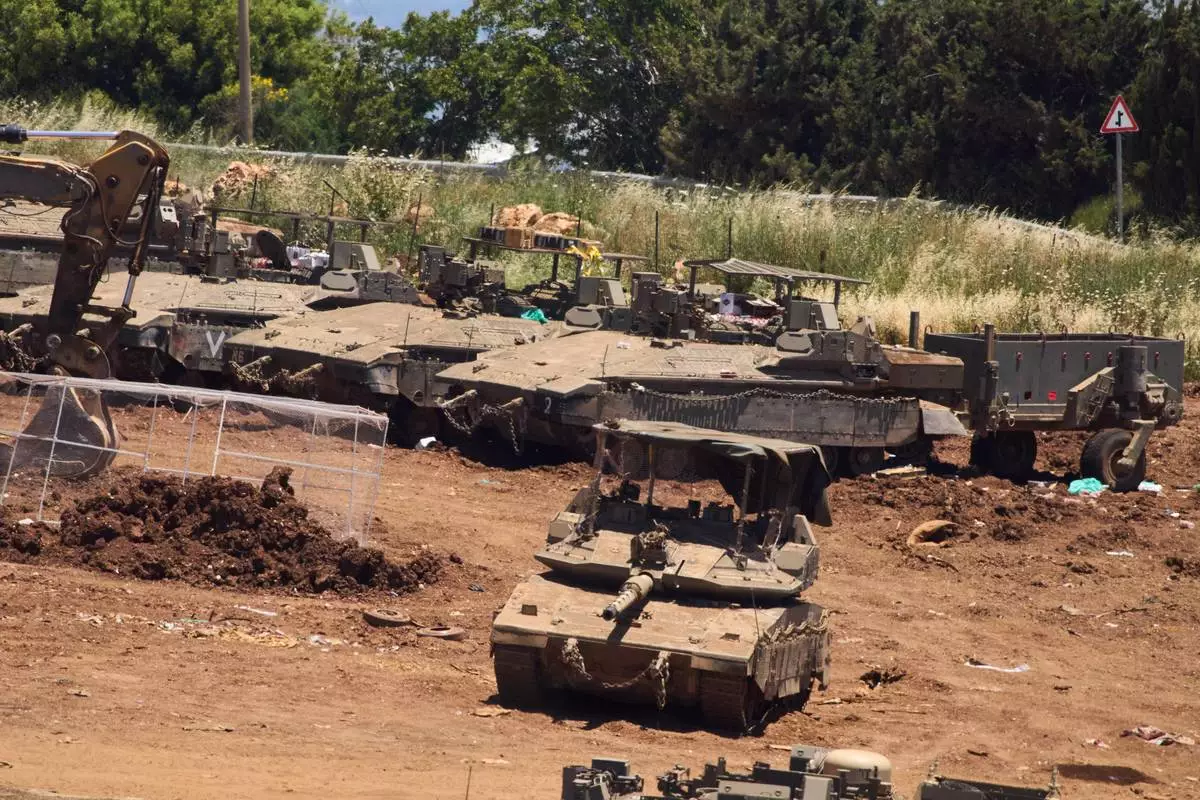
Israeli troops gather on the border with Lebanon in northern Israel, Thursday June 4, 2026. (AP Photo/Ariel Schalit)
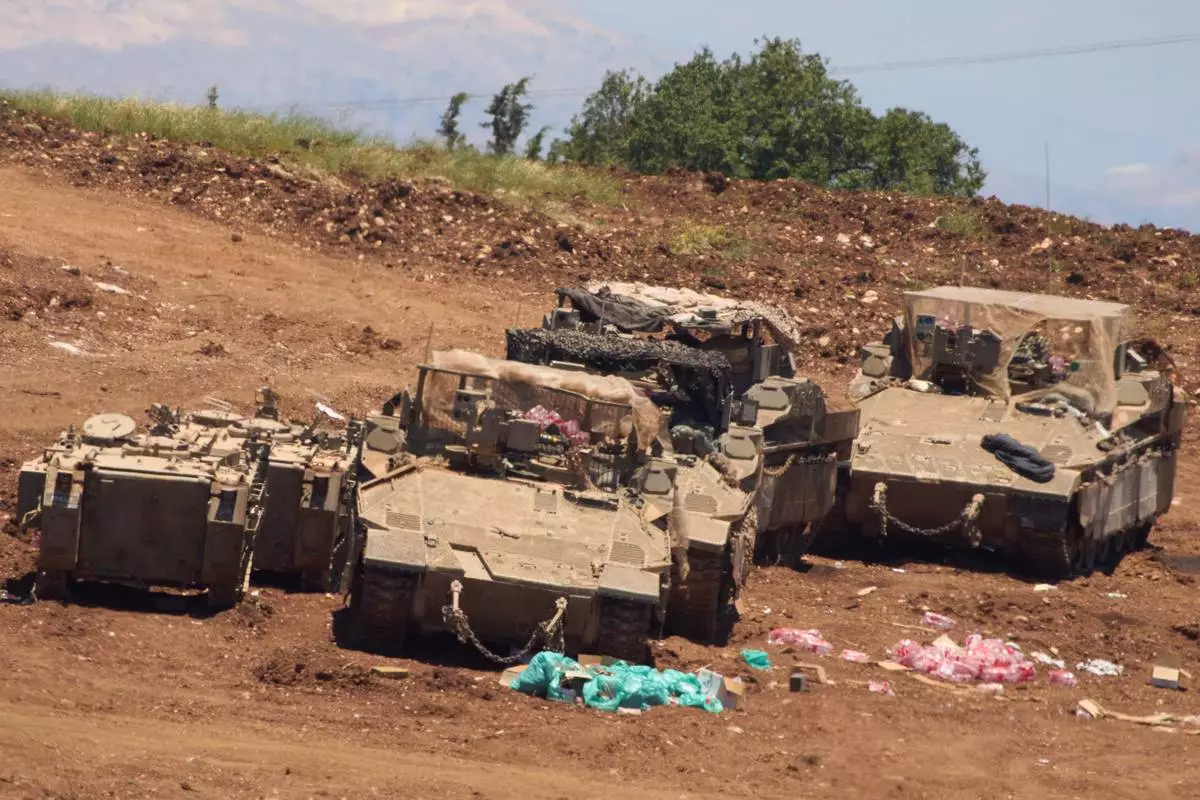
Israeli troops gather on the border with Lebanon in northern Israel, Thursday June 4, 2026. (AP Photo/Ariel Schalit)
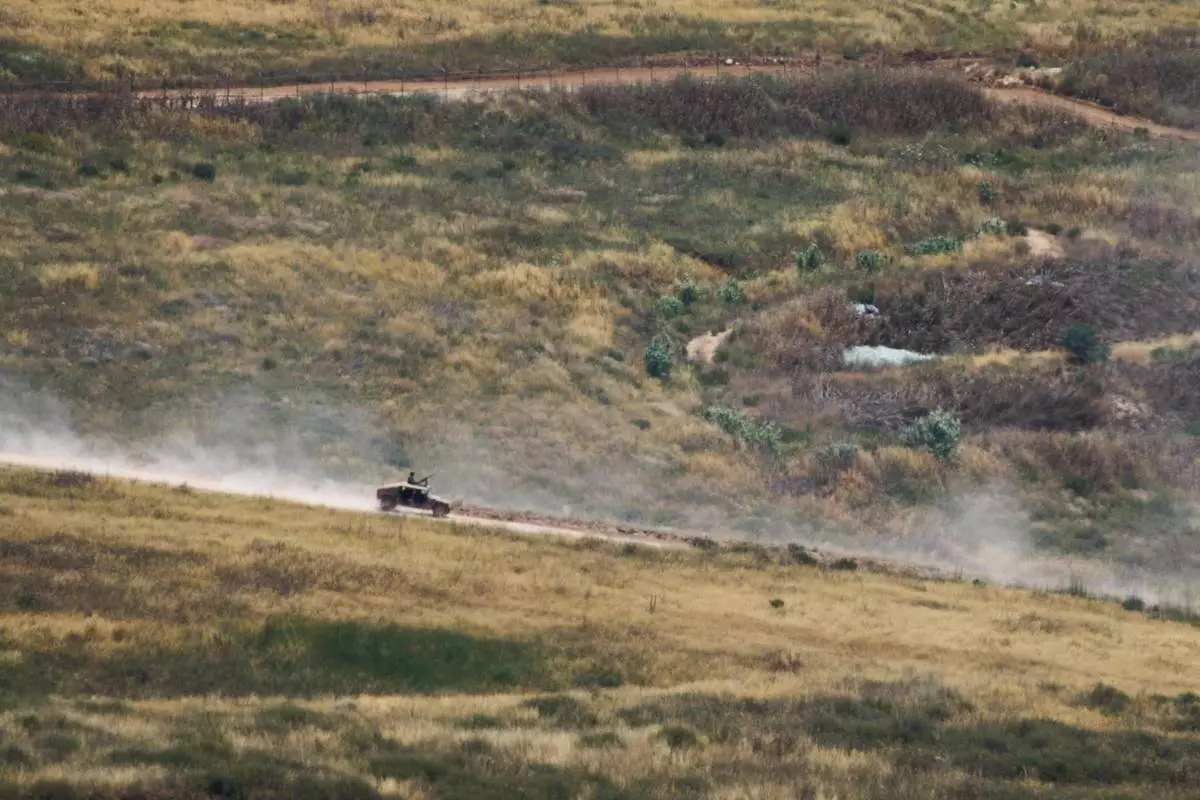
Israeli soldiers drive in southern Lebanon as seen from northern Israel, Thursday June 4, 2026. (AP Photo/Ariel Schalit)
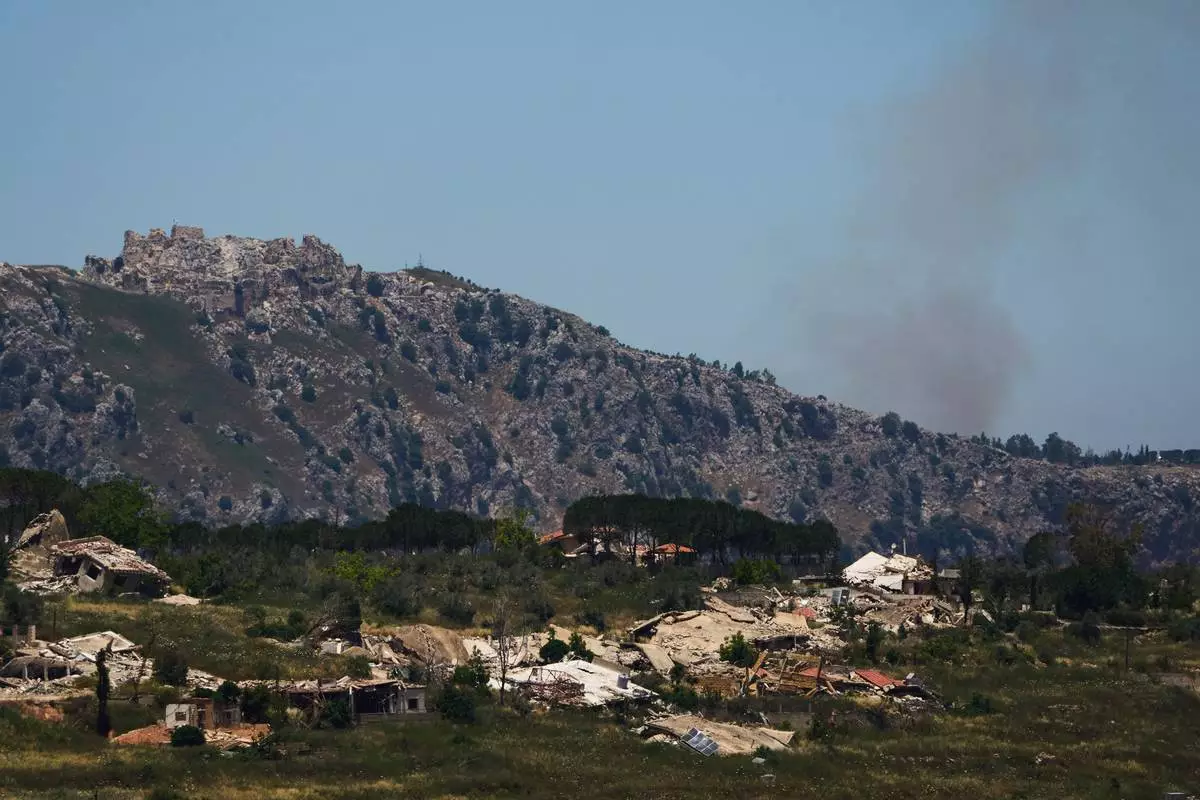
Smoke rises near the Beaufort Castle in southern Lebanon as seen from northern Israel, Thursday June 4, 2026. (AP Photo/Ariel Schalit)
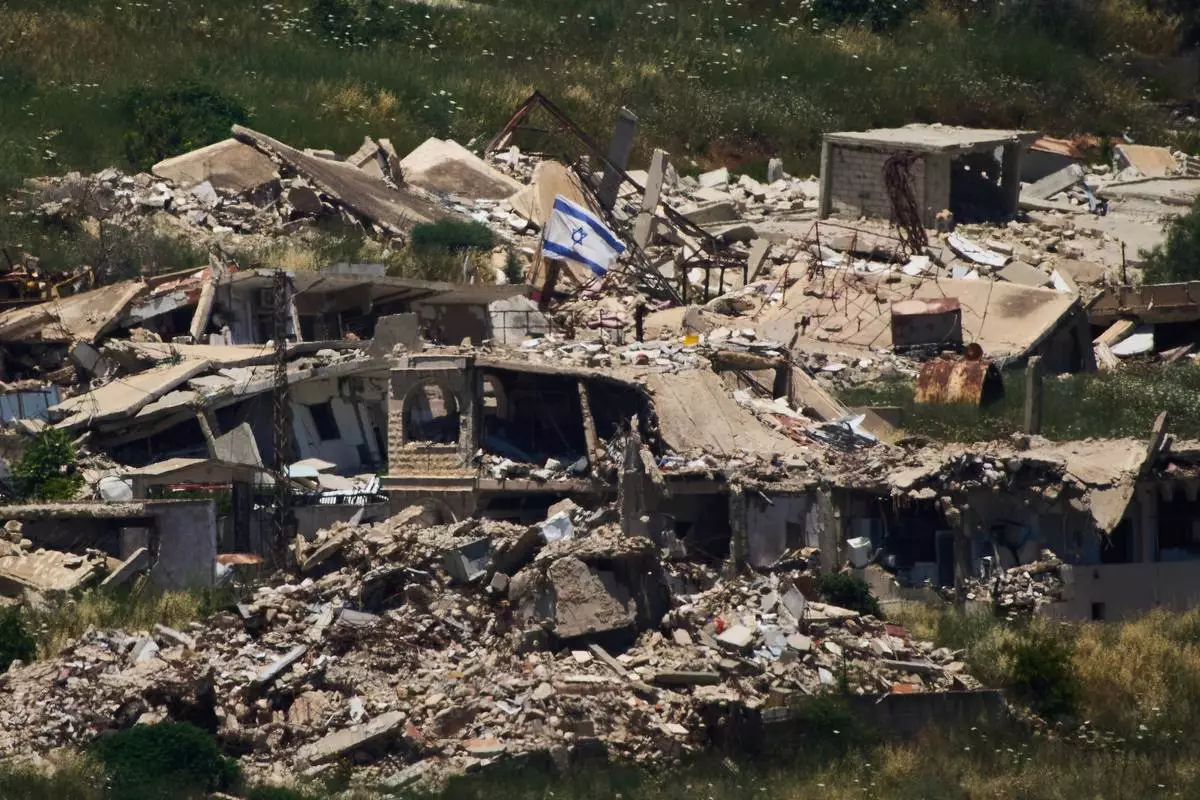
An Israeli flag hangs on a destroyed building in southern Lebanon as seen from northern Israel, Thursday June 4, 2026. (AP Photo/Ariel Schalit)